
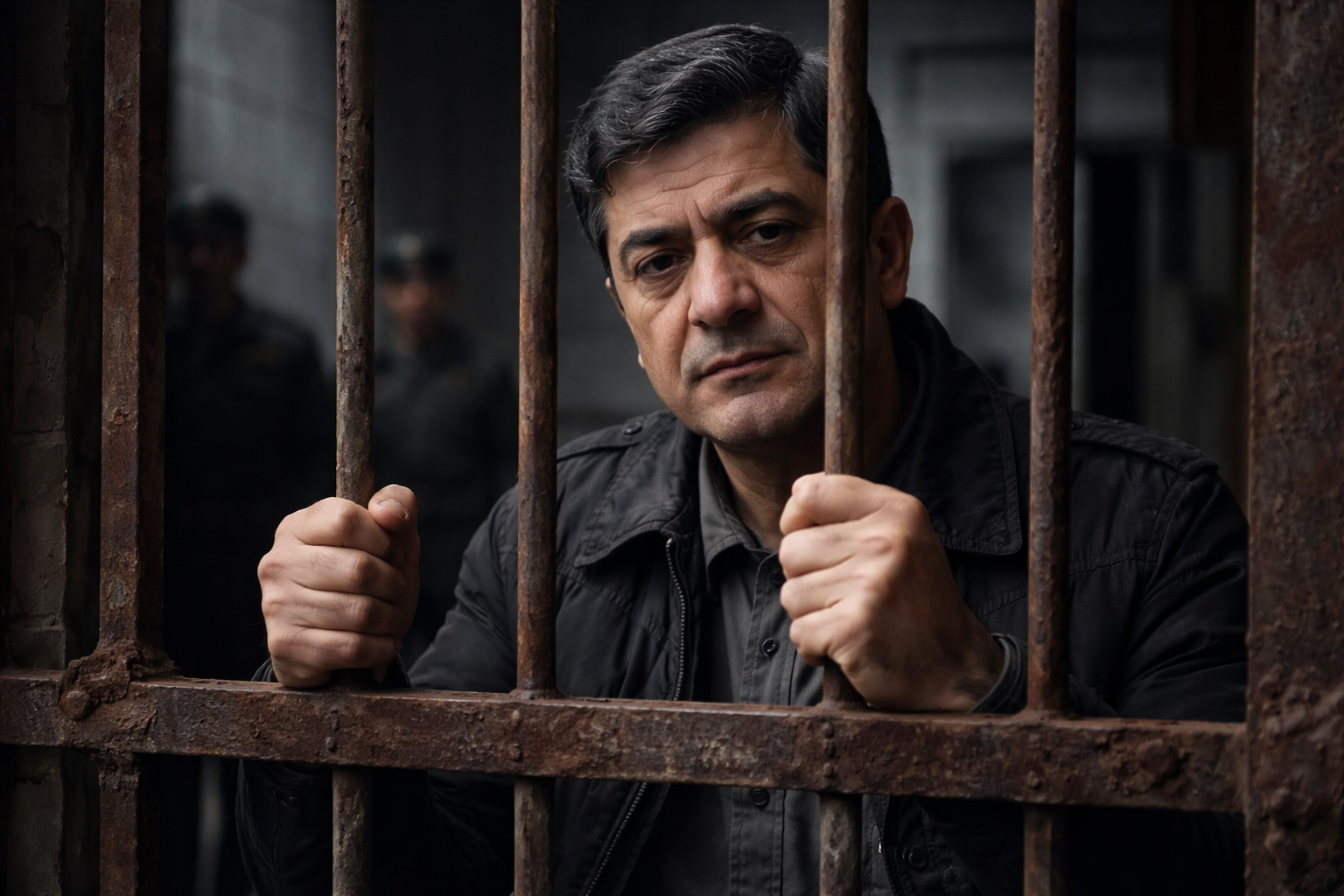
Azerbaijani opposition leader Ali Karimli remains imprisoned one year after his arrest, facing serious charges that his defense and international observers describe as politically motivated. Karimli, chairman of the Azerbaijani Popular Front Party (APFP), was arrested alongside his longtime adviser, Mammad Ibrahim, both accused of attempting to forcibly seize power in Azerbaijan.
Karimli and Ibrahim are tried under Article 278.1 of the Azerbaijani Criminal Code, which relates to attempts to overthrow the constitutional order and carries sentences ranging from 12 years to life imprisonment. The State Security Service has alleged a conspiracy involving Karimli and the former head of the Presidential Administration, Ramiz Mehdiyev, including claims of foreign intelligence interference, though Karimli denies ever having met or communicated with Mehdiyev.
Details of the Case and Trial Conditions
The prosecution claims Karimli planned to exploit a mass rally in Baku in July 2020, initially held to support the Azerbaijani military, to provoke unrest and seize parliament and state television buildings. Karimli has rejected these allegations and stated that his party was not involved in organizing the rally. Defense lawyers and human rights groups maintain the charges lack credible evidence. Amnesty International and other organizations have criticized the Azerbaijani government, calling the arrest and trial part of a broader campaign to suppress political opposition and consolidate authoritarian control.
The trial is conducted behind closed doors and excludes foreign diplomats, with authorities citing state secrets as justification. Karimli has voiced skepticism about the fairness of the proceedings, asserting they aim to eliminate him from political life.
Concerns Over Detention Conditions and Health
Karimli’s family reports seriously deteriorating detention conditions, including restrictions on food parcels, limited water supply, poor ventilation, persistent noise preventing sleep, and worsening back pain. Amnesty International has warned that these conditions could amount to torture or ill treatment, noting at least one incident where Karimli reportedly fainted during a court hearing due to dehydration. His son, Turkel Karimli, also reported a lack of phone and face-to-face visits since June.
Similarly, Ibrahim’s family has raised concerns about inadequate medical care for his kidney problems and insomnia. Despite some medical examinations ordered by authorities, communication and family visits remain limited.
Political Impact and International Reactions
Karimli has led the APFP since 2000, and despite his imprisonment, the party continues its activities, though members face ongoing pressure and administrative detentions, particularly those active on social media. Rahim Hajiyev, a founding member living abroad, described Karimli’s arrest as part of a wider campaign targeting opposition figures.
The European Parliament passed a resolution demanding Karimli’s immediate and unconditional release, along with other political prisoners in Azerbaijan, urging authorities to guarantee medical care, legal access, and family contact. Karimli recently received the 2026 Magnitsky Human Rights Award. Azerbaijani officials maintain the case is handled in line with national law, with Foreign Minister Jeyhun Bayramov emphasizing that opposition affiliation does not exempt anyone from legal accountability.