
Thousands call for change in Albania as protests escalate into violent clashes
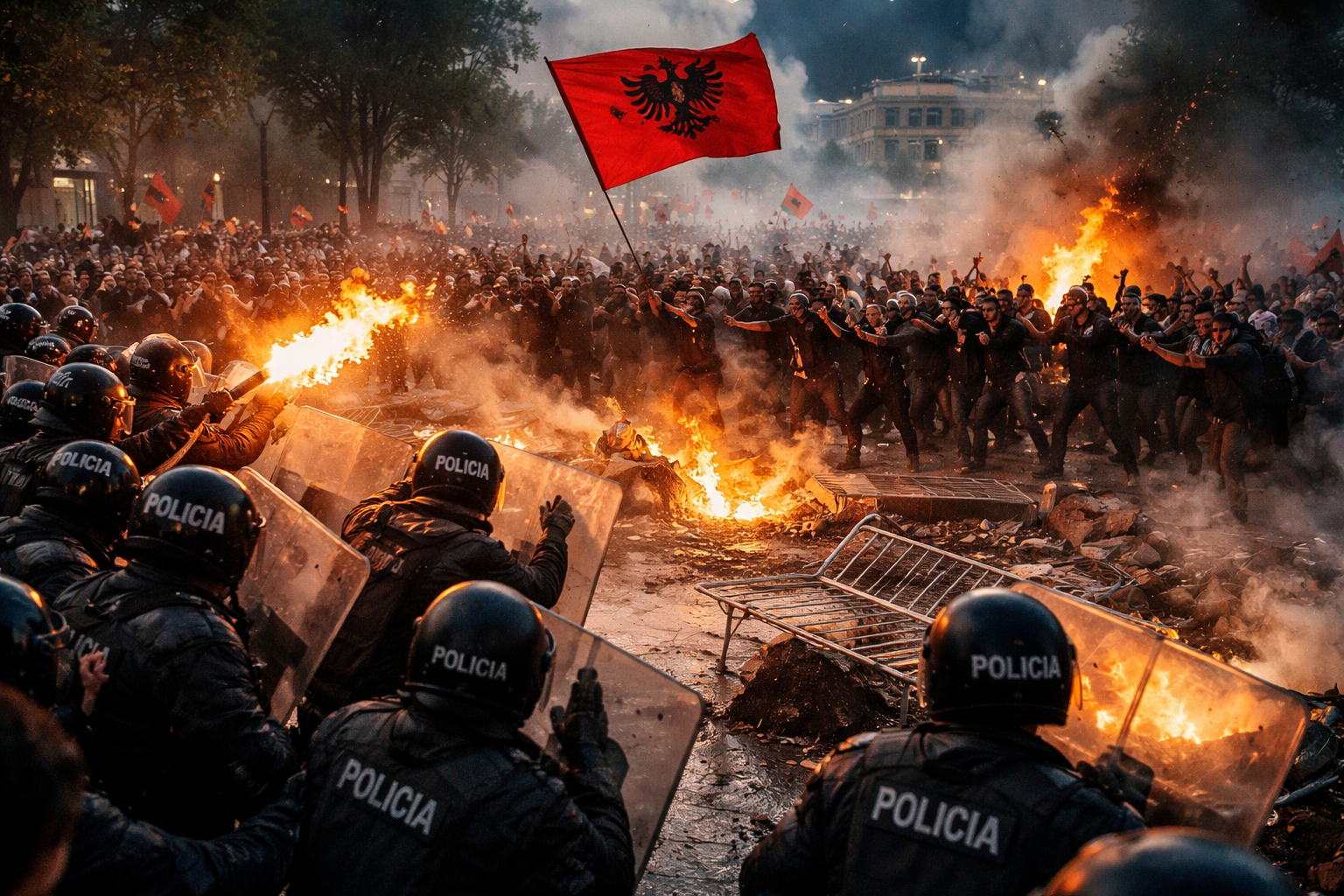
Thousands of demonstrators gathered in Tirana, Albania’s capital, demanding the resignation of the country’s current administration. The protest initially started peacefully on the country’s Independence Day but later escalated into violent confrontations between police and groups of masked protesters who attacked government buildings.
The unrest reflects mounting public dissatisfaction with issues including alleged corruption, government policies, and socio-economic conditions. Authorities responded with tear gas, water cannons, and rubber bullets to disperse violent protesters.
Background and causes of the protests
The demonstrations, which began in late May, originally centered on opposition to a luxury tourism project linked to an investment firm founded by Jared Kushner, son-in-law of former U.S. President Donald Trump. The movement, known as the Flamingo protests, expanded to include student-led rallies and broader demands for improvements in education, living standards, healthcare access, and reductions in corruption and unemployment.
Protest dynamics and government response
Saturday’s protest coincided with Albania’s 114th independence anniversary, a traditionally celebratory public holiday, intensifying the political symbolism. Protesters gathered at Tirana’s Skanderbeg Square, chanting for the government’s resignation and systemic change. Authorities established checkpoints on key roads and took measures to contain the unrest after violence erupted, including attacks on street cameras and ministry building windows by some protesters wielding wooden sticks.
The government denied corruption claims and highlighted efforts such as subsidies on fuel and financial aid for low-income families to ease public discontent. The administration has maintained its stance on the legality and environmental consideration of the coastal tourism project despite ongoing opposition.
Voices from the protest
Many participants came from across Albania and abroad, expressing deep frustrations. One protester who traveled from the United Kingdom criticized the dominance of long-standing political parties and called for a new generation to lead the country. Other rallies drew students and pensioners, with calls focusing on poverty, corruption, and worsening living conditions. Several protesters emphasized the need to overhaul the political system entirely.
Political context and challenges
The current leadership has been in power since 2013, recently securing a fourth consecutive parliamentary term, and aims to align Albania with the European Union by 2030. Nevertheless, recurring allegations of corruption and concerns over criminal networks involved in illicit trafficking have continued to challenge governance credibility. The protests underscore the tension between public demands for reform and the government’s efforts to maintain order and pursue economic development.