
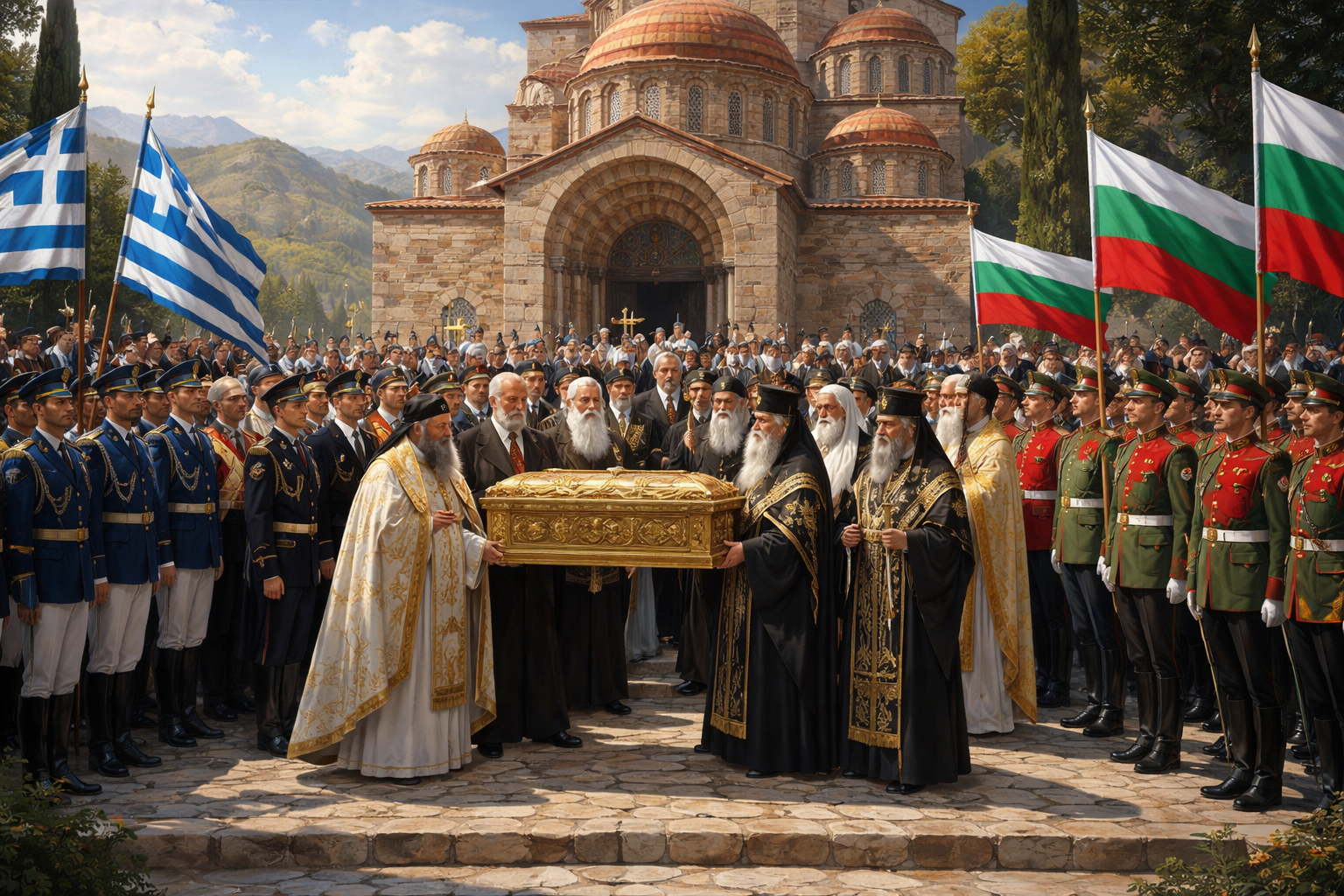
After decades of diplomatic efforts, Greece has returned the remains of Czar Samuel, one of Bulgaria’s most significant medieval rulers, to the Bulgarian capital, Sofia. The handover ceremony was held with full state honors and reflects a notable moment in the relations between the two neighboring countries.
Czar Samuel led the First Bulgarian Empire from 997 to 1014, expanding his influence throughout the Balkans before his defeat by the Byzantine Empire. His remains, discovered about 60 years ago in a Greek border area, were transported by military aircraft escorted by fighter jets for their return.
Significance of Czar Samuel’s Return to Bulgaria
Samuel is remembered as a key figure of Bulgarian national identity, symbolizing historical sovereignty despite eventual Byzantine conquest. The ceremony included a 21-gun salute and a procession to the Church of St. Sophia in Sofia, where the public could pay their respects. Authorities provided free trains to the capital for the event and deployed around 750 police officers to ensure security during the ceremony.
Bulgarian leadership emphasized that the remains are part of a shared heritage that connects both peoples and serves as a cultural bond. The handover was seen as a unifying act that strengthens historical and strategic ties between Bulgaria and Greece.
Context of the Return and Regional Implications
The process began officially in 2007 and had been a sensitive issue in Bulgarian-Greek relations, involving negotiations on cultural heritage. In exchange for the return of Czar Samuel’s remains, Greece is set to receive 48 sentimental objects that Bulgarian troops had taken during World War I.
However, some Greek academics and religious leaders criticized the exchange as insufficient from the Bulgarian side. The Greek leadership expressed hope that the gesture would support Greece’s campaign for the return of the Parthenon Marbles, sculptures taken from Athens more than two millennia ago and currently held in the British Museum.
Ongoing Controversies Over Czar Samuel’s Legacy
The handover also reignited tensions related to Czar Samuel’s historical identity. North Macedonia, which features a large statue of Samuel in its capital Skopje, also claims the medieval ruler as part of its heritage. Media outlets in the region described the event as another “battle over history,” highlighting the competing narratives between Bulgaria and North Macedonia concerning Samuel’s legacy.
Recent recommendations by a Bilateral Commission have suggested portraying Czar Samuel as the leader of a state recognized by many historians as the Bulgarian Empire, a territory now encompassing North Macedonia. This underscores ongoing disagreements over historical narratives in the Balkans.
Political and Historical Impact in Bulgaria
Within Bulgaria, the return has been linked to domestic political considerations ahead of the country’s presidential election. Analysts observed that the event may appeal to patriotic sentiment by emphasizing the Bulgarian character of the Slavic population of Macedonia. The issue remains a significant cultural and political symbol shaping relations in the region.