
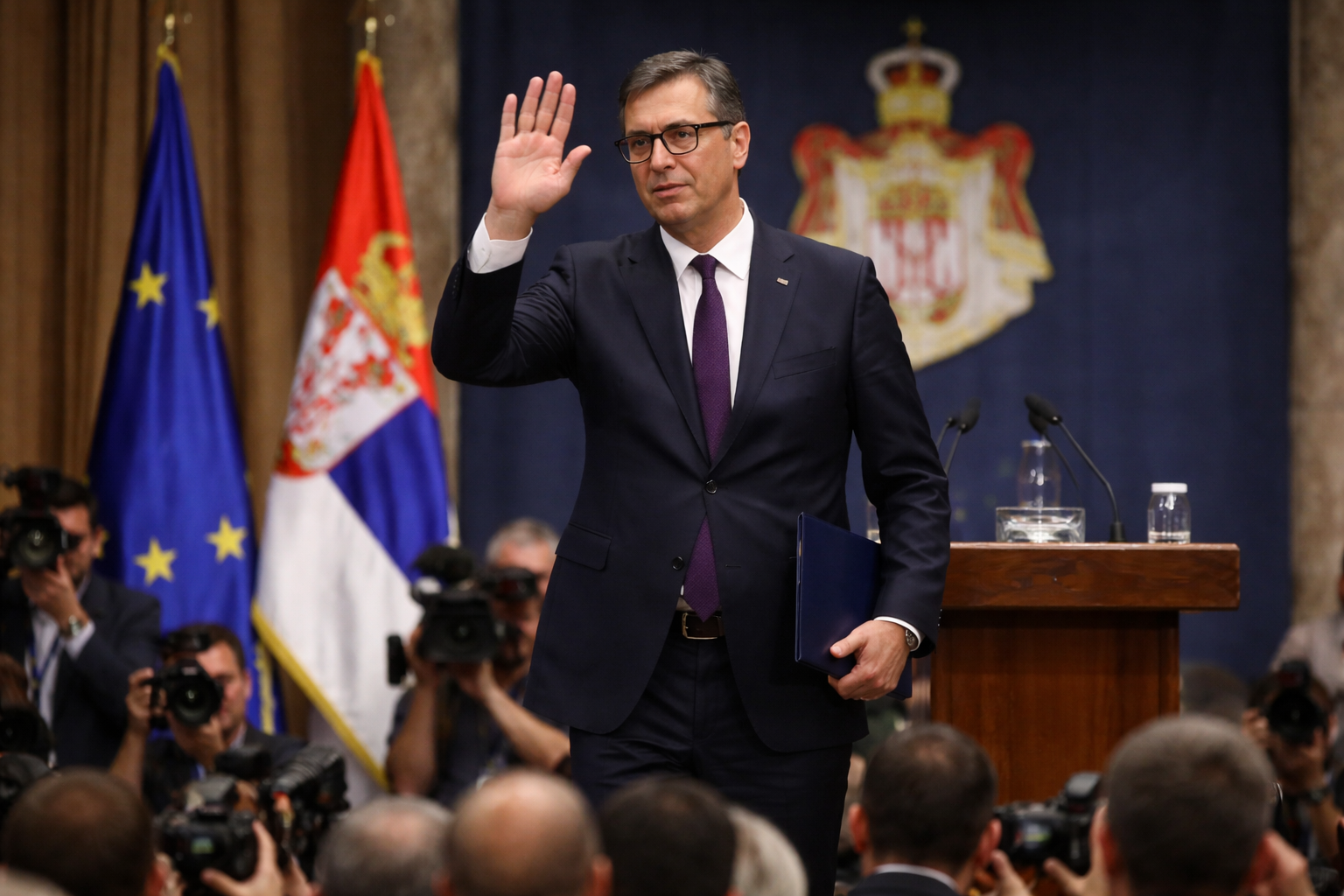
Serbia’s populist leader Aleksandar Vučić has resigned from his role as president to run for prime minister in early parliamentary elections set for October 25. His decision follows the Serbian constitution prohibiting him from seeking a third presidential term, as his current mandate would have ended in May 2025.
Vučić’s move signals a strategic attempt to retain authority through his Serbian Progressive Party (SNS) amid mounting challenges from a youth-led movement demanding accountability and an end to corruption. The protests intensified after a train station canopy collapse in November 2024 killed 16 people in Novi Sad, fueling criticism of Vučić’s government after 14 years in power.
Key Developments and Political Context
By resigning, Vučić aims to lead the SNS in a highly contested election that may reshape Serbia’s political landscape. The party faces stiff competition from a student-backed coalition composed of experts, professors, teachers, and athletes campaigning on promises of rule of law and anti-corruption reforms.
In recent weeks, Vučić embarked on a nationwide campaign, extensively covered by pro-government media, involving inaugurations of infrastructure projects and personal voter outreach. Despite officially holding the presidency—a role constitutionally less powerful than the prime ministership—Vučić has historically controlled government activities and policy announcements.
Charges and Controversies
The independent Bureau for Social Research filed a complaint accusing Vučić of exploiting his presidential position to promote the SNS, a claim he has denied. No action has been taken by state anti-corruption authorities, which critics say are influenced by the government. Vučić and his party have long faced allegations of corruption, connections with organized crime, and suppression of independent media.
Following his resignation, Ana Brnabić, a close ally and former prime minister, will act as president until post-election parliamentary and presidential appointments are finalized. The elections will also feature Vučić’s allies, including the Socialist Party, a pro-EU opposition alliance, and various smaller factions.
Election Stakes and Outlook
The October elections are expected to be tightly contested, with polls showing close support between Vučić’s SNS and the student-led opposition. The campaign atmosphere is tense, with reported police crackdowns on protests and Vučić alleging, without presenting evidence, that foreign actors intend to destabilize the country. Serbia’s stalled European Union accession bid and its refusal to sanction Russia over the Ukraine conflict add further complexity to the political environment.
As the vote approaches, the election will serve as a referendum on Vučić’s extended grip on power and whether public demands for justice and transparency can reform Serbia’s political system.