
Germany hosts EU talks on migration in Munich amid mass protests demanding social welfare protections
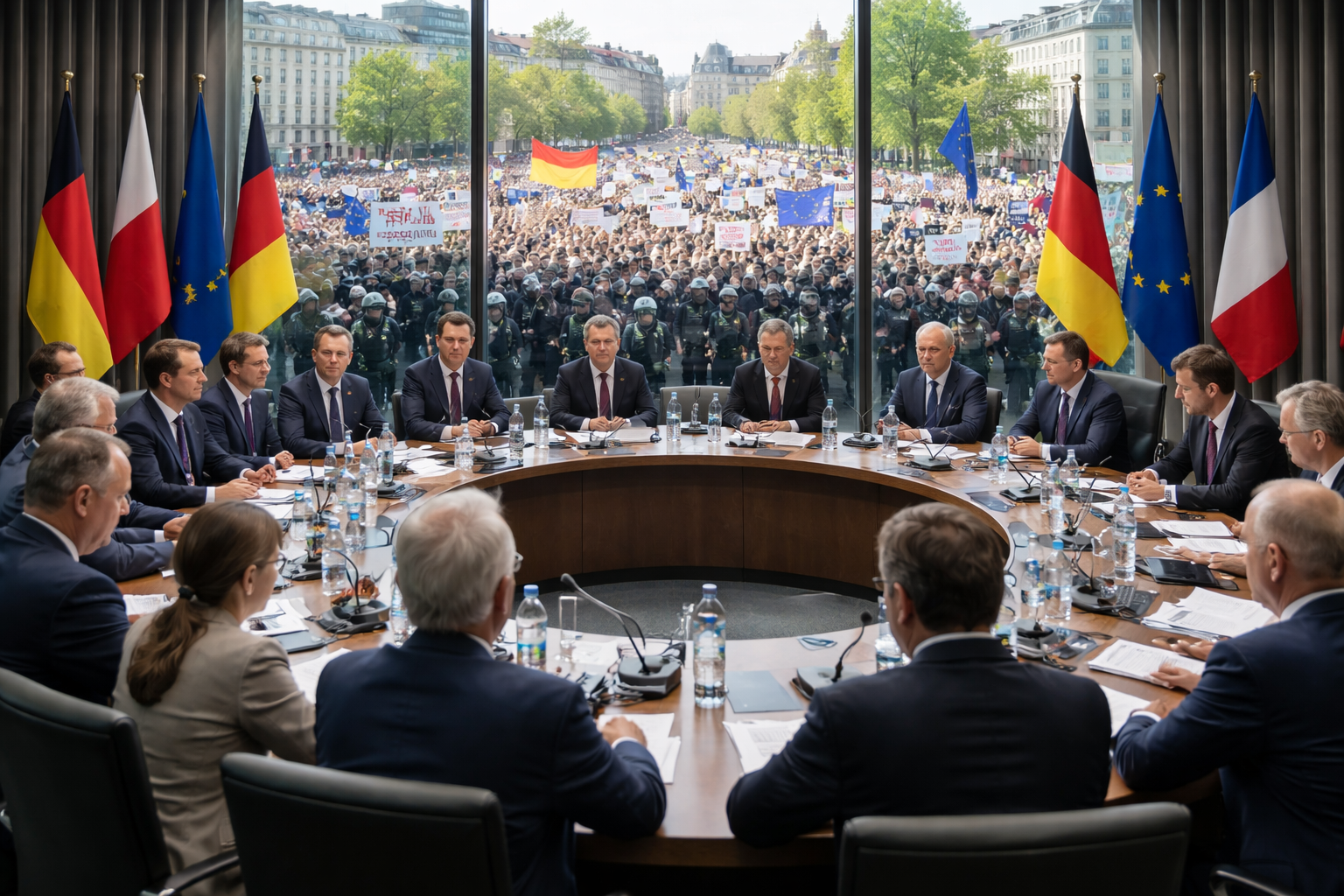
European Union interior ministers gathered in Munich to discuss tightening migration policies, including expanding border protection and deportation efforts. The meeting featured officials from Germany and other member states aiming to address challenges around asylum processing and returns.
Meanwhile, across Germany, hundreds of thousands protested planned government cuts to social services, highlighting tensions over proposed reforms to pensions, working hours, and welfare benefits.
Migration Policy and Frontex Mandate Expansion
German Interior Minister Alexander Dobrindt, ahead of the EU meeting, advocated for an expanded role for Frontex, the EU’s border agency, to include wider operations in transit countries outside the bloc—subject to those countries’ consent—and more responsibility in enforcing the Dublin Regulations on asylum processing. He emphasized the need for a new European migration mechanism to accelerate returns and create deportation centers or return hubs in third countries, possibly in Africa or Asia.
The meetings also involved discussions between Germany, Denmark, Austria, the Netherlands, and Greece, focusing on the practical establishment of these deportation centers. EU Commissioner for Internal Affairs and Migration Magnus Brunner attended the talks.
Mass Protests Against Social Welfare Cuts
Simultaneously, cities across Germany saw widespread protests against the government’s plans to reform pensions and reduce social security spending. Trade unions reported an estimated 175,000 participants, with large gatherings in cities such as Nuremberg, Stuttgart, Frankfurt, Hanover, Essen, and Berlin.
Yasmin Fahimi, leader of the German Trade Union Confederation, criticized Chancellor Friedrich Merz’s coalition government for proposing cuts she said would undermine decades of social standards. Christiane Benner of the IG Metall union warned that scaling back social security amid economic restructuring—and job losses at companies like Volkswagen—would harm public confidence and solidarity.
Employers’ representatives countered, accusing unions of resisting necessary reforms and clinging to the past.
Additional Notable Events in Germany
The ongoing discussions and protests come amid other notable incidents and developments in Germany, including a major transportation disruption when a truck carrying a massive wind turbine blade became stuck, forcing temporary closures of two autobahns in North Rhine-Westphalia.
Furthermore, deliberate cable thefts disrupted high-speed rail services across western Germany, particularly affecting routes between Dortmund and Munich and areas around Gelsenkirchen.
On a more ceremonial note, former Chancellor Angela Merkel received the Elisabeth Prize from the Catholic Caritas Association, honoring her contributions to social cohesion, despite ongoing debates about her refugee policies from 2015.