
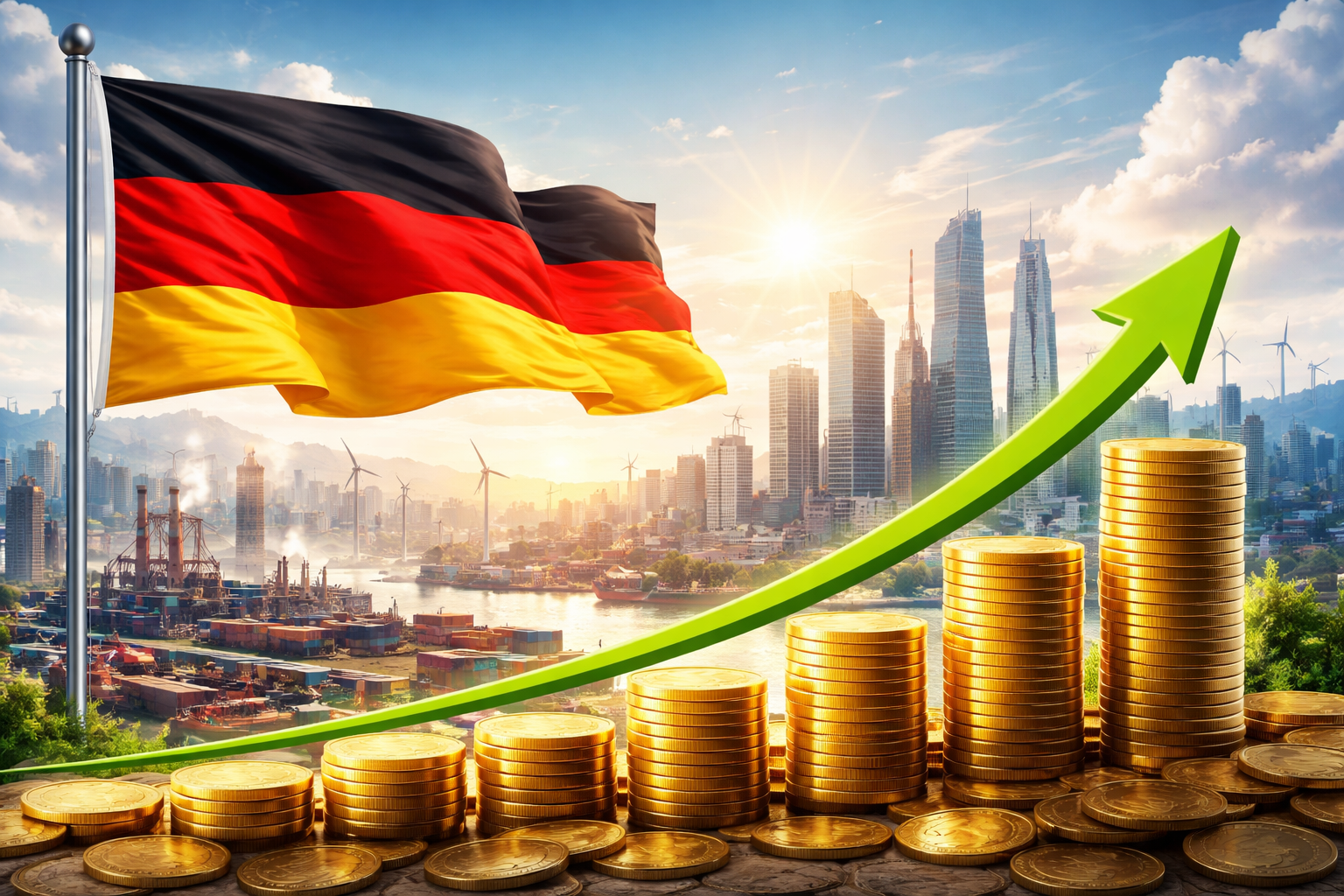
Germany’s economy is demonstrating early signs of recovery following several years of stagnation and challenges. Official figures indicate the country’s GDP expanded by 0.3% in the second quarter of 2026, surpassing expectations and building on previous quarterly gains. European economic think tanks now forecast growth rates exceeding 1.3% for the year, marking the strongest performance since 2022.
The increase in economic output corresponds with a rise in business confidence reflected by the Ifo business climate index, which hit its highest level in August in over a year. Analysts caution, however, that Germany still faces significant structural issues that could inhibit sustained growth.
Drivers of the Economic Upswing
The uptick in Germany’s economy comes despite persistent negative news such as Volkswagen’s downsizing and disruptions caused by record low water levels on major waterways like the Rhine and Danube. Another factor weighing on the economy is elevated energy prices linked to geopolitical tensions surrounding the war in Iran.
Notably, Germany’s exports and industrial production have been key contributors to growth. The closure of the Strait of Hormuz shifted some industrial orders from Asian suppliers to European and German manufacturers, particularly in energy-intensive sectors like chemicals. This rerouting of supply chains has helped firms increase their orders and production levels, with some sectors reporting foreign order growth as high as 2% year-on-year for July.
Government Role and Economic Policy
Analysts highlight government spending, especially on defense and infrastructure, as a significant factor supporting the economic rebound. Germany’s government is implementing a €500 billion infrastructure investment program alongside major defense budget increases and tax relief packages targeted at lower-income households. These stimulus measures are credited with improving corporate optimism and injecting momentum into the economy.
Persistent Challenges and Future Outlook
Despite the positive economic signals, domestic demand remains weak, with consumption and investment showing little to no growth. Structural problems persist, including international competitiveness challenges in industries such as automotive manufacturing and ongoing pressure from global rivals, notably China.
Experts emphasize that while the industrial core of Germany remains strong, the current recovery may be fragile unless significant structural reforms and investments in innovation and technology adoption occur. There is growing recognition among German businesses of the need to embrace digital transformation and new technologies to remain competitive, viewing such changes as essential for survival.
Overall, Germany is on track for an approximate 1.2% GDP growth in 2026, which compares favorably to several other major European economies. However, analysts warn that this growth should be seen as a rebound from low levels rather than a sustained economic boom, highlighting the importance of continued adaptation and structural change to secure long-term economic health.