
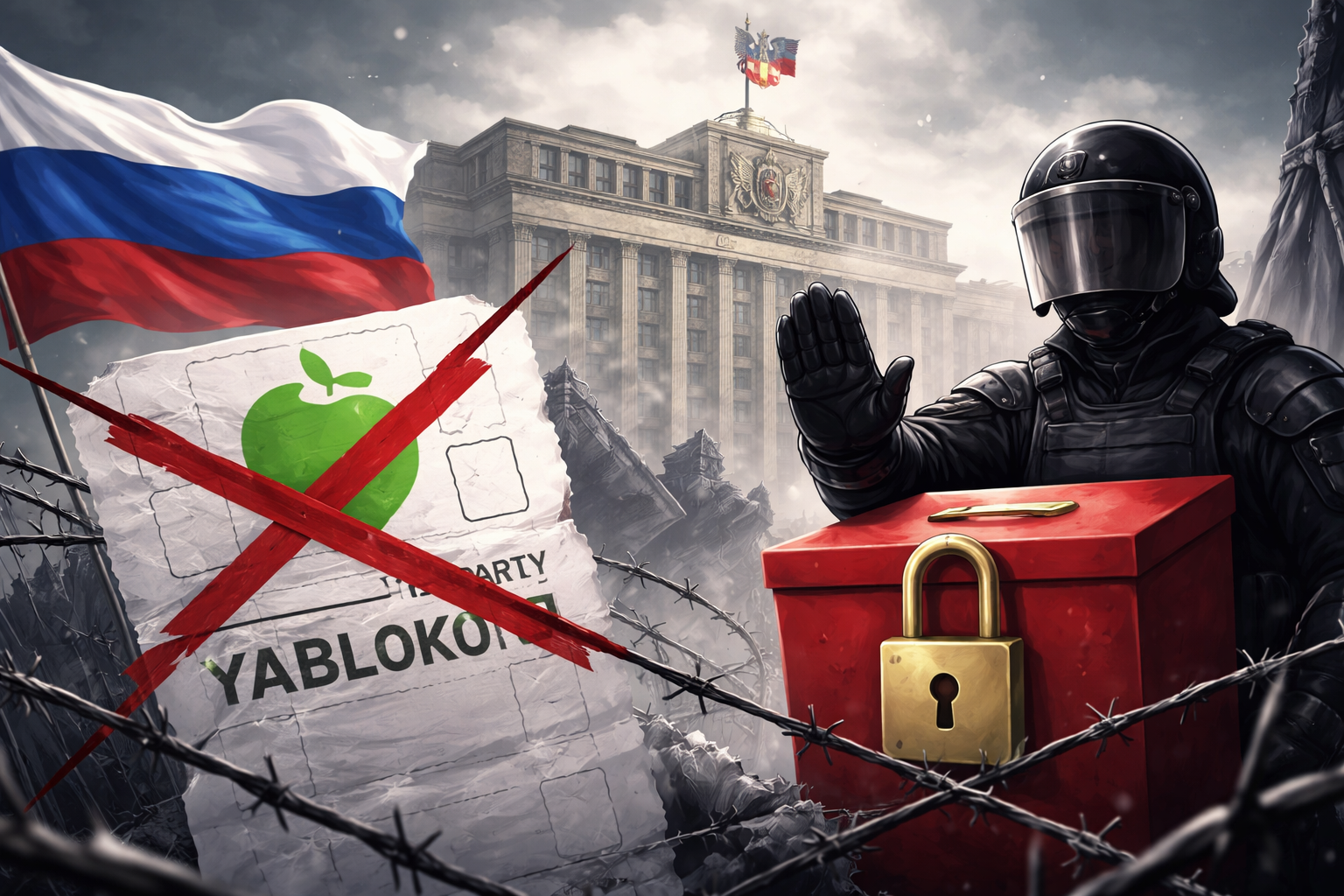
Russia’s Supreme Court has confirmed a ruling that disqualifies the Yabloko party from participating in the parliamentary elections scheduled for September 18 to 20. The decision follows a lawsuit initiated by the pro-Kremlin Rodina party accusing Yabloko of copyright infringement, extremism, and illegal foreign funding related to its election campaign materials.
The verdict was delivered by Judge Vyacheslav Kirillov, known for previously banning the Memorial human rights organization and rejecting complaints against prison conditions involving opposition figure Alexei Navalny. The ruling has sparked protests outside the courthouse, where supporters gathered to voice their backing of Yabloko and faced warnings of arrest and enlistment threats.
Nikolai Rybakov, Yabloko’s leader, declared the party would appeal, denying any legal violations. The ban raised questions about Kremlin motives and the political atmosphere in Russia ahead of the elections.
Allegations and Political Context Behind the Ban
The Rodina party accused Yabloko of copyright violations and extremist activities, including receiving illegal funding from abroad, allegations central to the legal case. Supporters and opposition figures, including Yulia Navalnaya, widow of Alexei Navalny, argue the ban reflects Kremlin fear of Yabloko’s anti-war platform and the growing visibility of dissent against the war in Ukraine.
Political analysts suggest the ban may stem from internal Kremlin power dynamics and underestimate the extent of anti-war sentiment in Russia. Some experts argue that the Kremlin initially planned to allow Yabloko’s participation to contrast pro-war parties and reveal opposition feelings but reversed course as the party gained support.
Impact on Election Monitoring and Public Sentiment
Banning Yabloko also complicates independent election monitoring, as the party is no longer permitted to send observers to polling stations. Experts point out that Yabloko had previously facilitated access for independent electoral observers, raising concerns about election transparency.
Concurrently, public opinion data indicates rising unease in Russia, with the highest levels of worry reported since the 2022 mobilization. Increased drone attacks, casualties, and rumors of further mobilization contribute to societal uncertainty. Analysts highlight that the Kremlin likely aims for a subdued election with low turnout, but current conditions suggest instability leading up to the vote.
Reactions From Party Leaders and Opposition Figures
Yabloko founders and leaders stress the political motivations behind the ban. Grigory Yavlinsky emphasized that excluding a party advocating for peace and freedom without solid grounds exposes systemic issues in Russian politics. Nikolai Rybakov reaffirmed the party’s commitment to challenge the decision legally and maintain its presence despite suppression.
Opposition activists and cultural figures living abroad have called for support of Yabloko, viewing the party as a vehicle for expressing widespread anti-war sentiment. Political activists acknowledge that while Yabloko’s election success was unlikely to end the war, its presence would have signaled significant dissent within Russia.