
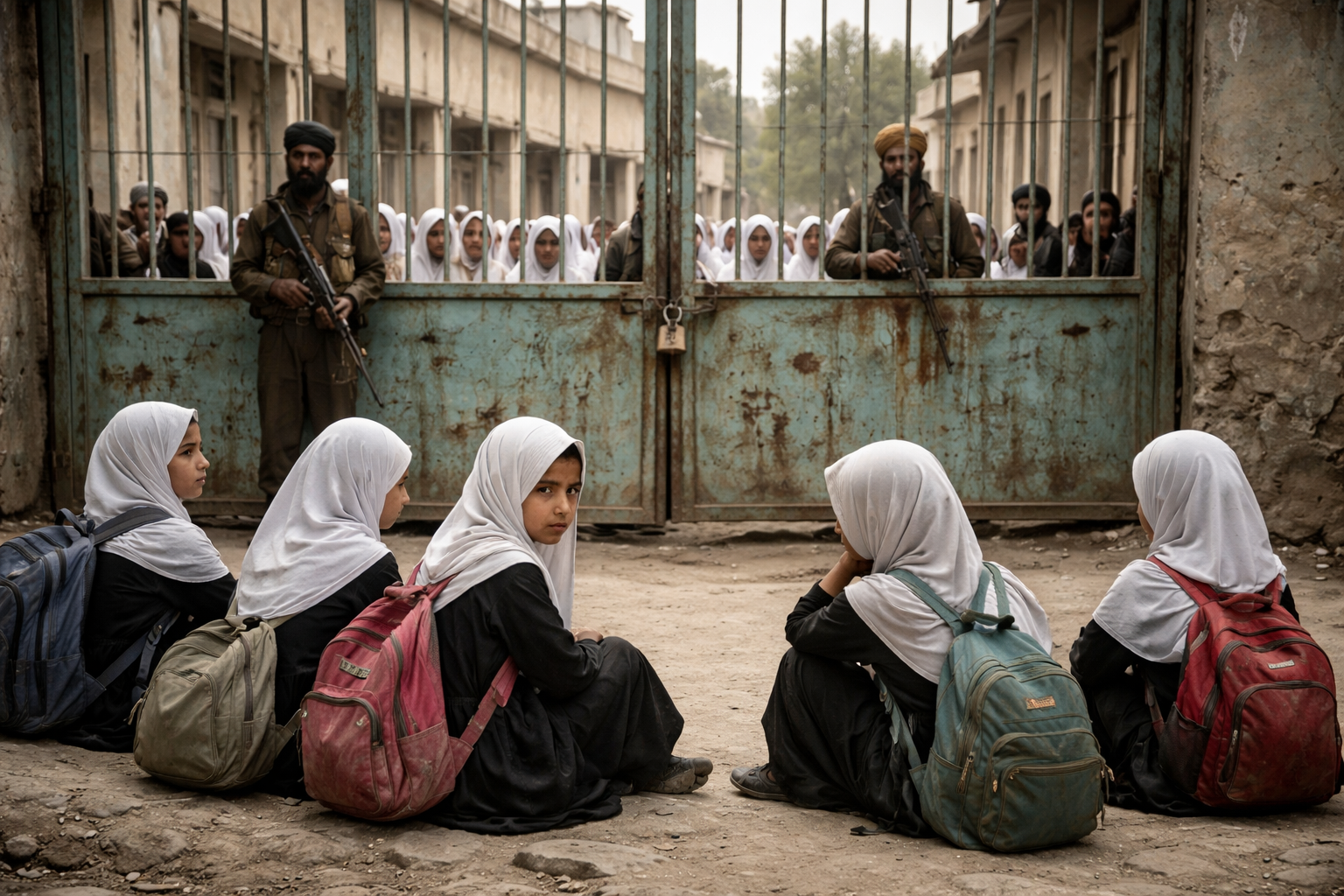
Approximately 2.4 million girls in Afghanistan have been denied access to secondary education since the Taliban regained control in 2021, UNESCO reported on Tuesday. This figure has increased by around 200,000 compared to last year and could reach nearly four million girls by 2030 if the current ban continues.
UNESCO’s program coordinator for education in emergencies, Hoda Jaberian, highlighted that Afghanistan remains the only country worldwide where girls and women are officially barred from secondary and higher education, describing the situation as nearly a complete interruption of an entire secondary school cycle.
Reasons Behind the Education Ban
The Taliban took power on August 15, 2021, following the withdrawal of US and NATO forces after two decades of conflict. While initially promising the international community that women would be allowed to continue their education, the regime shut secondary schools to girls in March 2022 and banned women from attending universities in December of the same year.
Taliban authorities have framed these restrictions as temporary and based on their interpretation of Islamic law and Afghan cultural norms. They assert that the issue is a domestic one. Restrictions also extend beyond education, limiting women’s employment, movement, and access to public spaces such as parks, gyms, and beauty salons. The United Nations has described this体系of restrictions as “gender apartheid.” Russia is currently the only country to formally recognize the Taliban administration.
Impact on Education and Society
UNESCO states the ban has reversed two decades of progress in girls’ education. In 2001, girls had very limited schooling access, but by 2021, nearly one million were enrolled in secondary education. The exclusion of women from secondary and higher education threatens to push around 600,000 women out of the workforce by 2066, potentially resulting in cumulative income losses estimated at $9.6 billion.
The ban also exacerbates a shortage of qualified female teachers, with a projected deficit of over 11,000 by 2030, as many have left Afghanistan or been barred from teaching. Some boys have been left with unqualified male teachers or no teachers at all due to restrictions on women teaching male students.
Broader Education Challenges in Afghanistan
Afghanistan’s education system faces critical challenges beyond the ban on girls. More than two million primary school children are out of school due to various reasons. Additionally, over 90% of 10-year-olds are unable to read a simple text, with a national literacy rate at 37%. Many schools suffer from overcrowding, lack of water, sanitation, or heating.
The education system is under increased strain from population movements, with over seven million people having been forced to return or have returned to Afghanistan since 2023. Natural disasters, including earthquakes and floods, have forced the closure of about 1,000 schools since 2021, further deepening the crisis.