

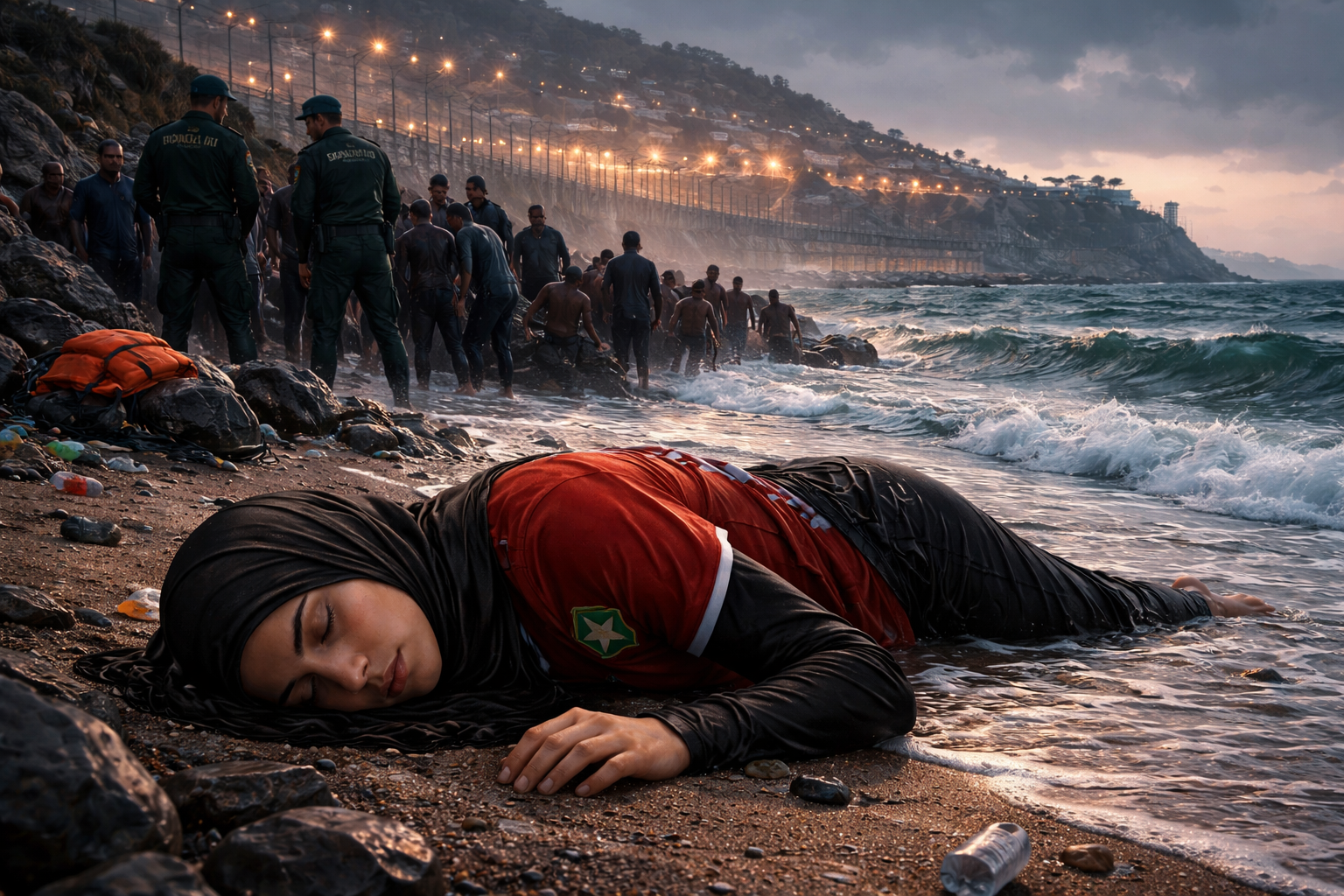
The heartbreaking story of Faten Ben Omar El Azizi, a Moroccan footballer who drowned the same day her Spanish visa was granted, amid a deadly mass crossing into Ceuta
Faten Ben Omar El Azizi was a 26-year-old Moroccan footballer whose dream was to reach Europe and advance her career while supporting her family. She had played for Maghreb Atlético Tetuán in Morocco’s regional league but struggled to make a living on her meagre football earnings.
On July 30, the day her mother was informed that Faten’s visa to Spain had been approved, Faten tragically drowned while attempting to swim from Morocco to the Spanish exclave of Ceuta. She was one of at least 141 people who died during an extraordinary, illegal mass crossing in that period.
This tragedy sheds light on the harsh realities facing many young Moroccans, battling unemployment and poverty while chasing hopes of a better future abroad, according to migrant rights group Caminando Fronteras and family accounts reported by media sources.
Faten’s Football Dreams and Harsh Realities in Morocco
Faten loved football deeply and trained passionately on Tuesdays and Thursdays near Tétouan, where she lived with her mother and family. Despite her commitment, she earned only about 260 dirham, equivalent to £21, when her team won, and nothing when they lost. This income was not enough to support her mother, siblings, and relatives. Her father had passed away when she was 12.
Alongside football, Faten worked in Tétouan’s oldest cemetery, cleaning graves and selling rayhan bouquets, a plant associated with blessings in Muslim funeral customs. Her mother, Jamilla, said her daughter dreamed of reaching Europe through football but the family could not financially support that ambition.
The Deadly Attempt to Reach Ceuta and Family Tragedy
On the morning Faten drowned, her mother received a call from an official notifying that Faten’s Spanish visa had been approved, instructing her to collect it at the consulate in Tangier. Jamilla was unaware that Faten had applied for a visa and did not understand why she attempted the perilous sea crossing spontaneously.
Family members recall Faten becoming unusually quiet and distant weeks before her death. After her disappearance, they searched overnight. A young man later informed them that Faten had hit her head during the crossing. The anguish intensified as Jamilla learned her eldest son had also crossed to Ceuta, and her 14-year-old daughter was believed to have reached there as well, leaving Jamilla feeling alone without her children.
Context of Youth Unemployment and National Priorities in Morocco
This tragedy unfolds in a context of high youth unemployment in Morocco, with nearly 40% of people aged 15 to 24 out of work last year and very low wages for those employed. The country is preparing to co-host the 2030 World Cup with Spain and Portugal, a project that has sparked debate over national spending priorities, as critics highlight underfunded healthcare and education budgets amid investments in expensive stadiums.
Simo, a 20-year-old who recently returned from attempting the Ceuta crossing, stated, “Like Faten, many of my friends and myself cannot find work in our country. It’s difficult to build a future here.”
The Broader Tragedy of Migration and Lost Lives
The deaths of at least 141 people trying to enter Ceuta last month, many under the age of 35, underline the desperation of thousands risking their lives for a chance at a better future. According to Caminando Fronteras, most deaths occurred either by drowning or being crushed at the land border.
Faten’s story symbolizes this broader human tragedy, where dreams collide with harsh realities, showcasing the urgent need for addressing youth unemployment and safer migration pathways in Morocco and beyond.