
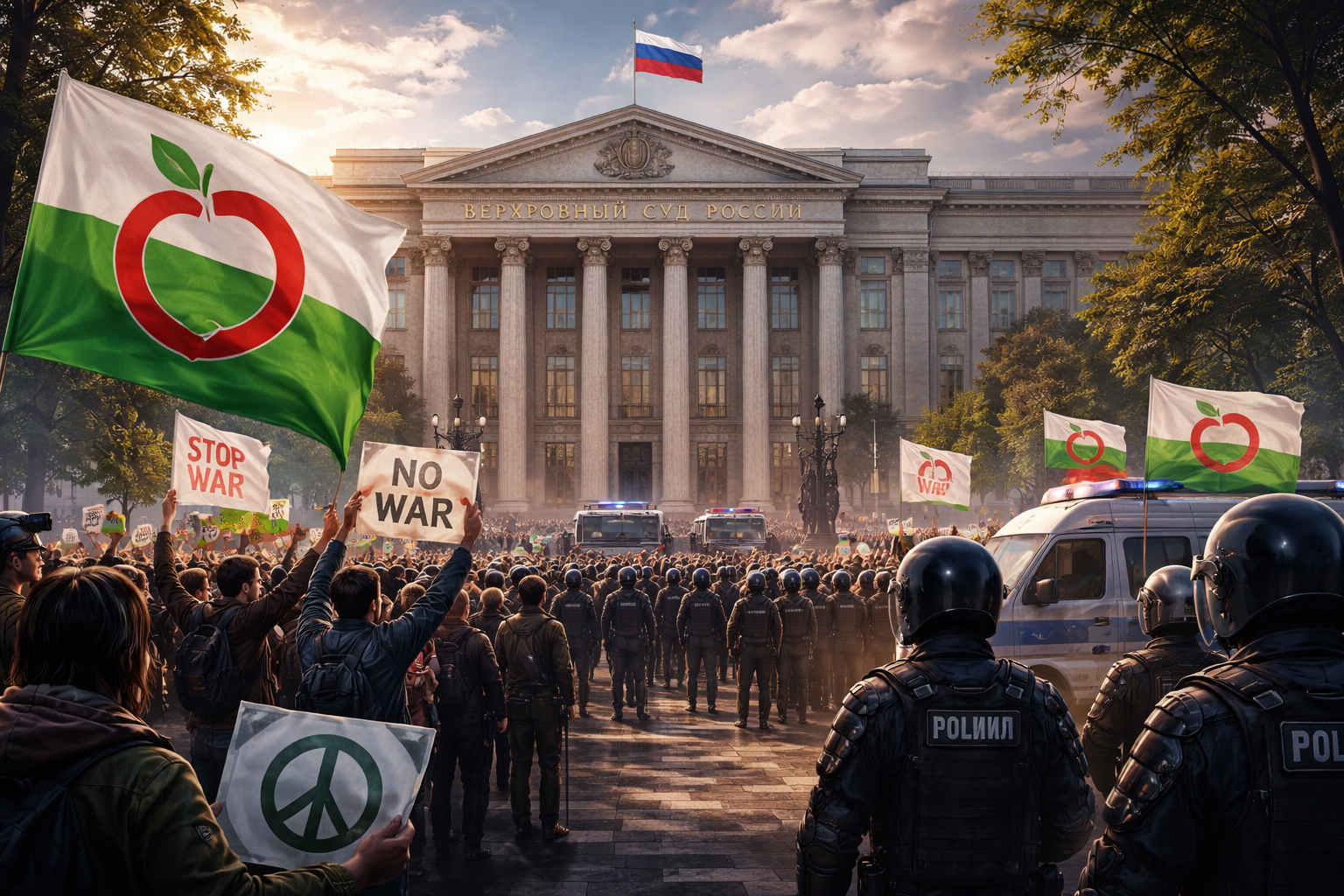
The Supreme Court of Russia ruled on Monday to disqualify the opposition party Yabloko from participating in the September parliamentary elections. The decision favors the nationalist pro-Kremlin Rodina (Motherland) party, which accused Yabloko of receiving undisclosed financial support from Western sources.
The court’s ruling effectively removes the only registered political force openly opposing Russia’s ongoing military operation in Ukraine from the ballot, limiting voters’ options to express disagreement with the Kremlin’s policies.
Yabloko’s leadership denied the accusations and criticized Rodina’s lack of evidence, vowing to appeal the ruling. Their exclusion signals further restrictions on political dissent in Russia amid tightened controls over anti-war voices.
Legal Justification and Impact on Opposition
Judge Vyacheslav Kirillov announced that the claims to annul Yabloko’s registration were upheld, barring them from contesting the State Duma elections scheduled for September. This decision eliminates any formal platform for voters opposing Russia’s four-and-a-half-year invasion of Ukraine, legally described as a “special military operation.”
Nikolay Rybakov, Yabloko’s leader, addressed supporters outside the court, emphasizing that the ban suppresses dialogue with citizens questioning the authorities and highlighted the party’s commitment to peace and stopping deaths. Yabloko remains the last liberal party still operating inside Russia, after many opposition figures have been jailed, exiled, or killed.
Political Context and Electoral Outlook
Once a significant liberal force, Yabloko has seen its political influence decline. It currently polls around 3 percent, below the 5 percent threshold required for parliamentary representation, and has not held a seat in the federal State Duma since 2003.
The ruling United Russia party, which supports President Vladimir Putin, has won every election since then and is anticipated to maintain control in the upcoming vote. Despite the crackdown on opposition, public support for the military operation has decreased, especially following intensified Ukrainian attacks on Russia’s energy and logistics infrastructure.
Opposition Challenges and Kremlin Crackdown
Yabloko has received support from several exiled opposition figures, including Yulia Navalnaya, widow of the late opposition leader Alexei Navalny. However, the Kremlin continues to suppress dissent through censorship, imprisonment, and pressure on activists and journalists. Many opposition members have fled Russia to avoid persecution.
The independent Levada Center reports that public backing for the military operation stands at about 66 percent, a decline since the conflict began in February 2022, indicative of growing public unease despite state controls.