UK Defense Officials Report a Significant Rise in Russian Naval Activity, Prompting Intensified Royal Navy Operations
The Royal Navy has significantly increased its efforts to monitor Russian naval vessels operating near United Kingdom waters, with patrols spending 21 days in July shadowing Russian warships. This marks a 25% increase in monitoring activities compared to last year, highlighting rising concerns over Russian maritime movements in strategically important sea areas, including the Dover Strait and the North Sea.
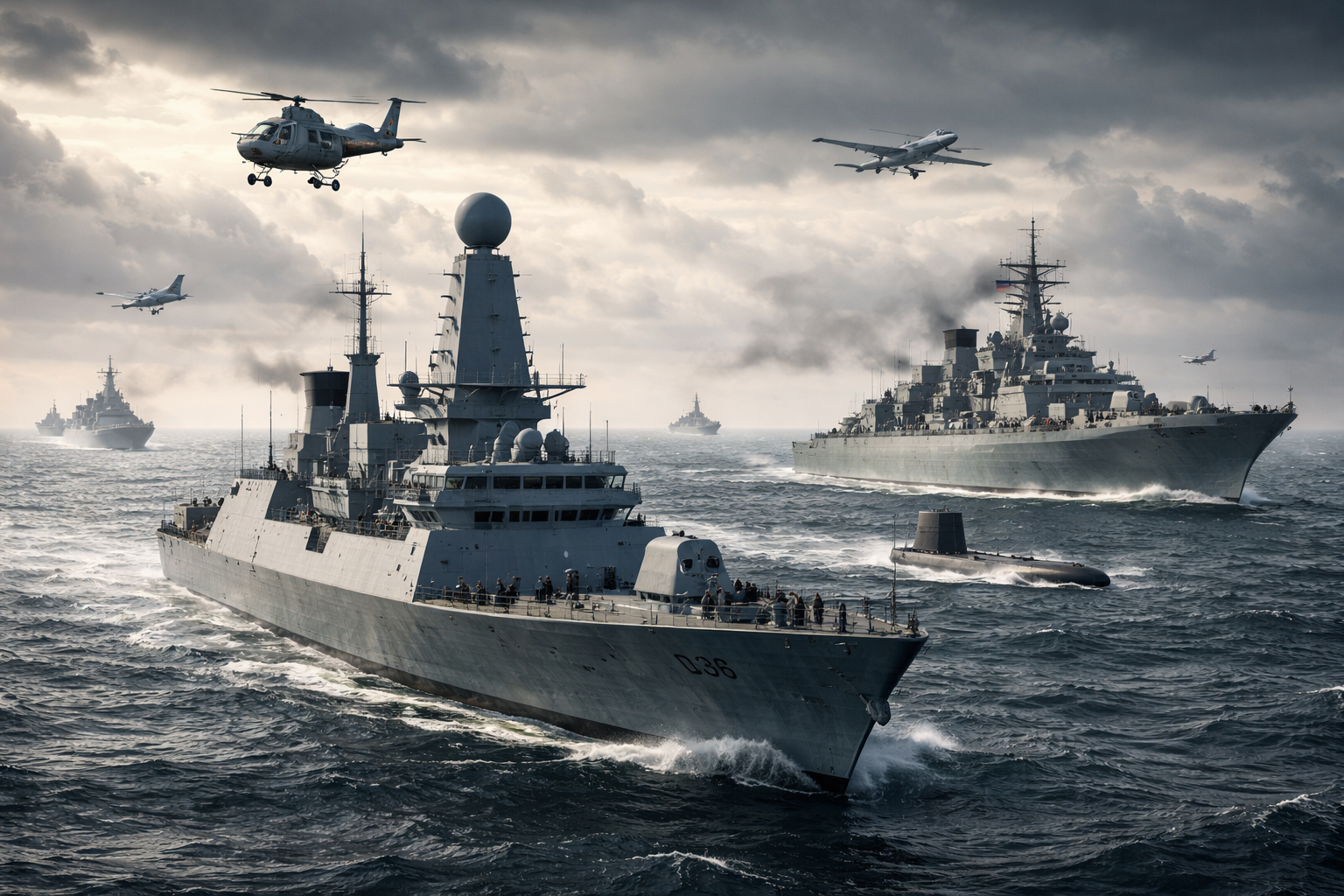
Enhanced Royal Navy deployments feature a combination of offshore patrol vessels and specialized aircraft, tasked with closely tracking Russian frigates and their escort tankers, known as the Kremlin’s “shadow fleet.” The move follows escalating tensions influenced by ongoing geopolitical conflicts and sanctions imposed on Russian energy exports.
Information compiled from the Ministry of Defence’s most recent reports outlines a steady growth in Russian naval deployments and outlines defensive measures taken by the UK and NATO allies to secure their maritime interests.
Intense Royal Navy Deployment in Strategic Maritime Zones
In July, the Royal Navy extensively deployed patrol vessels HMS Tyne, HMS Mersey, and HMS Severn along with air support from Wildcat helicopters of the 815 Naval Air Squadron and Merlin submarines-hunting aircraft. These forces actively monitored Russian frigates Neustrashimy and Admiral Grigorovich, which escort the Kremlin’s so-called “shadow fleet” of tankers, thought to be used for evading sanctions and funding ongoing conflicts like the war in Ukraine.
The Ministry of Defence revealed that from April 2025 to March 2026, Royal Navy vessels were activated 116 times to shadow 61 Russian warships and 28 merchant vessels near UK waters. This surveillance activity represents a 30% increase within two years, reflecting Moscow’s intensified maritime strategy.
Strategic Implications and UK Military Response
The rise in Russian naval activity coincides with notable UK military actions, including the seizure of the tanker Smyrtos by Royal Marines in June. This was the first direct boarding of a shadow fleet vessel by British forces, emphasizing the escalating UK defense posture in response to perceived threats.
Officials explained that Russia is using a considerable portion of its naval resources to guard its shadow fleet cargo, which impacts its operational capacity. The UK has retaliated with strict sanctions, targeting over 500 vessels, contributing to a 24% year-on-year reduction in Russia’s oil and gas revenues in 2025.
Continued Surveillance and NATO Collaboration
Beyond direct monitoring, HMS Tyne also tracked Russian frigate Neustrashimy during live-fire exercises near British and French waters on July 20. Furthermore, the frigate HMS Somerset has been deployed in the North Atlantic for a four-month NATO assignment focused on anti-submarine operations, supplemented by Navy Fleet Air Arm helicopters.
Cmdr Matt Millyard, Somerset’s commanding officer, emphasized, “This deployment demonstrates exactly what the Royal Navy exists to do: protect the UK and our allies from wherever our interests are threatened. I am immensely proud of every single member of the ship’s company for what we have achieved over the past four months.”
The increase in Russian naval activity around UK waters remains a critical security concern for British defense planners as they continue robust maritime vigilance to counter Moscow’s strategic ambitions, according to Ministry of Defence data and statements.