

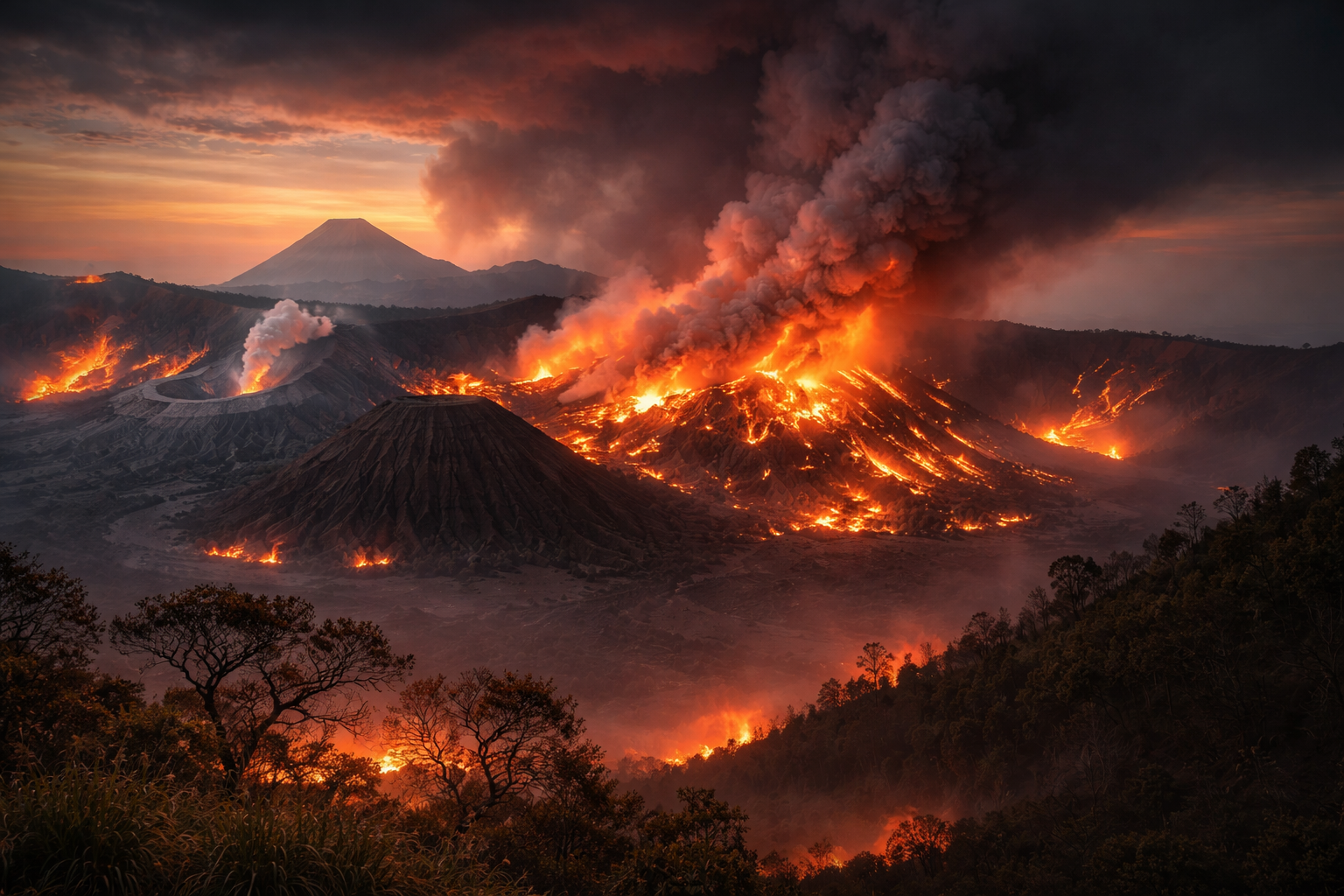
Authorities in Indonesia have closed the Bromo Tengger Semeru National Park in East Java until further notice following a wildfire that has burned approximately 176 hectares on Mount Bromo since it started Monday. The fire is one of several currently active across the country.
Hundreds of firefighters, park rangers, police, soldiers, and volunteers are involved in efforts to contain the blaze at one of Indonesia’s most visited tourist destinations, according to information released by officials.
Firefighting Efforts and Challenges
Helicopters and drones are being deployed to assist firefighting from the air, while crews on the ground work to create firebreaks. Officials describe the operation as challenging due to high winds, rough terrain, and steep volcanic slopes that limit access to many affected areas.
These conditions have made aerial operations critical to reach zones that cannot be sufficiently accessed by land teams.
Causes and Environmental Conditions
The Indonesia Meteorological, Climatological and Geophysical Agency has attributed the fire’s spread to dry conditions and seasonal winds coming from Australia. The fire reportedly began during land clearing work, a common practice in the region where plantation owners and farmers sometimes ignite fires illegally to prepare land for planting.
Experts note that the current El Nino weather pattern combined with these dry winds has increased the region’s vulnerability to wildfires and drought this year.
Comparative Impact and Context
Indonesia has lost over 107,000 hectares to wildfires in the first half of 2026, which is more than double the area destroyed by wildfires in 2023, the year when the previous El Nino pattern commenced.
This intensification underscores growing environmental challenges related to weather patterns and land management practices in the country.