

UK Home Office admits error in granting settled status, putting family residency rights in jeopardy for EU nationals after Brexit
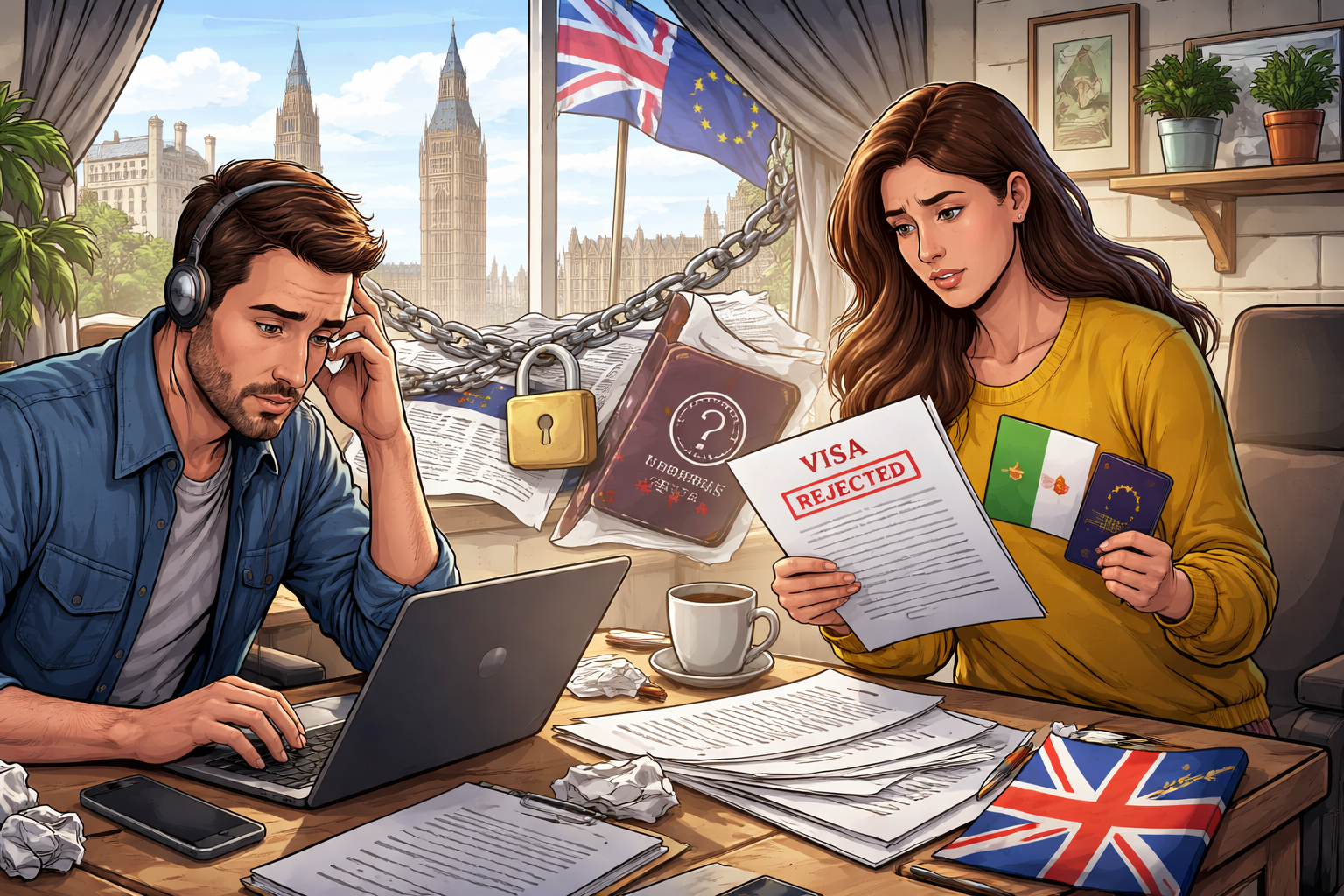
An Italian engineer living in London since 2018 faces an unexpected challenge after the UK Home Office declared his settled status under the EU settlement scheme was granted in error. This decision has directly impacted his Brazilian wife’s right to remain in the UK as a family member. The case highlights concerns over how the Home Office is reviewing residency status for EU nationals who have dual citizenship.
The engineer, identified as Fabio, came to the UK initially to complete his doctorate and built a career working in energy and climate change sectors. Despite following all rules and being granted permanent residency after five years, officials are now requiring him to prove his Italian citizenship before the Brexit deadline, which he says is unreasonable. His wife, who has been living in the UK with him since his arrival, now faces losing her right to stay.
This incident comes amid growing scrutiny of the Home Office’s handling of EU settlement scheme applications, raising concerns about family separation and legal fairness for dual nationals. According to information disclosed by news reports, Fabio is among at least 100 people contacted by authorities regarding similar “errors” in residency status awards.
Home Office decision and impact on residency rights
The Home Office notified Fabio that the evidence he provided to prove his Italian citizenship was considered insufficient, and therefore his settled status was granted by mistake. The department stated he is no longer a “relevant EEA citizen,” which means he loses the right to sponsor his wife to remain in the UK. Despite this, officials have said his own settled status would not be revoked, but the unintended consequence leaves his family’s future in uncertainty.
Legal and expert perspectives on the Home Office’s approach
Catherine Barnard, professor of EU law at the University of Cambridge, expressed astonishment at the case, pointing out it appears to create a two-tier system among EU nationals in the UK. She noted, “The Home Office cannot punish him by saying he has only second-class rights and, in particular, that he doesn’t have family rights so long as he retains settled status.” She referenced Article 13(4) of Chapter Two of the EU-UK Withdrawal Agreement, which protects residency rights without additional limitations or conditions.
Advocacy groups and legal experts warn this policy disproportionately affects families. Monique Hawkins from the3million organization emphasized the risks of a “cliff-edge loss of their rights” without proportionality assessments mandated by the Withdrawal Agreement. Solicitor Mala Savjani highlighted the complexity and apparent targeting of EU nationals with dual citizenship, questioning the government’s motives and legal interpretations.
Official responses and broader implications
The Home Office has refrained from commenting on individual cases but stated that withdrawing status from those incorrectly granted EU settlement scheme status does not violate the Withdrawal Agreement. Their position is that those benefiting from such status must provide evidence meeting the established rules to maintain residency rights.
The Independent Monitoring Authority, responsible for upholding the Withdrawal Agreement, has expressed concerns that these retrospective reviews and discretionary decisions might contradict legal commitments. They have encouraged EU citizens facing difficulties to get in touch for support.
Fabio’s case underscores the uncertainty faced by many EU nationals living lawfully in the UK post-Brexit, especially those with dual nationalities. The ongoing reviews by the Home Office threaten family unity and long-term life plans for residents who have followed official procedures and contributed to UK society.