
Spain’s shelved octopus farming plan reignites ethical and environmental debates about cultivating one of the world’s most intelligent marine animals
In 2022, Spain’s largest fisheries company, Nueva Pescanova, announced an ambitious €65 million investment to build the world’s first industrial octopus farm and processing plant near Las Palmas in the Canary Islands. The company predicted producing 3,000 tonnes of octopus annually by 2025, aiming to meet growing global demand for this high-protein seafood.
Despite this promise, years of controversy surrounded the project due to the octopus’s reputed intelligence and the serious ethical and practical challenges of farming such a complex wild animal. At the end of July 2026, Nueva Pescanova unexpectedly canceled its plans, citing “business and regulatory” reasons, leaving activists and scientists reflecting on the future of octopus farming.
This article explores why farming octopuses remains a slippery challenge, the sustainability potential of octopus meat, and the growing ethical concerns associated with capturing and farming these sentient creatures, based on information published by The Guardian.
Why Farming Octopus Has Proven Nearly Impossible
Octopuses are notoriously difficult to farm, primarily because their larvae spend around 20 days floating in open water before settling to the sea bed. This delicate life stage makes captive breeding highly unstable. Marine biologist Ian Gleadall, who has researched octopuses for 50 years, explains that hatchlings are extremely fragile, and any misstep in their development generally results in high mortality.
Moreover, octopuses have a finicky diet. While fish paste is sometimes offered as feed, these creatures quickly reject monotonous food sources, refusing to eat the same thing day after day. Gleadall notes, “Even if you could solve the feed problem, you’d probably spend more on feed than the octopus was worth on the market.” This makes commercial farming economically unviable.
Ethical Concerns Fuel Opposition to Octopus Farming
Octopuses are exceptional among sea life, possessing nine brains and complex behaviors that suggest sentience. Author Richard Schweid describes octopuses as having a mind, a trait more commonly associated with higher mammals like dogs and primates.
The Oscar-winning documentary My Octopus Teacher popularized this idea by showcasing the emotional, reciprocal relationship between a human and a wild octopus. This reinforced public empathy, making the idea of confining such intelligent, solitary, and antisocial animals to farms deeply unpalatable.
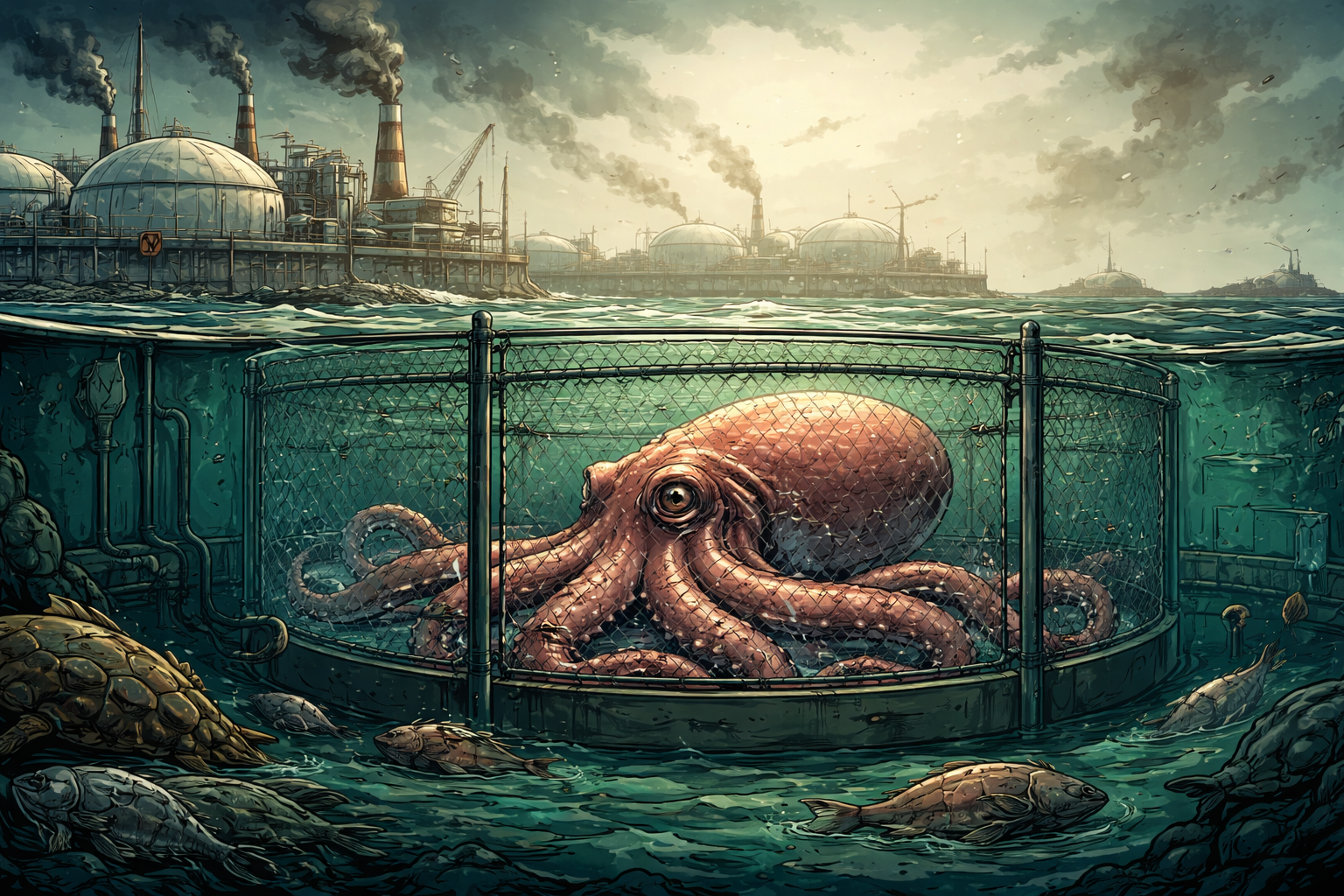
Charlotte Reid from Compassion in World Farming emphasizes, “An octopus is a highly intelligent, naturally solitary wild animal. These are wild animals and they belong in the wild, not these underwater prisons.” Spain’s animal rights party Pacma hailed the cancellation as a victory driven by social, scientific, and political pressure.
The Future of Octopus Consumption and Sustainability
Despite farming setbacks, global octopus consumption remains high. The UN’s Food and Agriculture Organization estimates 370,000 tonnes are caught annually, mostly from Morocco and Mauritania. China, Japan, and Spain—where almost 1 kilogram per person is consumed yearly—are key markets. Climate change is shifting octopus habitats, with places like the UK recently experiencing the largest octopus bloom since 1950.
Octopuses grow quickly, have short lifespans, and offer low-fat, high-protein meat. Schweid highlights, “The conversion rate of what an octopus eats into a high-protein, low-fat meat is much better than any land-based livestock.” This suggests octopus farming could become a more environmentally sustainable alternative to beef or poultry, especially as temperatures rise worldwide.
For now, however, the practical difficulties and ethical debates surrounding octopus farming ensure it remains a controversial and unresolved topic. With no successful large-scale octopus farm yet established, the debate continues between meeting demand sustainably and respecting the intelligence and welfare of these extraordinary marine creatures.