

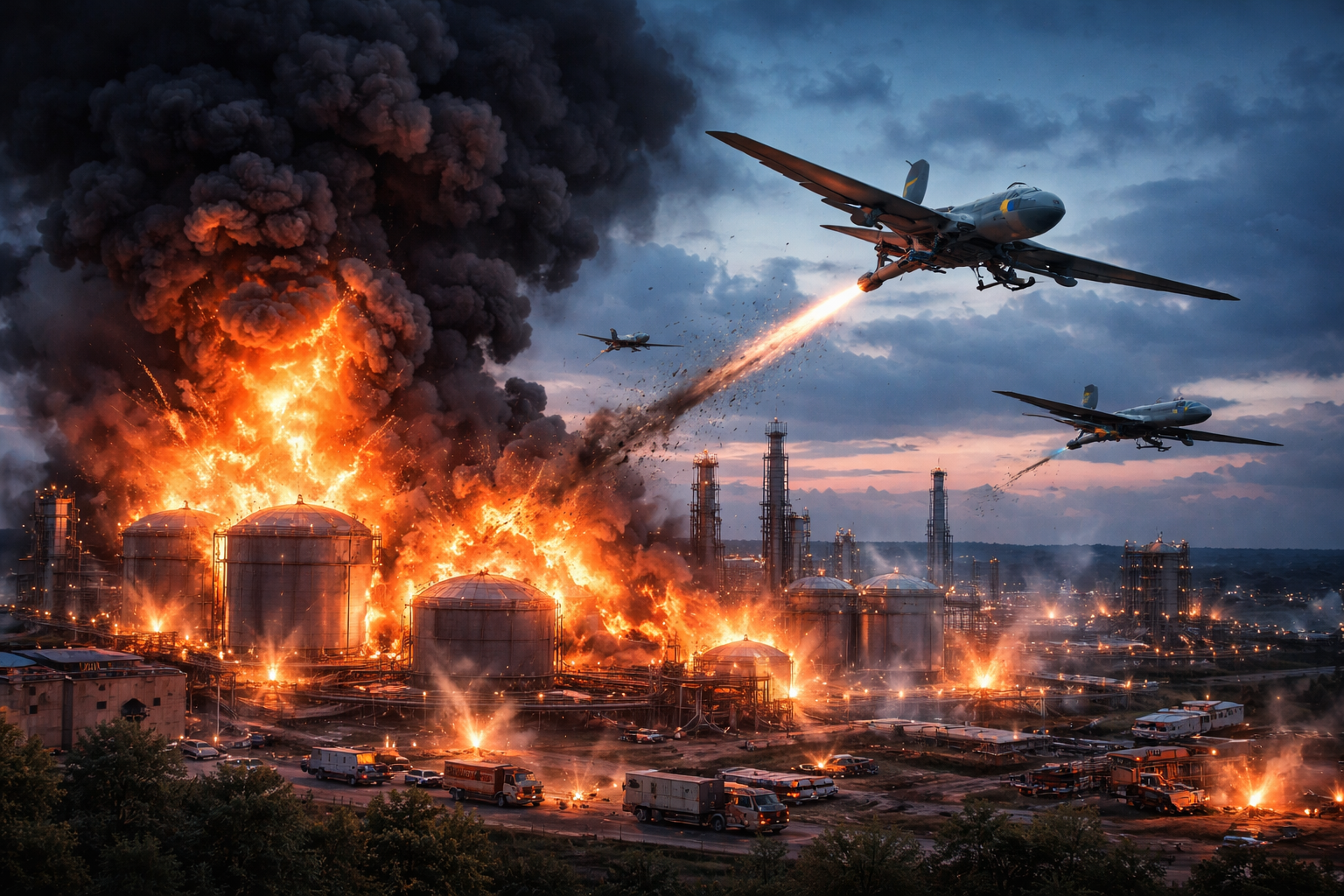
Ukraine escalates drone attacks deep inside Russia, killing at least 13 in strike on major Taneco oil refinery 750 miles from the border
A recent Ukrainian drone strike has struck the Taneco oil refinery in Nizhnekamsk, Russia, killing at least 13 people and marking one of the deadliest Ukrainian attacks on Russian soil since the 2022 full-scale invasion. The strike targeted one of Russia’s largest and most advanced oil refineries located about 750 miles from the Ukrainian border, signaling Kyiv’s expanding reach with long-range attacks on critical industrial infrastructure.
The attack underlines Ukraine’s intensified campaign to weaken Russia’s military capabilities and economy by hitting strategic assets far from frontline zones, according to Ukrainian military statements and regional Russian officials. Following the strike, local authorities declared a day of mourning, while Moscow launched a criminal terrorism investigation.
As Kyiv vows to continue its “long-range sanctions” through military means, the impact on Russia’s oil production and export capabilities grows, highlighting a new phase in the ongoing conflict. This article details the latest developments and implications of Ukraine’s drone strikes deep inside Russia. All information is sourced from recent reports by international news outlets and official statements.
Details of the drone strike and casualties
The drone attack targeted the Taneco refinery situated in Nizhnekamsk, a city within Russia’s Tatarstan region about 1,200 kilometers from the Ukrainian border. According to the mayor and Rustam Minnikhanov, the head of Tatarstan, the strike hit an industrial zone including a hostel where nine people were killed. The Uzbek consulate confirmed that seven victims were Uzbek citizens.
Video footage showed plumes of black smoke rising from the refinery and Ukrainian drones flying over the city’s Soviet-era housing blocks. Minnikhanov released images of the damaged building and labeled the event a tragedy. Russian prosecutors opened an investigation, treating the strike as an act of terrorism.
Strategic significance of Taneco refinery and industrial targets
Taneco is one of Russia’s largest and technologically advanced refineries owned by Tatneft, processing crude oil into fuels and petrochemical products. The refinery’s strategic importance lies in its contribution to Russia’s oil export infrastructure, a critical revenue source for Moscow’s military operations.
Kyiv previously bombed this area in June as part of its broader campaign. Ukrainian officials said their goal is to degrade Russia’s military-industrial potential by repeatedly targeting oil refineries, infrastructure, and transport routes deep inside Russian territory.
Escalation of Ukraine’s long-range drone campaign
Ukraine’s armed forces have increasingly launched drone and missile strikes far from the frontlines, with targets in Siberia and western Russian regions like Kursk and Bryansk. The southern Black Sea coastline and Russian industrial hubs have also been hit, affecting oil tankers, warehouses, and energy facilities.
Ukrainian President Volodymyr Zelenskyy described these remote strikes as “entirely justified” retaliation against Russian attacks on Ukrainian cities. He emphasized that Russia’s war will increasingly affect its own population as Kyiv targets critical military and economic assets. Ukraine claims to be outpacing Russian air defenses, clearing pathways for continued drone attacks.
Broader conflict and security impacts
Beyond the drone strike in Nizhnekamsk, the conflict sees ongoing violence in eastern Ukraine, with shelling causing civilian casualties near Kharkiv. Power outages have been reported in Russia’s southern port cities following damage to energy infrastructure.
Separately, Sweden’s security service recently dismantled a Russian espionage operation aimed at influencing Nordic and EU decision-making, reflecting wider tensions and espionage associated with the conflict. This complex picture demonstrates the multidimensional nature of the war, combining military, economic, and intelligence fronts.
As the war enters its third year, Ukraine’s drone strikes on key Russian industrial sites underscore the strategic shift towards targeting economic lifelines and prompting costly damage deep inside Russia itself.