Ukraine intensifies long-range drone attacks against Russia, targeting refineries and key logistic hubs amid escalating conflict and strategic challenges
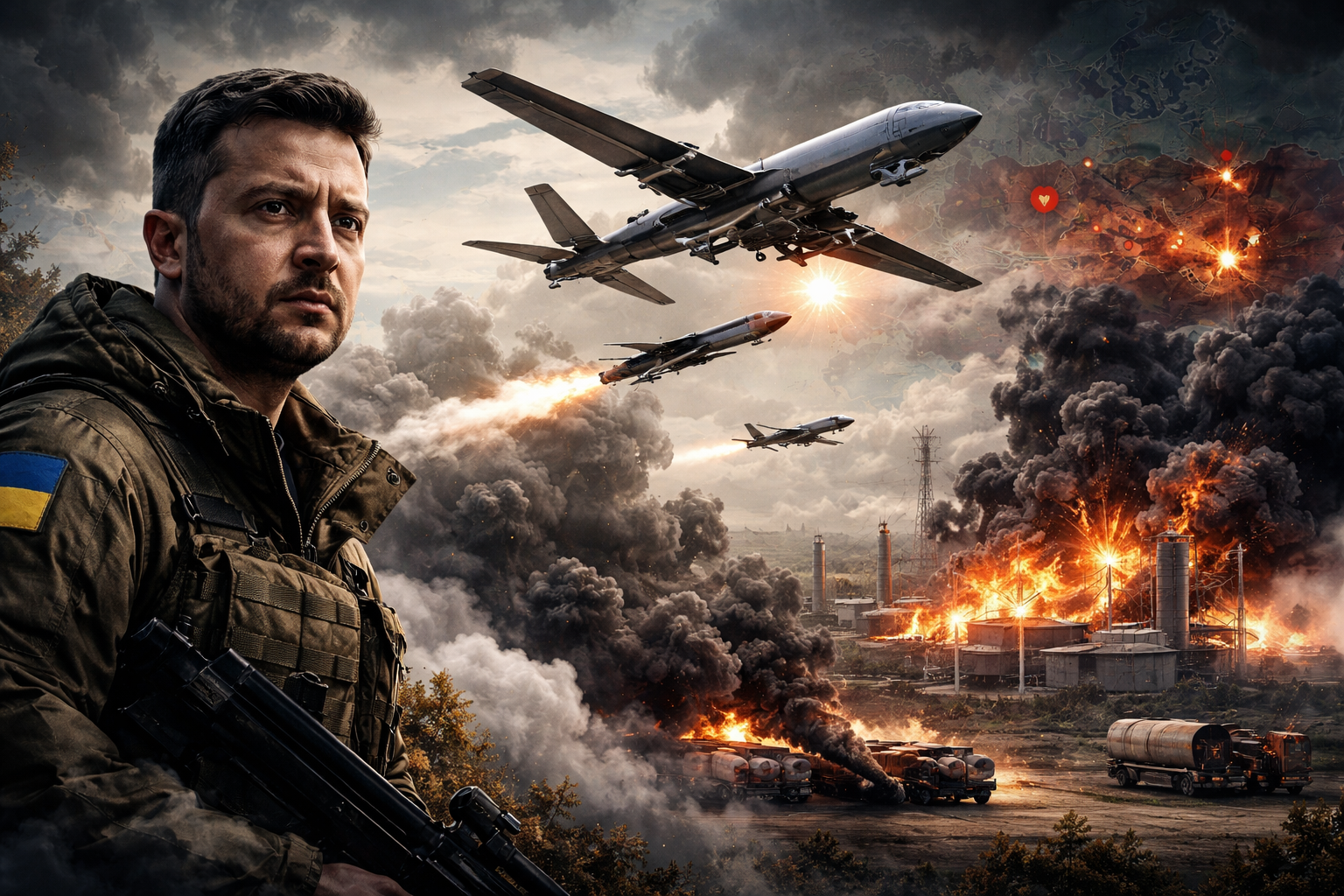
The war between Ukraine and Russia continues to deepen with President Volodymyr Zelenskyy ordering a significant increase in long-range drone strikes on Russian territory. The Ukrainian military aims to boost its daily drone attacks from around 300 to 1,000, signaling an intensified offensive effort.
This escalation follows repeated drone strikes that have severely damaged Russian gasoline production, dropping to approximately 70% of domestic consumption by the end of August. Key refineries in important regions such as Perm, Nizhny Novgorod, and Yaroslavl have been forced to halt operations after recent aerial attacks.
Meanwhile, Ukraine faces significant logistical challenges at home as Russian strikes destroy about 90% of food logistics operated by retail chains, threatening the country’s fragile economy. Despite the ongoing pressures, Ukrainian officials express confidence in their food and energy reserves as they prepare for the winter season. These developments highlight the multifaceted impact of the conflict on military, economic, and civilian infrastructure, according to information compiled from Reuters and Ukrinform.
Zelenskyy’s order to triple drone strikes marks a strategic escalation
In his Friday evening address, President Zelenskyy emphasized the need to increase the number of drone strikes on Russian territory. He declared, “There needs to be more: there is a concrete goal, and we will fulfill this task.” This move is part of Ukraine’s efforts to disrupt Russian military and industrial capabilities by targeting energy infrastructure and supply chains. The more frequent and precise strikes aim to degrade Russia’s ability to sustain its war effort, especially given the losses Russia is facing on the battlefield.
Russian forces reportedly lose approximately 6,000 more troops each month than they can recruit, despite conscription efforts bringing in about 1,000 new recruits daily, according to western officials. The imbalance between losses and replacements is straining Russian military capacity.
Drone attacks severely disrupt Russian gasoline production and logistics
The drone strikes have notably hit Russian fuel production hard. Two industry sources told Reuters that gasoline production fell to around 70% of what is needed to meet Russia’s domestic demand by late August. The attacks have targeted critical refineries, forcing many to suspend operations during August after a brief easing of fuel sales restrictions in late July.
Alongside fuel disruption, the recent Russian air attacks have devastated Ukraine’s domestic food supply logistics. Kyiv’s agricultural minister, Taras Vysotskyi, told reporters, “Approximately 90% of food logistics operated by retail chains have been destroyed, but that doesn’t mean Ukrainians will be left without food.” The Ukrainian government continues to manage the challenges to avoid civilian shortages despite the damage inflicted by Russian strikes on warehouses, supermarkets, and postal services.
Ukraine prepares for winter amid energy and agricultural challenges
Ukraine has built up gas reserves to face the winter, with energy minister Denys Shmyhal confirming that the country stored about 14.6 billion cubic meters of natural gas in underground facilities. These stocks are intended to cover basic needs during the coming cold season, giving Ukraine strategic resilience against ongoing attacks on infrastructure.
Meanwhile, in Russia’s Rostov region, authorities declared a state of emergency after port closures and disrupted navigation in the Azov-Black Sea basin caused significant agricultural product accumulation at farms. The regional government announced an emergency response via Telegram without further detail.
Additional developments: political shifts and nuclear safety concerns
Ukraine’s former defense minister Mykhailo Fedorov has joined Italy’s Ministry of Defence as an innovation adviser. Fedorov was dismissed from his Ukrainian post in July following reform attempts that created political tensions.
Moreover, the UN nuclear watchdog, the International Atomic Energy Agency, reported three drone incidents at the Russian-held Zaporizhzhia nuclear plant in southeastern Ukraine earlier this week. Although two plant employees were injured, radiation levels remained normal and no further damage was reported.
Russian drones continue striking Ukraine’s Kyiv region, damaging residential buildings, warehouses, and vehicles. These persistent attacks contribute to the ongoing humanitarian and economic strain within Ukraine’s critical urban areas.