

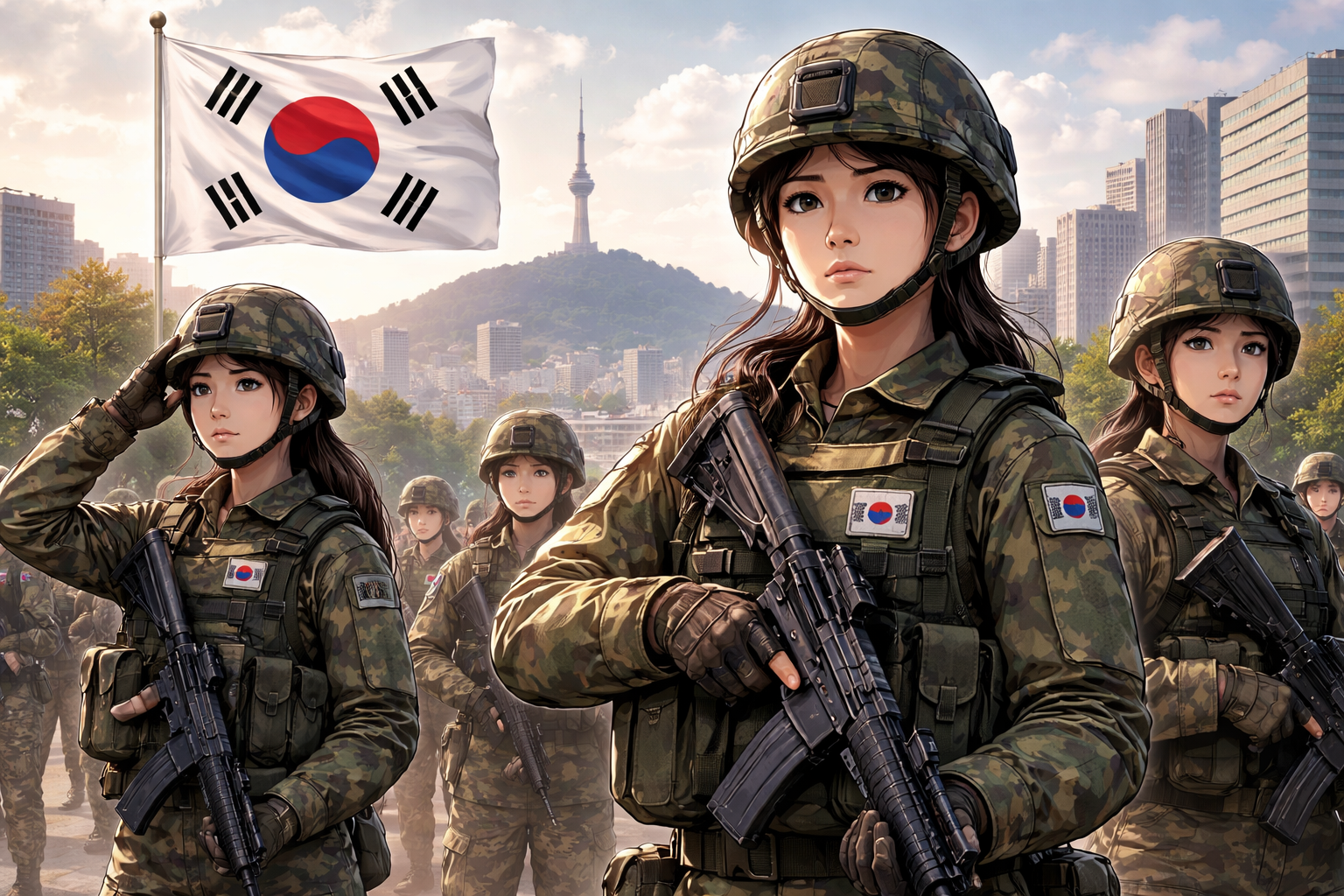
South Korea is witnessing a significant shift in public opinion as nearly 60% of its population now favors mandatory military service for women alongside men. This change emerges amid concerns over a declining birth rate, shrinking numbers of military recruits, and growing demands for gender equality in civic duties, according to a recent survey by the Reform Institute.
The debate surrounding women’s conscription has long been sensitive in South Korea, where military service has traditionally been compulsory only for men. However, evolving societal expectations and the modernization of military roles that rely less on physical strength are driving renewed discussion ahead of a planned national defense reform this autumn.
Public Opinion and Demographic Challenges
The survey found that 59.6% of respondents support changing the law to require women to complete national service, while 34% oppose it. Support was highest among young men in their 20s and 30s, with 71.7% in favor. Women across all age groups showed a 54.5% approval rate.
Currently, South Korean men serve 18 to 21 months of mandatory duty and may be recalled during national emergencies. However, the Defense Ministry reports a steep decline in eligible male conscripts—from about 332,000 in 2019 to 257,000 in 2022, with projections of only 120,000 by 2043—highlighting the urgency of defense system reforms.
Impact of Traditional Gender Roles and Gender Equality Debate
Experts note that South Korea’s male-centered conscription system is closely tied to traditional expectations, where men defend the country while women focus on childbirth and childcare. Professor Hyobin Lee of Sogang University explained this historical division and emphasized increasing societal discourse about gender equality, especially among younger men questioning the fairness of military obligations.
Lee also highlighted concerns that mandatory service could disproportionately burden women, who continue to bear primary responsibilities for caregiving and may face career interruptions after childbirth. She warned that compulsory conscription might exacerbate challenges related to the country’s already low birth rate by delaying or discouraging marriage and childbearing.
Modernization and Alternative Defense Strategies
Alongside social considerations, the military itself is transforming, placing greater emphasis on technology like drones, cyber operations, and communications systems, which require less physical strength. Some voices oppose conscripting women, advocating instead for increased investment in advanced military technologies.
Song Young-Chae, a human rights activist and former infantry soldier, expressed opposition to mandatory women’s conscription, arguing the defense obligation traditionally rests with men and suggesting a focus on technological solutions to border security.
Prospects for Policy Reform
The South Korean government established a task force in 2025 to revise its defense plan, including troop modernization and reviewing conscription policies enacted in the 1950s. Military Manpower Commissioner Hong So-young acknowledged a looming “demographic cliff” and the need for fundamental reforms such as reducing service exemptions and including naturalized foreign-born citizens in conscription but did not comment specifically on women’s mandatory service.
This debate reflects wider societal changes as South Korea balances security needs, demographic shifts, and evolving views on gender roles.