
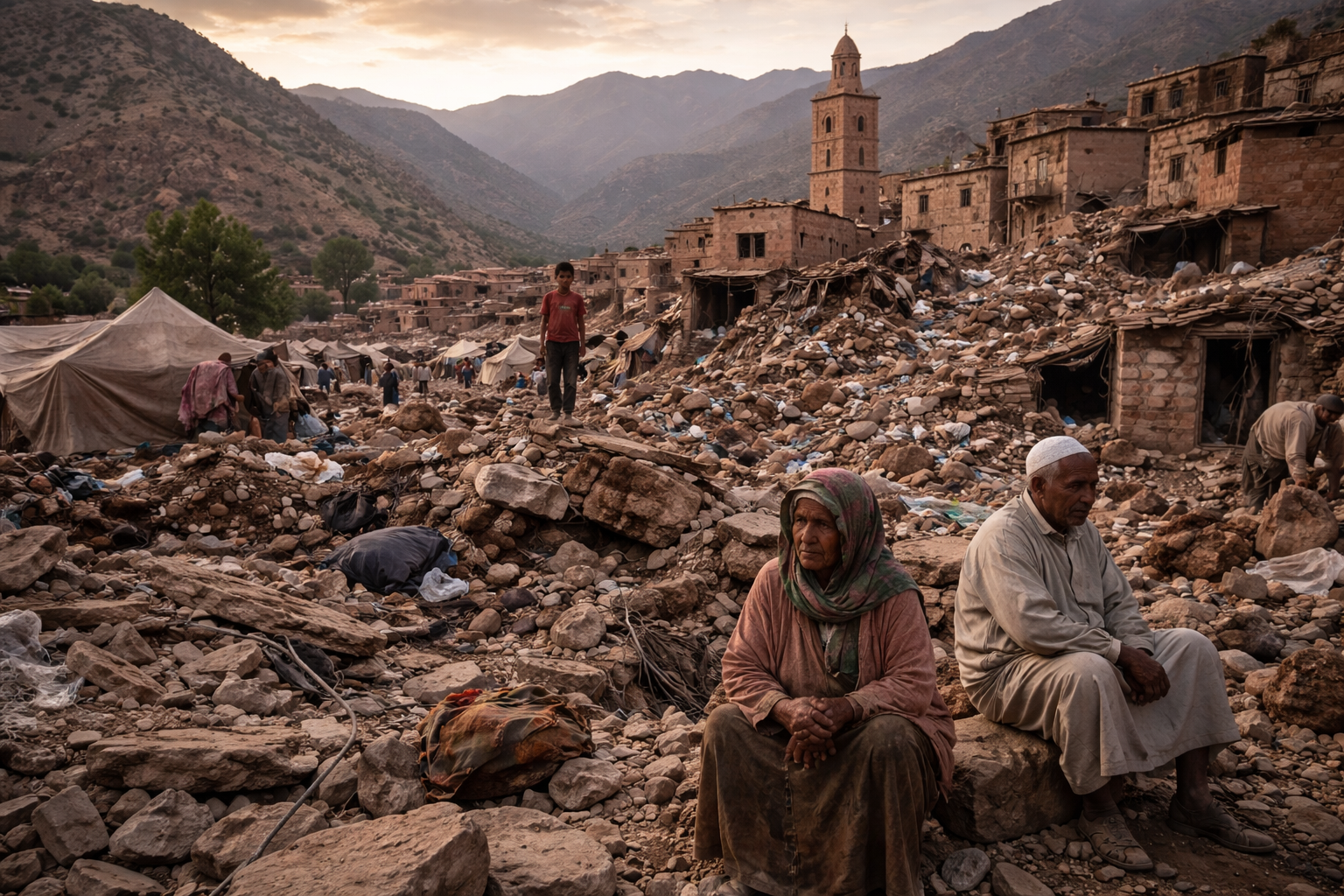
On September 8, 2023, a powerful earthquake devastated the Al Haouz region in Morocco, killing over 2,900 people and injuring more than 5,500. Nearly three years later, reconstruction efforts continue, but many survivors still face uncertainty and lack of assistance.
While some communities, like the village of Ighermane near Marrakech, have seen substantial rebuilding, others—especially in the hardest-hit town of Azgour—struggle with incomplete recoveries and bureaucratic obstacles that prevent families from receiving aid.
Mixed Progress in Rebuilding Efforts
In Ighermane, approximately 90% of homes have been rebuilt, aided by state support combined with residents’ own contributions. Mohamed Ait Belaid, a 72-year-old earthquake survivor, moved from living in a tent to a new, albeit smaller, house with partial government funding and personal savings. He said he felt peace knowing his family was healthy and sheltered.
By contrast, near Azgour, villagers like Larbi Ait Jelloulat still confront piles of rubble where once stood their homes. Jelloulat and many others remain excluded from aid due to bureaucratic hurdles, including requirements to prove residency amid population movements following the quake. About 56 families in Azgour are still awaiting help, and even those who rebuilt their homes elsewhere face challenges with utility connections.
Challenges to Reconstruction in Remote Areas
The Moroccan government, through the High Atlas Development Agency (ADHA), reports having built or rehabilitated over 54,000 homes and allocated more than 7.2 billion dirhams (approximately $770 million) in relief and rebuilding funds. However, experts note the region’s difficult terrain, remote mountain locations, and damaged infrastructure have slowed progress.
Marrakech architect Mohamed Belmejjad described the pace as relatively positive given the circumstances but acknowledged persistent issues such as transporting materials, clearing debris, and aligning constructions with local building traditions.
Survivors Seek Accountability and Continued Support
Despite official efforts, some 3,000 families report receiving no state assistance. Advocacy groups accuse local authorities of mismanaging aid distribution and marginalizing victims, particularly those who temporarily relocated after the disaster and thus lost proof of residence.
The National Coordination for Al Haouz Earthquake Victims has demanded a transparent investigation into aid allocation, highlighting feelings of neglect and frustration among survivors who view themselves as statistics rather than individuals needing dignity and support.
As Morocco approaches a general election, some survivors express cautious hope that political promises will lead to solutions, though skepticism remains about whether aid will reach all those in need.
Humanitarian Concerns Persist
Beyond reconstruction, the affected population faces urgent needs including access to clean water, adequate sanitation, and weatherproof shelters before the harsh winter. Reports warn of increased risk of waterborne diseases due to poor hygiene conditions.
International organizations continue to call for more support to ensure survivors can properly mourn their dead and rebuild their lives, underscoring the long-term impact of the earthquake on communities across the High Atlas region.