

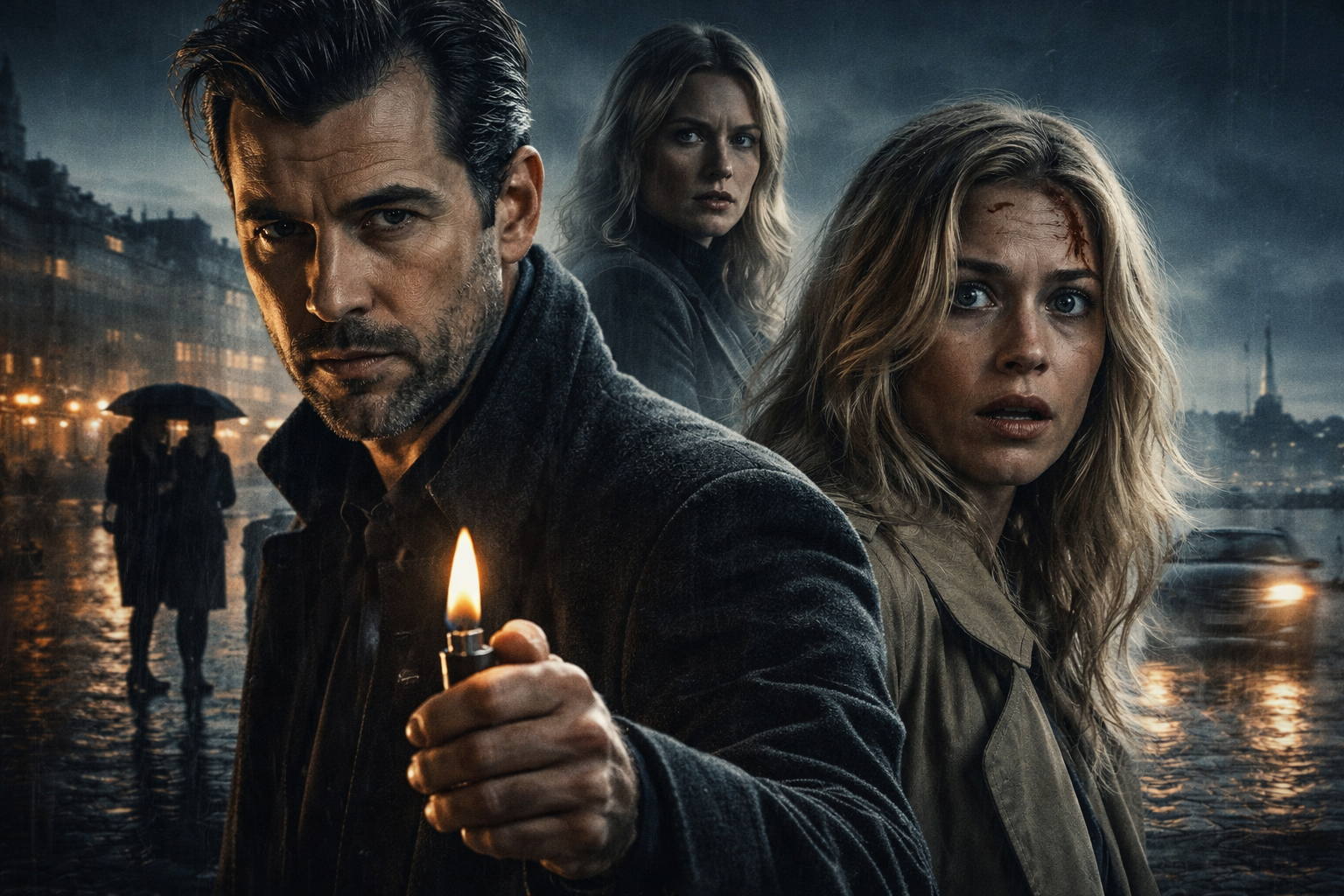
The Secret Woman combines hygge charm and Nordic noir style but stumbles over a thin plot and underdeveloped characters in this Danish thriller
The Secret Woman aimed to mix cozy Scandinavian atmospheres with gothic and Nordic noir thriller elements. However, the film falls short in delivering a convincing story or deep character insights. The Danish thriller features Claes Bang as a manipulative gaslighter in a narrative centered around amnesia and identity, but it ultimately feels forced and implausible.
Set partly in Norway and Denmark, the story follows a woman with total amnesia who cannot recall her life before running a peaceful rural café. As she prepares for marriage to crime author Joachim, her world is shaken when a stranger addresses her by another name. A DNA test later reveals she is actually Helene Söderberg, a Danish shipping heiress previously presumed dead. Hoping to reclaim her past, she confronts her former partner Edmund, cast in a dark and unsettling portrayal by Claes Bang.
According to a review from The Guardian, despite competent acting and atmospheric touches, the film’s plot is riddled with convenient revelations and lacks the necessary tension. The director Barbara Topsøe-Rothenborg’s approach leans on gothic and thriller tropes without fully exploring the psychological layers or the serious themes of human trafficking the film attempts to address.
Unrealistic Amnesia and Character Development
The film’s premise that Helene could be so entirely unaware of her past for an extended time strains believability, especially given her complete memory blackout. Instead of gradual, natural recoveries, her memories reappear in ways that feel scripted to provide exposition rather than emotional truth. This reduces audience engagement with her plight and limits the suspense.
Edmund’s villainy is established early, yet his psychological complexity is never fully uncovered. The gloomy mansion setting, complete with a sinister mother figure reminiscent of Hitchcock’s Mrs. Danvers, creates a dramatic atmosphere but fails to substitute for substantive character insight. The film opts for stylized shorthand rather than meaningful storytelling.
Plot Contrivances Undermine Thriller Tension
Numerous over-convenient plot devices weaken the story, such as a yearbook with torn pages left carelessly behind by a powerful conglomerate implicated in corruption. The thriller elements, including gaslighting and the quest for truth, are handled in a superficial manner that cannot match the intensity required for psychological suspense.
Performances by Natalie Wolfsberg Madeuño as Helene/Louise and Claes Bang as Edmund are highlighted as sympathetic and cunning respectively. Bang’s portrayal adds a chilling layer beneath Edmund’s mild exterior. Despite this, the scattershot narrative prevents these performances from elevating the film beyond mediocrity or rivalry with more acclaimed Nordic noir creations by Stieg Larsson or Jo Nesbø.
A Missed Opportunity in Nordic Noir Genre
The Secret Woman seems eager to absorb the atmosphere and motifs of hygge, manor-house gothic, and Nordic crime dramas, but this frenetic blending leaves the film disjointed. The story’s thematic threads, especially human trafficking, are touched upon only superficially, which limits emotional impact and relevance.
The film’s release on Netflix starting August 28 offers viewers a chance to explore the mix of cozy and dark themes. However, if you seek a tightly paced thriller with layered characterization and a plausible storyline, this Danish production may not satisfy those expectations.
In sum, while The Secret Woman features solid acting and an intriguing premise, its overall execution stumbles due to a dopey and facile plot, undercutting its potential as a Nordic noir thriller, according to the review provided by The Guardian.