
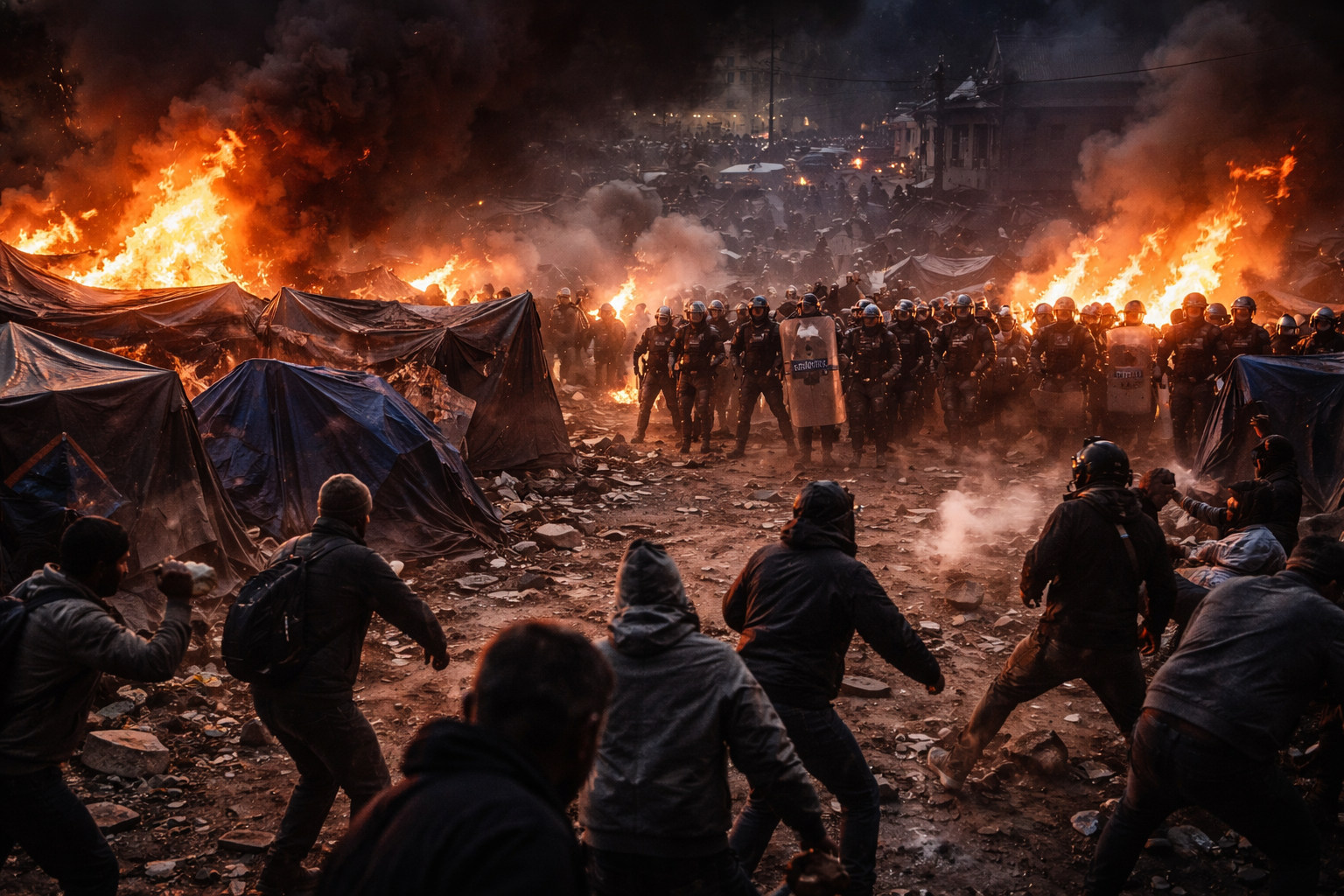
Protesters in the Spanish enclave of Ceuta set fire to a migrant camp and confronted police officers on Thursday, highlighting ongoing unrest linked to the large number of migrants who arrived from Morocco last month. Authorities reported clashes as demonstrators opposed the presence of migrants and humanitarian aid workers in the area.
The disruptions occurred roughly one month after approximately 72,000 migrants crossed irregularly into Ceuta, with most returning to Morocco but several thousand remaining in the city. The Spanish government estimates fewer than 7,000 migrants are still present, while local officials suggest the number is around 10,000, out of a total population of about 84,000.
According to police statements made to AFP, a military vehicle was struck by stones and other objects from a group of around 70 protesters earlier on Thursday. These protesters also blocked Red Cross vehicles from delivering food on the beach, shouting slogans urging migrants to leave and rejecting aid efforts.
Conditions at the Migrant Camp
Many migrants have stayed in makeshift camps on Ceuta’s beaches or lived on the streets since the mass arrival in late July. Despite occasional appearances of calm, the situation remains difficult. Aid groups, including the Red Cross, regularly distribute food and water, particularly to unaccompanied minors among the migrant population.
The humanitarian conditions in Ceuta have drawn concern due to insufficient shelter and sanitary facilities. An emergency shelter was set up following a police clearance of a beach camp, but many migrants continue to live outdoors.
Political Tensions and Government Response
The Spanish government faces increasing criticism over its handling of the situation, especially from opposition parties who accuse the administration of inadequate action and of neglecting Ceuta’s residents. Authorities in Madrid have intensified efforts to identify migrants for repatriation and approved additional funding to support unaccompanied minors eligible for special protection.
The crisis has heightened political divisions just months ahead of general elections and also sparked broader tensions within the European Union about how to manage migration at external borders.
Casualties and Ongoing Challenges
The migration surge has led to tragic losses, with official figures attributing more than 80 deaths to attempts to reach Ceuta’s shores. Many deceased migrants have been buried in the local Muslim cemetery wrapped in white cloth, reflecting the community’s response to the crisis’s human toll.
Efforts continue to relocate some vulnerable migrants—including approximately 500 minors—to the Spanish mainland. However, normal conditions have yet to be restored in Ceuta, as significant numbers of migrants still reside in precarious situations on the city’s beaches and streets.