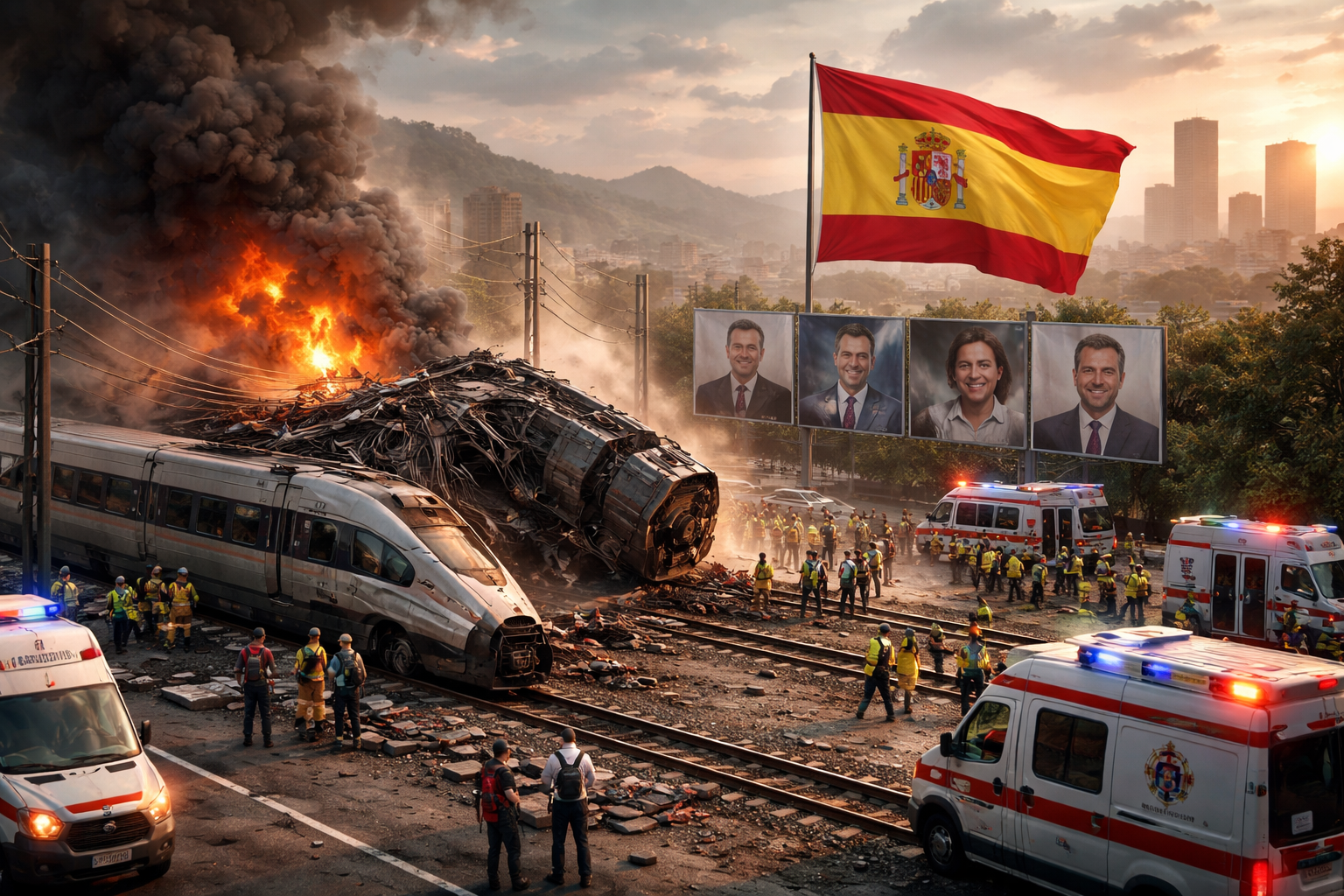
A deadly train collision in Spain has cast a shadow over the snap general election scheduled for next month, altering the political contest as Pedro Sánchez confronts criticism of his government’s safety record. At least 69 people died in the recent high-speed railway collision near Urda, amplifying public grief and raising urgent questions about infrastructure and public service management.
The tragic crash follows another fatal incident on the same high-speed rail line earlier in the year that claimed 46 lives, deeply unsettling a nation proud of its extensive rail network. In the wake of the disaster, the usual adversarial election rhetoric has softened, with the incident dominating national attention and complicating Sánchez’s campaign, which was initially focused on housing reforms amid growing tensions with right-wing opposition parties.
Election Climate Shifts Amid Mourning
Spain’s snap election was called after right-wing parties rejected government reforms addressing housing issues, a campaign issue tied closely to social progress and economic policy battles. However, following the rail disaster, political discourse has shifted toward rail safety concerns. According to political scientist Pablo Simón of Carlos III University in Madrid, the tragedy highlights structural problems in public infrastructure and signals a decline in public services, challenging the government’s narrative and credibility.
Government and Opposition Reactions
Prime Minister Sánchez described the disaster as “unacceptable” and pledged enhanced safety measures to prevent future accidents. Nevertheless, opposition parties are leveraging the incident to criticize government management. Alberto Núñez Feijóo of the conservative People’s Party condemned the handling of public infrastructure and promised accountability for those responsible. Meanwhile, the far-right Vox party has accused the government of mismanagement and called for a judicial investigation into Transport Minister Óscar Puente on suspicions related to gross negligence, allegations the minister has firmly denied.
Implications for the Political Future
Analysts suggest the national mood of shock and mourning could impede Sánchez’s efforts to mobilize his base, particularly among voters previously disengaged or leaning toward the Socialist Workers’ Party. The election, initially framed as a fight over social progress and conservative rollback, now confronts a somber public focused on safety and government responsibility. Political commentators note that the crisis presents a challenge to both the tone and substance of campaigns, with the People’s Party opting for a more institutional approach compared to Vox’s aggressive posture.