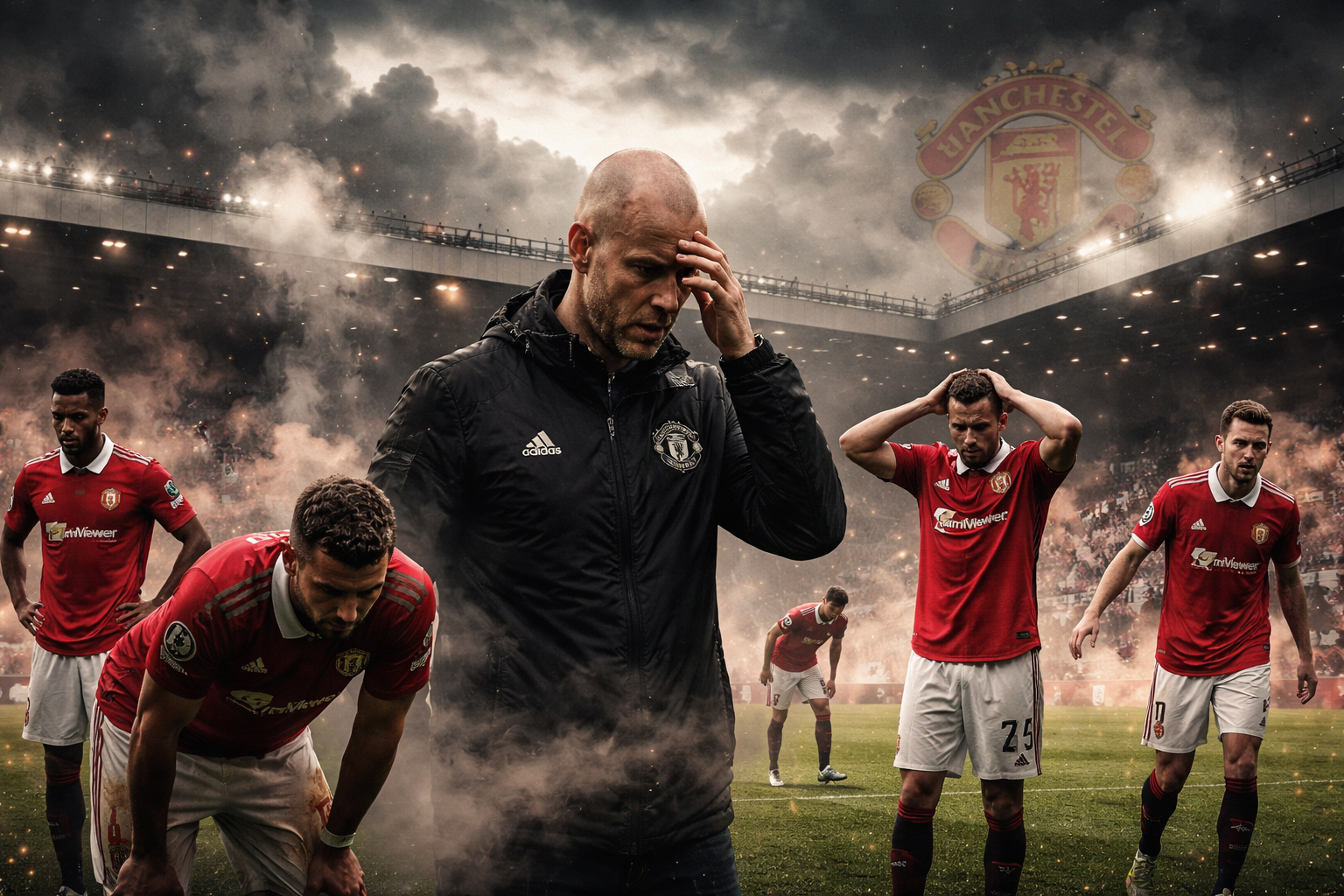
Manchester United finds itself trapped in a cycle of instability that has engulfed every manager since Sir Alex Ferguson stepped down in 2013. The latest casualty of this ongoing struggle is Michael Carrick, who faces mounting pressure following a 4-1 Champions League defeat to Como that painfully echoed a similar loss under Ole Gunnar Solskjaer in 2021.
Carrick, the club’s seventh full-time manager since Ferguson’s retirement, has witnessed mounting dissent within the squad and fanbase amid disappointing performances and questionable club decisions. The repeated pattern of managerial hiring and firing raises questions about the club’s management and whether Manchester United has become an unmanageable entity.
A Troubled Sequence of Managers
Since Ferguson’s era ended, Manchester United has seen seven full-time managers including David Moyes, Louis van Gaal, Jose Mourinho, Ole Gunnar Solskjaer, Erik ten Hag, Ruben Amorim, and now Carrick. Short-term interim figures such as Ryan Giggs, Ralf Rangnick, and others have also filled in.
Though occasional successes punctuated this period—Van Gaal’s FA Cup in 2016, Mourinho’s League Cup and Europa League in 2017, and Ten Hag’s 2024 FA Cup win—none have matched the sustained dominance of the Ferguson years. Yet, every manager eventually faced dismissal as problems off the pitch have worsened.
Internal Conflicts and Leadership Questions
Recent defeats have highlighted fractures within the club. Defender Lisandro Martinez publicly criticized football director Jason Wilcox after a loss against Atletico Madrid, while captain Bruno Fernandes questioned tactical choices. These tensions reflect broader troubles, including low morale and dissatisfaction extending to staff and fans.
Leadership decisions, particularly by part-owner Sir Jim Ratcliffe and former executive vice-chairman Ed Woodward, have come under scrutiny. Ratcliffe’s approach to footballing decisions and severe cost-cutting measures have contributed to a perception of instability. The club’s pursuit and abrupt dismissal of sporting director Dan Ashworth, as well as the mishandling of managerial appointments such as Ten Hag and Amorim, add to a narrative of chaotic governance.
Financial and Fanbase Challenges Amid Poor Performance
Financially, Manchester United recorded a significant operating profit and revenue increase despite missing out on European competition, aided by aggressive cost-cutting. However, overall debt remains around £1 billion. Plans for a new 100,000-seat stadium, projected to cost upwards of £2 billion, continue under Ratcliffe’s vision but add pressure to the club’s finances.
Fan dissatisfaction has boiled over in recent years, especially towards the Glazer family’s ownership and the club’s management of supporter relations, including controversial ticket investigations. This unrest compounds the challenges facing the club on and off the field.
Outlook for Manchester United
The latest appointment of Carrick, seen as similar to the Solskjaer choice, underscores Manchester United’s difficulty in attracting top-tier managerial talent. With pressing issues in squad quality, strategic direction, and leadership stability, the club faces a daunting task to restore itself as a global football powerhouse.
Unless the club addresses foundational problems, including internal cohesion and governance decisiveness, the cycle of turmoil that began after Ferguson’s departure is likely to continue, with the club’s competitors increasingly leaving Manchester United behind.