

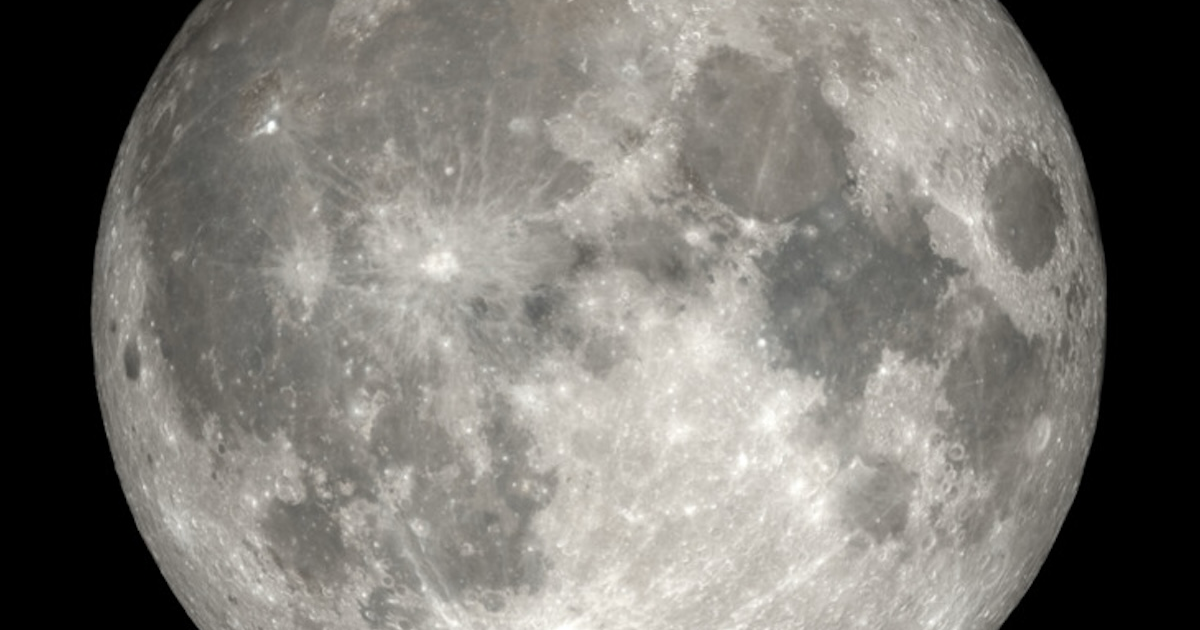
Look to the southeastern sky Monday evening and you’ll see June’s full moon rising just after sunset. Astronomically, the Moon reaches its full phase at 7:56 p.m. on June 29, but it will appear full throughout the night.
The June full moon is also known as the strawberry moon, but don’t expect a pink or red Moon. However, if you catch it just as it rises above the horizon Monday evening, it may appear yellow, orange, or even a subtle pinkish tint as the light passes through a much thicker layer of Earth’s atmosphere.
Tiny particulates and water molecules in the air scatter shorter blue wavelengths of light, a phenomenon known as Rayleigh scattering, allowing more of the longer red and orange wavelengths to reach our eyes.
The name comes from Native American traditions, popularized by the Old Farmers Almanac.
Long before printed calendars, many Indigenous peoples across North America named each full moon after the plants, animals, weather, or seasonal activities that defined that time of year. There was no single Native American lunar calendar. Each developed names that reflected the natural rhythms of its own homeland.
The name Strawberry Moon comes from the traditions of Algonquian-speaking peoples of the northeastern United States and eastern Canada, where the Old Farmers Almanac was first published. For them, late June marked the brief season when wild strawberries ripened, making the full moon a useful reminder that it was time for the annual harvest.
Over time, European settlers adopted many of these seasonal names, and “Strawberry Moon” eventually found its way into almanacs, where it became the name most Americans recognize today.
Other Indigenous nations gave June’s full moon names that reflected what was happening in their own communities.
The Dakota and Lakota used similar names tied to ripening berries. Farther south, the Cherokee called it the Green Corn Moon, recognizing the stage of the growing season when corn fields were becoming established.
The Western Abenaki referred to it as the Hoer Moon, reflecting the work of tending crops, while the Haida called it the Berries Ripen Moon. The Cree recognized it as the Egg Laying Moon or Hatching Moon, marking the nesting season for birds.
When look up to June’s full moon, you might notice it’s not as high as it was a few months ago. Because the Sun follows its highest path across the sky at this time of year, the full moon, which always appears opposite the Sun, traces one of its lowest paths of the year across the nighttime sky near last week’s June solstice.
The next full Buck moon arrives on July 29, a reference to when male white-tailed deer begin rapidly growing a new set of antlers, another example of how generations before us used the Moon to keep track of the changing seasons.
See More: https://www.ubirataonline.com.br