
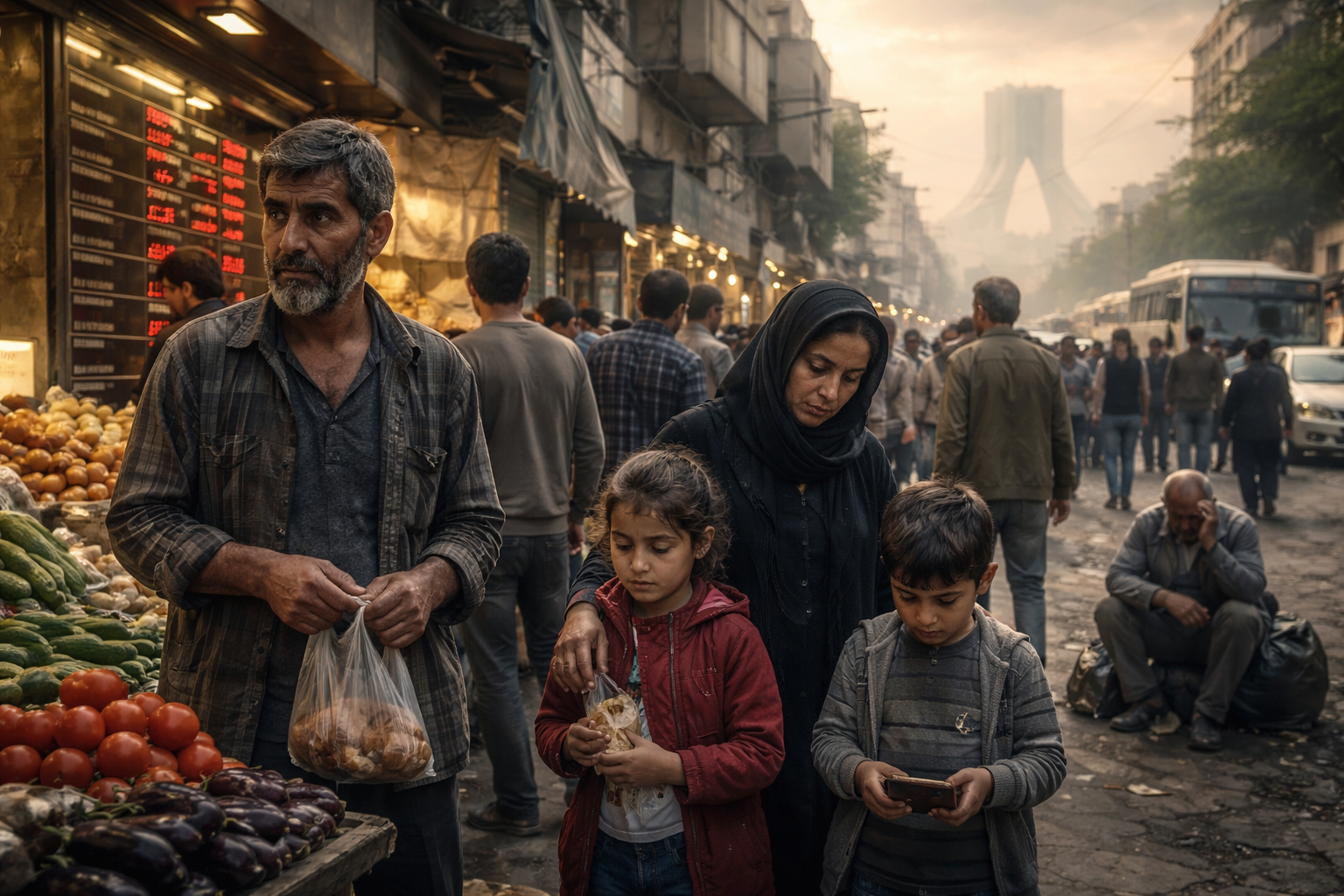
For families like Mina’s, the ongoing conflict has transformed war from distant military clashes to daily economic hardship. Since the conflict escalated last year, her household has steadily grown poorer, struggling to afford basic food and essentials, according to an interview with Deutsche Welle (DW).
The International Monetary Fund projects a 5.4% contraction in Iran’s economy this year, accompanied by inflation soaring toward 69%, while the World Bank highlights the heavy toll of conflict, disrupted trade, and enduring uncertainty on the nation’s financial stability.
Economic Conditions Worsened by War and Preexisting Issues
Ahmad Alavi, an Iran-focused economist based in Sweden, explains that Iran’s economic troubles predated the conflict, with inflation already exceeding 40%, a weakening currency, chronic budget deficits, and longstanding sanctions. The war introduced external shocks—damage to infrastructure, disrupted shipping routes, internet shutdowns, and ramped-up inflation expectations—that accelerated a collapse in purchasing power.
Official figures cited by Alavi indicate annual inflation reaching 66%, with food prices rising even faster: bread and cereals by 140%, meat and poultry by 135%, dairy by over 116%, and edible oils by more than 200%. Many families are reducing meat consumption, postponing medical care, and abandoning savings plans to cope.
Rising Poverty and Pressure on the Middle Class
Economic experts estimate that 3.5 to 4.5 million Iranians have fallen into poverty since conflict escalated, pushing the total impoverished population above 40 million. While low-income households have borne the brunt, middle-income families increasingly face similar pressures as wages lag behind inflation.
Alavi notes that some salaried workers and pensioners have dropped below the poverty line for the first time, with households cutting back initially on discretionary expenses but now often reducing spending on food, healthcare, and education.
Private Sector Struggles Amid Uncertainty
Iran’s private businesses confront shifting trade dynamics and uncertainty. Traders like Morteza report that maritime routes through the Strait of Hormuz have become more challenging, prompting China to expand overland rail shipments through Central Asia—an alternative transport route that offers fewer delays but little benefit to Iranian merchants coping with a plummeting rial and rising inflation.
Daily fluctuations in exchange rates and increased costs for replacing goods erode margins and customer purchasing power, leaving many traders uncertain about their economic prospects.
Government Measures and the Path Forward
Despite global oil price increases, Iran’s oil revenues remain constrained by sanctions and export limitations. Government efforts such as subsidies and price controls may provide short-term relief but do not address structural issues or restore confidence among investors and consumers.
Alavi warns that economic recovery depends heavily on reducing uncertainty, stabilizing inflation and exchange rates, easing trade conditions, and rebuilding trust among businesses and households. Without such changes, he expects further declines in living standards alongside rising unemployment and business closures.
As Mina reflects, many Iranians no longer plan for the future and instead focus desperately on making the next month’s rent.