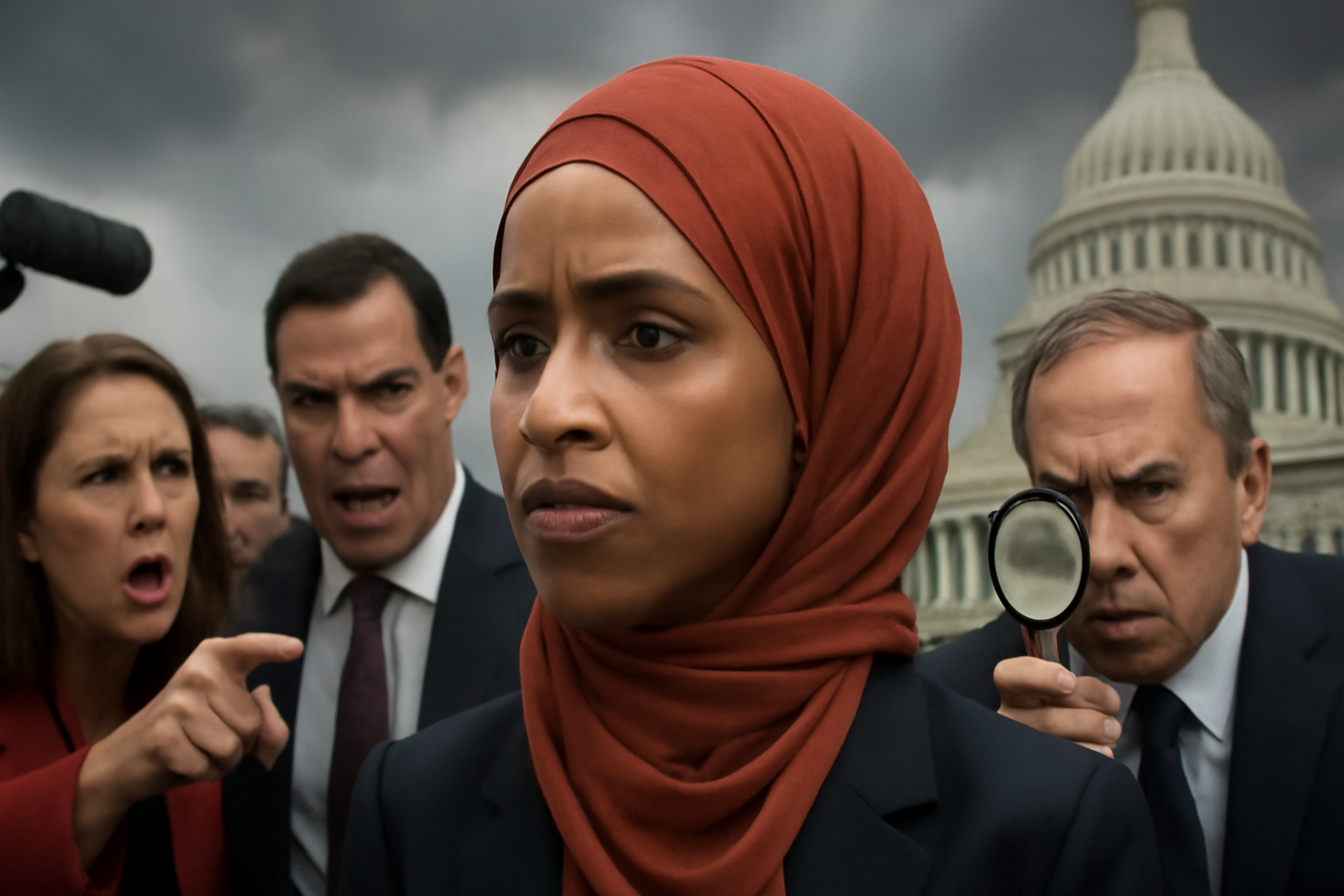
Ilhan Omar, a Minnesota representative known for her progressive politics and outspoken criticism of former President Donald Trump, continues to face intense scrutiny and political attacks as she campaigns for re-election in the upcoming midterm elections.
Trump has repeatedly targeted Omar with harsh verbal attacks, questioning her background and loyalty, often using inflammatory language. This has made her one of the most prominent Democrat targets of the former president.
Background and Political Profile
Born in Mogadishu, Somalia, Omar fled civil war as a child and spent years in a Kenyan refugee camp before moving to the United States in 1995. She became a naturalized citizen in 2000 and later embarked on a political career within the Democratic Party’s progressive wing. Since 2019, she has represented Minnesota in the U.S. House of Representatives, becoming one of the first Muslim women elected to Congress. Omar is notable for wearing a hijab, and Congress adjusted longstanding rules to accommodate her religious head covering.
Controversy over Israel, Antisemitism Accusations, and Committee Removal
Omar’s outspoken criticism of U.S. support for Israel has sparked controversy within and outside her party. She has voiced support for the Boycott, Divestment and Sanctions (BDS) movement as a legitimate form of protest, which has led to accusations of antisemitism. In early 2023, Republicans removed her from the House Foreign Affairs Committee following several contentious tweets, including comparisons of U.S. and Israeli actions with groups designated as terrorist organizations.
Investigations and Accusations Around Immigration and Corruption
Omar has also faced allegations related to immigration fraud, including claims that she provided false information during her immigration process. Federal investigators searched her home as part of inquiries into whether her father misstated her age on immigration documents submitted 26 years ago. Omar denies all accusations, calling them politically motivated attempts at intimidation.
In addition, critics connected Omar to a Minnesota corruption scandal involving the misappropriation of pandemic relief funds, although no law enforcement agency has charged her with wrongdoing.
Political Impact and Broader Context
The timing of the investigation has raised concerns about potential election interference, as it breaks with the unwritten “60-Day Rule” that discourages public investigations of political candidates shortly before elections. Other Muslim Democratic candidates, such as Abdul El-Sayed in Michigan, have also been subjected to disparaging remarks by Trump. Advocates defend Omar and accuse former Trump administration officials of weaponizing government agencies against political adversaries.