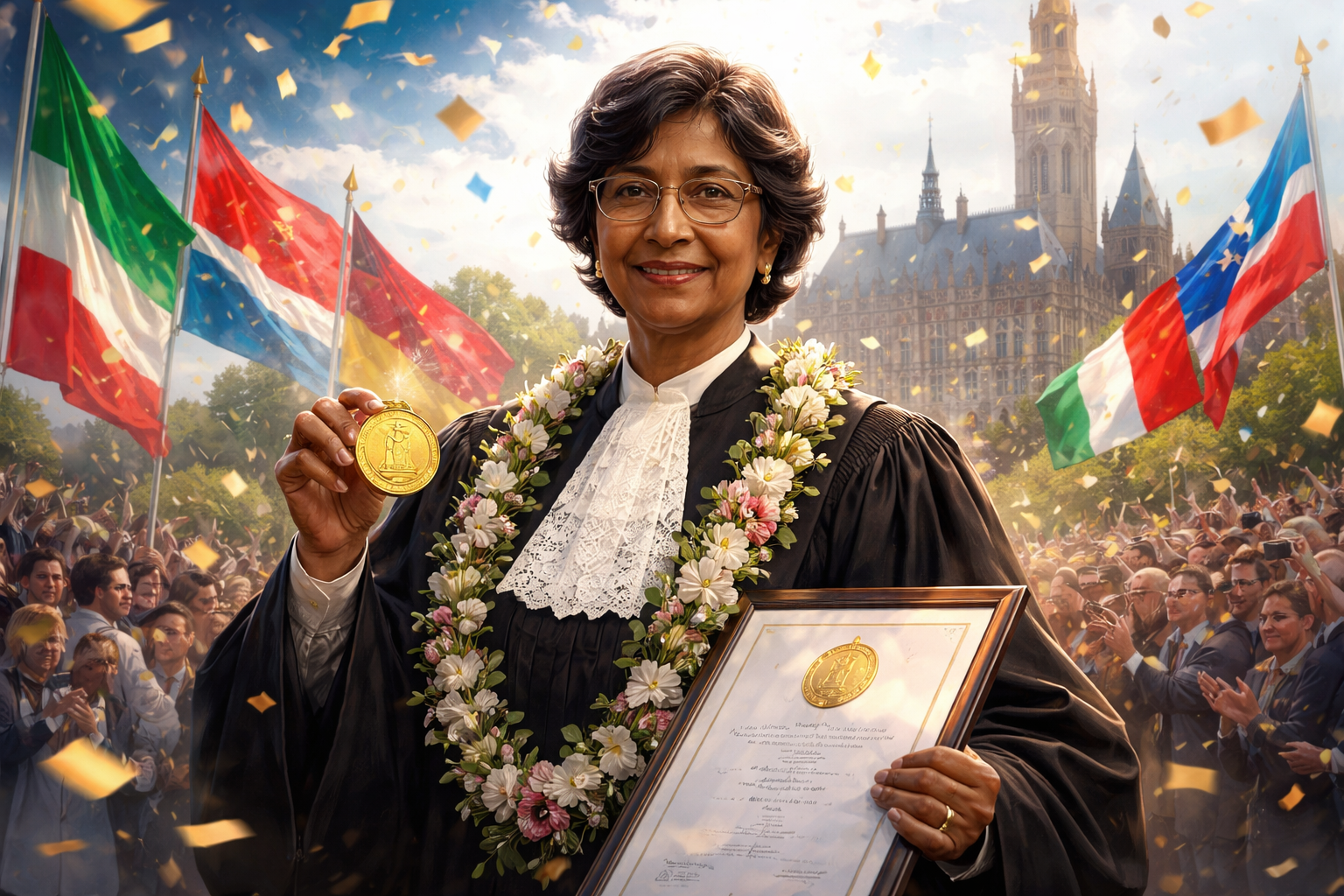
Navi Pillay, a South African judge at the International Court of Justice (ICJ), received the Nobel Peace Prize in recognition of her lifelong commitment to international law and human rights. The Norwegian Nobel Committee highlighted her pivotal role in chairing the United Nations commission that concluded Israel committed genocidal acts in Gaza.
The committee praised Pillay, 85, for demonstrating how legal measures serve to prevent war and violence. Her career spans defending Nelson Mandela during apartheid, contributing to international criminal tribunals, and serving as the U.N. High Commissioner for Human Rights.
Findings on Genocide in Gaza and Global Reactions
Last year, Pillay chaired an independent U.N. commission that determined Israel acted with genocidal intent against Palestinians in Gaza. The report accused Israeli leaders, including Prime Minister Benjamin Netanyahu, of incitement to genocide. Israel rejected the findings, labeling them biased and scandalous, and condemned the Nobel Committee’s decision to honor Pillay as legitimizing anti-Israel prejudice.
The Israeli Foreign Ministry responded harshly on social media, equating the award with endorsing falsehoods, while Pillay herself expressed surprise at the recognition, emphasizing her work was grounded in impartial legal analysis.
Contributions to International Justice
Beyond Gaza, Pillay currently presides over a genocide case involving Myanmar at the ICJ. The Nobel Committee underscored her independence, expertise, and unwavering integrity as central to her reputation as a leading international jurist.
Her previous work includes influencing landmark rulings such as the Akayesu judgment, which recognized rape and sexual violence as weaponized war crimes. She has been lauded by human rights advocates and South African leaders, including President Cyril Ramaphosa, who acknowledged her global impact on peace and human dignity.
Broader Context: ICC Sanctions and Human Rights Advocacy
The prize announcement coincided with the Trump administration imposing new sanctions on the International Criminal Court (ICC), targeting the institution to prevent prosecution of U.S. nationals. This move drew accusations from the ICC itself, which decried the sanctions as assaults on the rule of law and international justice.
Pillay previously served on the ICC and has been a steadfast advocate for accountability at the highest levels.