

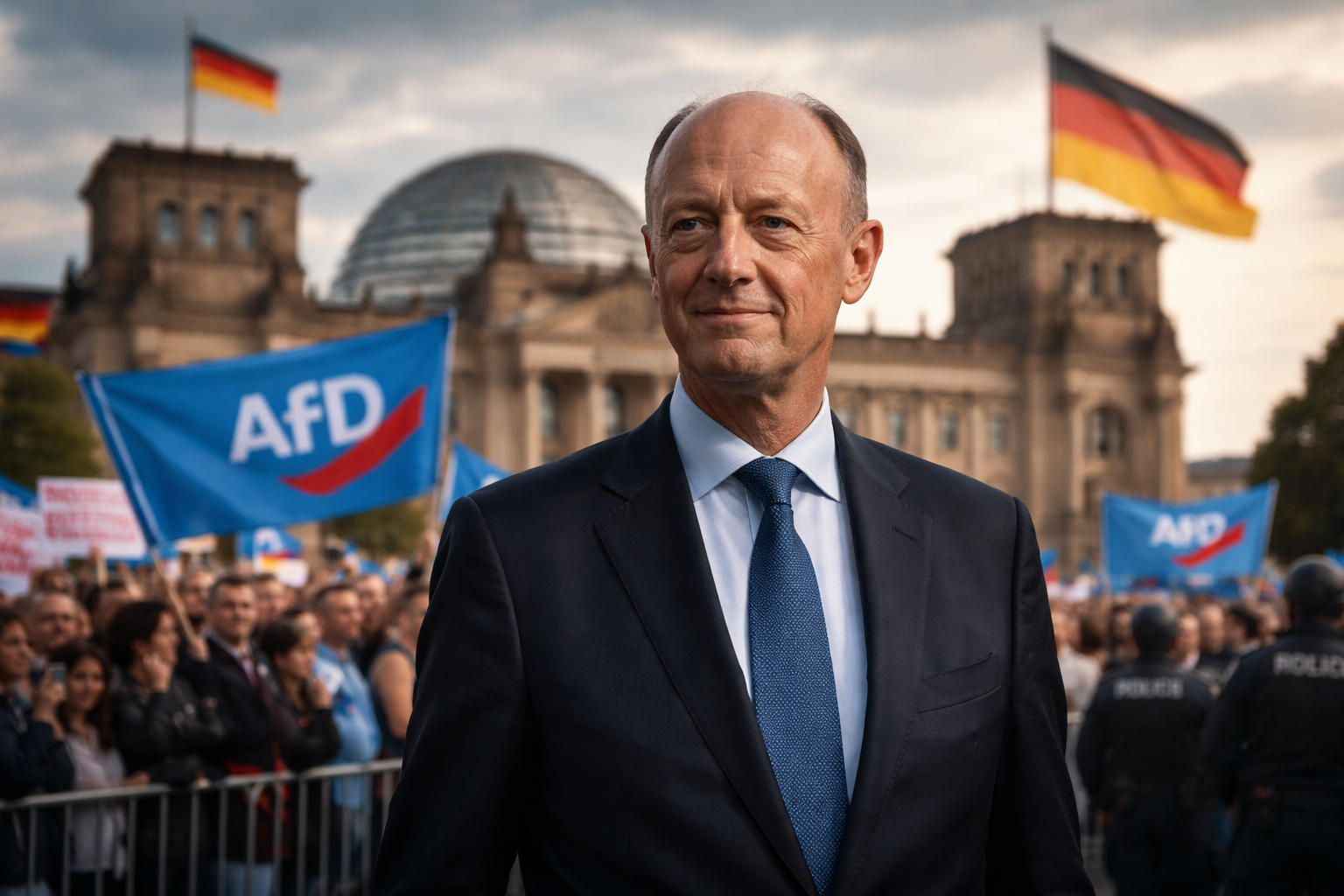
German Chancellor Friedrich Merz acknowledged the severe impact of the Alternative for Germany’s (AfD) near-victory in the Saxony-Anhalt state election, describing it as a shock to the Christian Democratic Union (CDU) “to its very foundations.” Despite the far-right party’s strong showing with almost 44% of the vote, Merz vowed to remain in office and maintain his commitment to political reform.
The election outcome positions the AfD and its candidate, Ulrich Siegmund, just short of an absolute majority, putting the country at risk of its first far-right state government since World War II. While the AfD did not secure enough seats to elect Siegmund as state premier outright, party leaders are actively trying to rally support from dissenting lawmakers in other parties to form a governing coalition.
Merz Responds to Historic CDU Defeat
Merz, who has been in office for only 16 months and whose popularity remains low with just 9% approval in exit polls, admitted his leadership was a campaign focal point influencing the CDU’s losses. He expressed willingness to improve communication with voters and emphasized that the CDU’s defeat was the worst in decades, signaling inevitable consequences and strategic reassessment within the party.
Merz reassured Germany and its allies of institutional resilience amid the rise of nationalist forces, underscoring the country’s historical responsibility and commitment to democratic values. He also reaffirmed Germany’s stance on supporting Ukraine against Russian aggression, criticizing Moscow for allegedly encouraging AfD’s electoral success and interfering in upcoming regional elections.
AfD’s Appeal and Political Challenges Ahead
The AfD’s campaign, led by Siegmund, capitalized on voter dissatisfaction with the political establishment, particularly exploiting grievances in the former communist east where many feel marginalized. The party has advocated for strict immigration policies, including mass deportations deemed illegal by critics, and promised substantial social welfare spending with unclear funding sources.
Experts and commentators have voiced concern over the AfD’s extremist classification by domestic intelligence and its attacks on public broadcasting and cultural institutions, raising fears about cultural influence under far-right leadership. Despite CDU’s poor performance, coalition talks seem complicated as its junior partner, the Social Democrats, may soften reforms in healthcare and pensions to maintain unity.
Outlook for German Politics
While the CDU continues to support Merz for now, influential voices within Germany’s media advocate for new leadership to reset the party’s direction. Saxony-Anhalt’s election results reflect broader trends of far-right gains amid economic challenges in regions with declining industries such as steel and automotive.
The AfD is also strong in other eastern states where elections are pending, raising the prospect of expanding its influence. AfD co-leader Alice Weidel expressed ambitions to reach 40% national support by the 2029 general election, signaling the party’s determination to increase its role in German politics.