

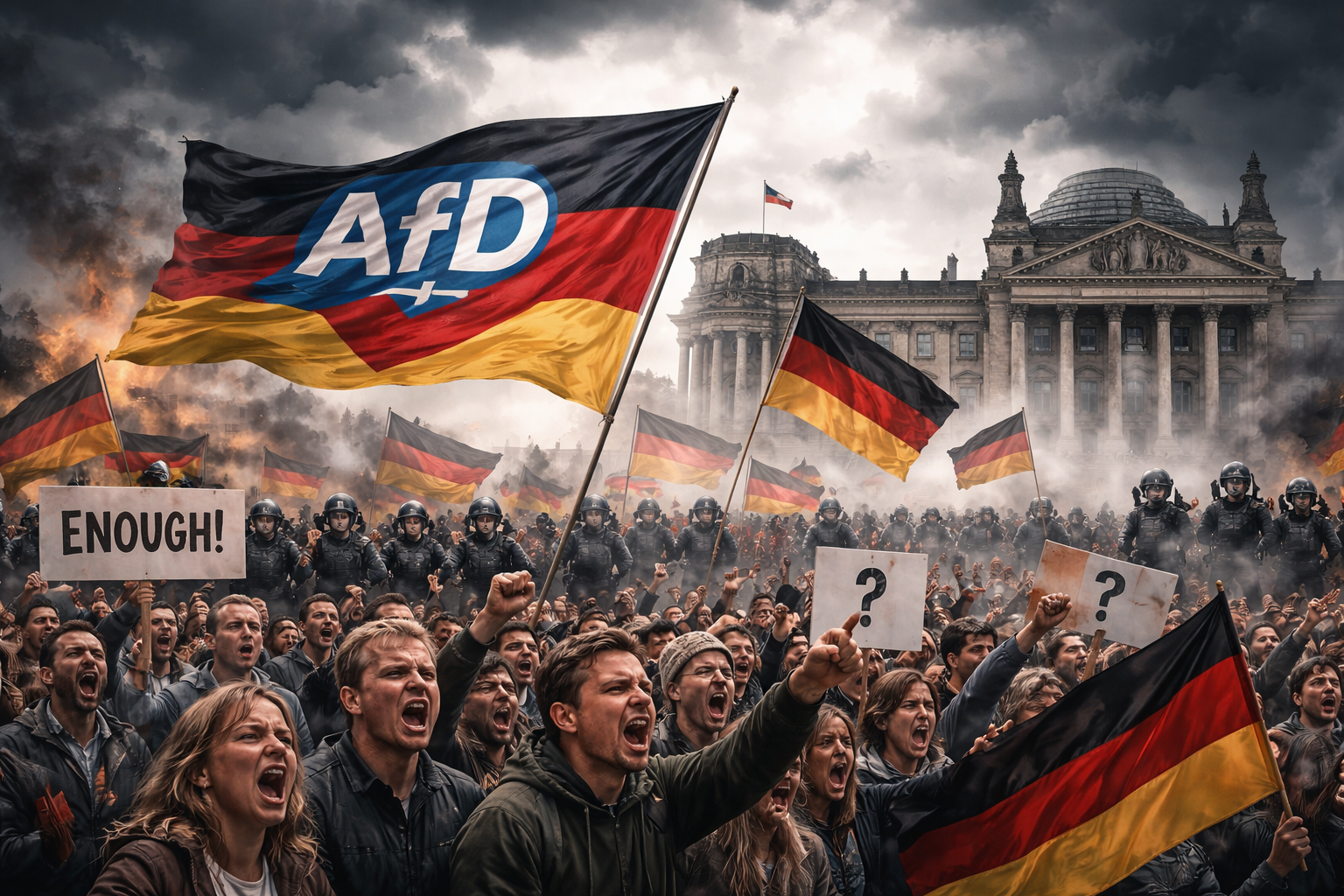
From violent demonstrations in southern England to historic electoral gains by Germany’s Alternative für Deutschland (AfD), far-right movements are capitalizing on a widespread perception among voters that traditional political parties can no longer ensure security, prosperity, or meaningful change.
In Saxony-Anhalt, the AfD achieved its strongest state-level performance yet, doubling its previous vote share to surpass 40%. This surge raises the possibility of Germany’s first far-right-led state government since World War II. The party’s platform opposes migrants, Islam, LGBTQ+ rights, and climate policies, with some senior members linked to neo-Nazi groups.
Extremism and Political Powerlessness Linked Across Europe
The AfD’s electoral success contrasts with far-right vigilantism seen in England, where masked agitators obstruct roads, claiming to ‘stop the boats’ amid ongoing migration debates. Though the tactics differ, both stem from a broader political narrative of powerlessness: a feeling among voters that governments lack control over borders, institutions, economic shifts, and national identity.
Migration remains a focal issue in these dynamics. While more than 33,000 people arrived in the UK by small boats in the past year, marking a 23% decrease from the previous year, far-right agitation has intensified. Studies indicate that political alienation, rather than economic deprivation alone, better explains far-right support in Germany, and potentially in Britain as well. Facts alone—such as falling migrant arrivals or disproving migrants’ responsibility for public service strains—have limited impact on voter sentiment when mistrust in democratic governance prevails.
The Governance Challenge Behind Far-Right Appeal
At the heart of this trend is voter skepticism about democracy’s effectiveness. In Germany, officials often cite constitutional limits and coalition dynamics to explain policy constraints. In the UK, economic pressures and financial institutions like the Bank of England are highlighted as restricting government action. Though the reasons differ, both convey a message that electoral choices do not necessarily translate into transformative governance.
This persistent belief that countries have become ungovernable fuels far-right empowerment and undermines confidence in established political systems. Addressing these challenges requires more than managing migration statistics; it demands demonstrating that democratic institutions retain the capacity to enact meaningful change despite complex constraints.