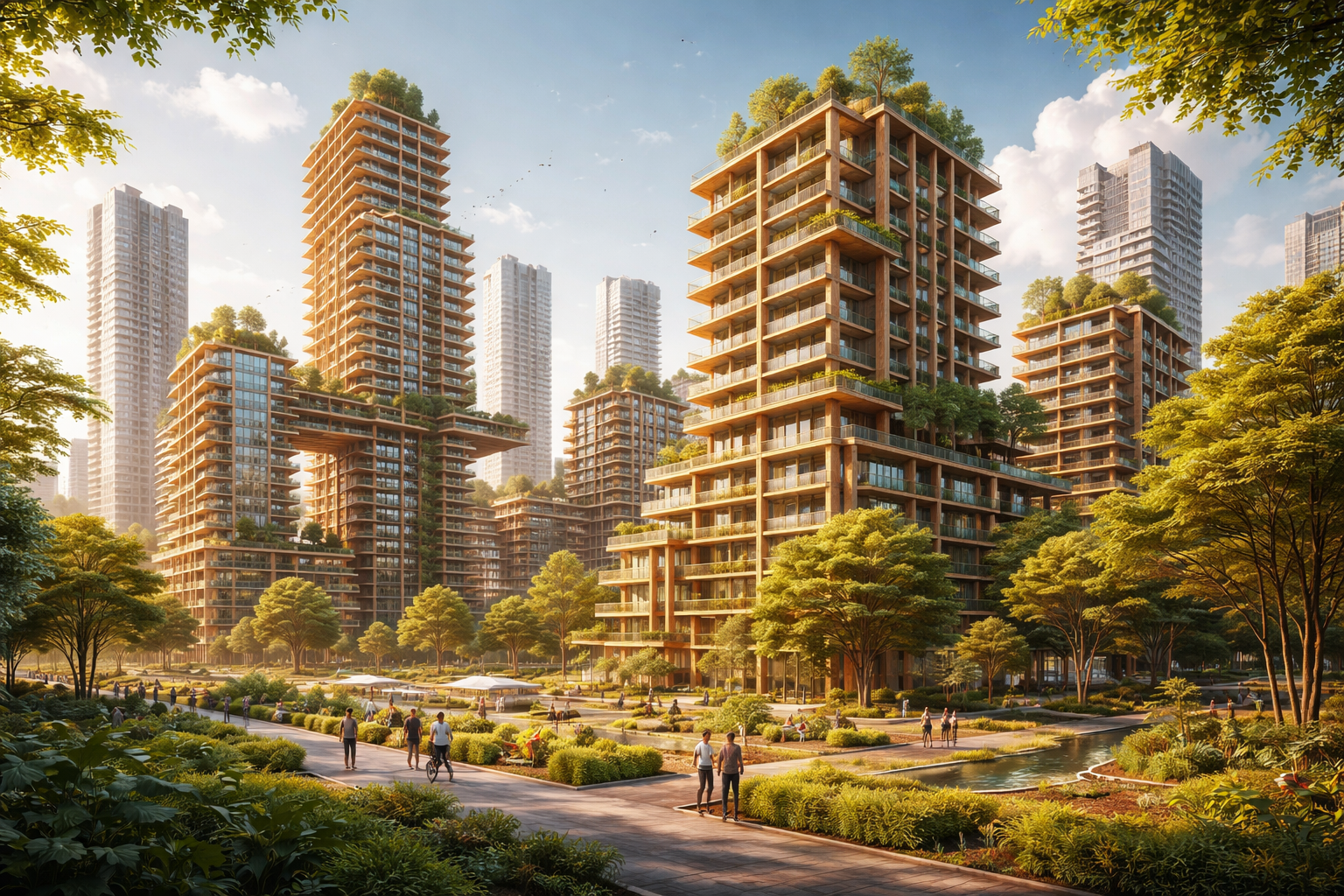
Buildings today largely rely on concrete, a material known for its intensive extraction process and high carbon emissions. This reliance has significant environmental consequences, prompting experts to explore sustainable alternatives.
One such alternative is timber, which offers the potential to drastically lessen the environmental footprint of urban construction. Unlike concrete, timber can be sourced renewably and used in innovative ways that could reshape city skylines.
Timber as a Constructive Alternative
Timber construction techniques, including flat-pack wooden structures, allow for efficient assembly while maintaining strength and durability. These methods contrast with traditional concrete-based construction that often involves heavier emissions and resource depletion.
Building with timber not only reduces carbon output but also redefines architectural possibilities, enabling faster construction and potentially lower costs. It represents a shift from destructive construction practices toward more environmentally responsible urban development.
Environmental Implications and Urban Impact
Shifting from concrete to timber could significantly influence cities’ carbon footprints. By replacing concrete with timber in skyscrapers and other large buildings, it is possible to create monuments to sustainability rather than extraction and pollution.
This transformation in building materials aligns with broader efforts to combat climate change and promote environmental stewardship in urban planning and construction sectors.