
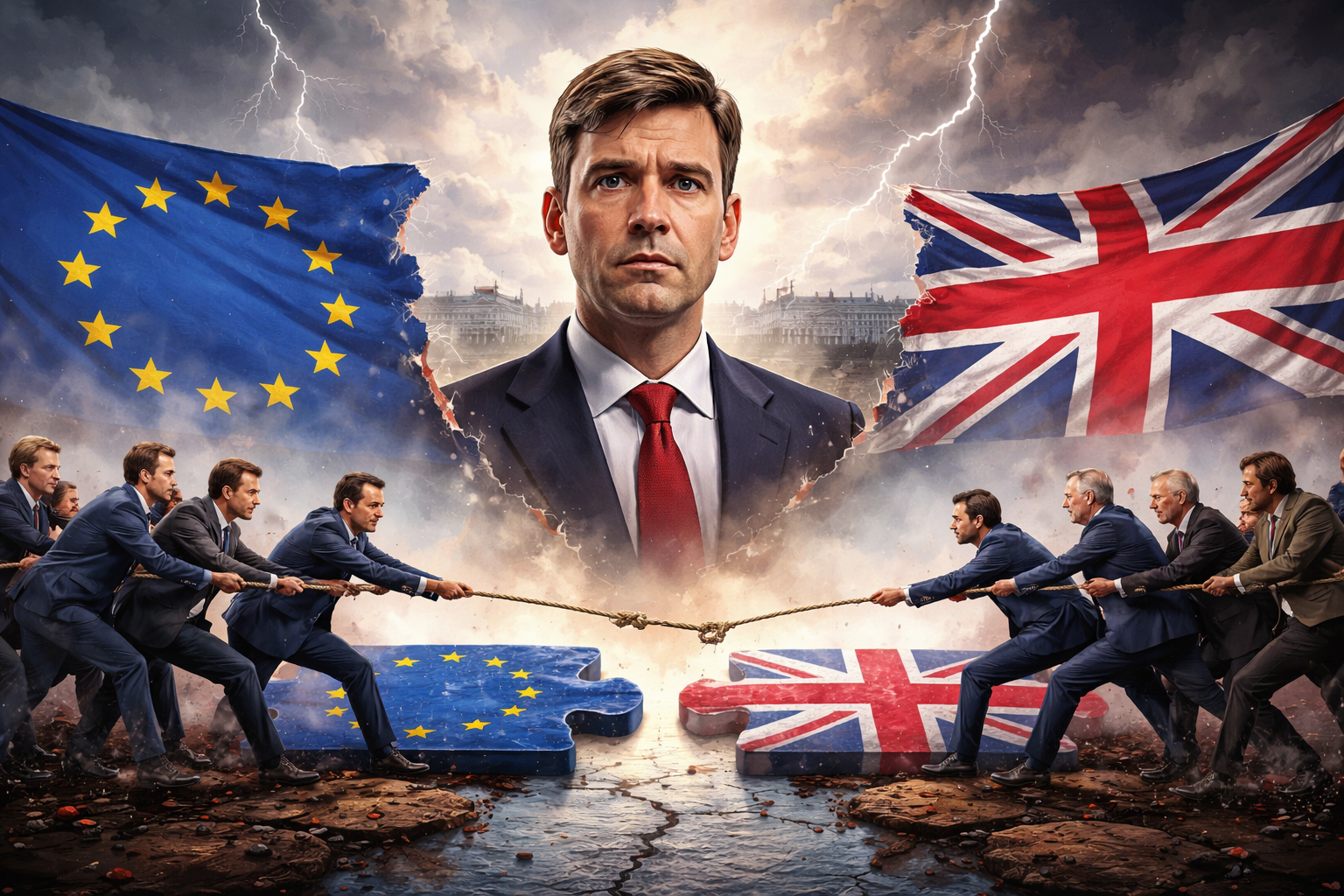
Recent developments in the relationship between the United Kingdom and the European Union indicate cautious progress, with ongoing discussions spearheaded by UK leader Andy Burnham suggesting new agreements on trade and cooperation may soon emerge. However, the broader European political landscape, marked by upcoming elections and far-right gains, introduces significant uncertainty about the future of UK-EU ties.
At a recent European Political Community summit in Dublin, an image of Emmanuel Macron seemingly welcoming Andy Burnham to a prominent position at the table symbolized a warmer tone in British-EU dialogue. This gesture followed Burnham’s suggestion that rejoining the EU might be an option for the UK, signaling a shift in attitude that has opened the door for discussions on resetting some Brexit arrangements.
Progress and Strategic Adjustments
Negotiations are expected to produce tangible outcomes soon, including agreements on food and drink regulations and emissions trading schemes. Additionally, a potentially significant youth exchange program remains under consideration, enhancing cultural and educational ties between the UK and EU members. Despite these steps, Burnham’s team has been cautious to avoid prematurely committing to broader discussions on the overall EU-UK relationship, mindful of domestic political implications and the complexities involved.
European Political Turbulence Complicates Outlook
The timing of these talks is complicated by upcoming elections across Europe that threaten to reshape the EU’s political makeup. With Macron’s tenure expected to end by spring, his likely successor may embrace far-right policies challenging EU law and support for Ukraine. Spain faces possible far-right inclusion in its next coalition, while Poland confronts persistent constitutional crises that may precipitate a similar shift in 2027. Such changes could limit Brussels’ capacity to engage in sustained dialogue with the UK on integration issues and affect Burnham’s calculus going forward.
Geopolitical Stakes and Opportunities
Amid these uncertainties, external factors provide both constraints and openings. Russia’s ongoing conflict in Ukraine and threats to Eastern Europe’s security increase the strategic value of closer UK-EU cooperation on defense. Calls from five European leaders for the UK’s return to the EU’s internal electricity market further underscore a recognition of shared energy and geopolitical challenges. Nevertheless, certain EU red lines, such as the free movement of people, remain non-negotiable despite evolving priorities since 2016.
While the path toward deeper integration or re-entry into the EU remains unclear, Burnham’s approach reflects an acknowledgment of these shifting dynamics, embracing pragmatism amid volatility. For now, the exact future of UK-EU relations can only be viewed through a glass darkly, shaped by unpredictable political shifts and complex geopolitical realities.