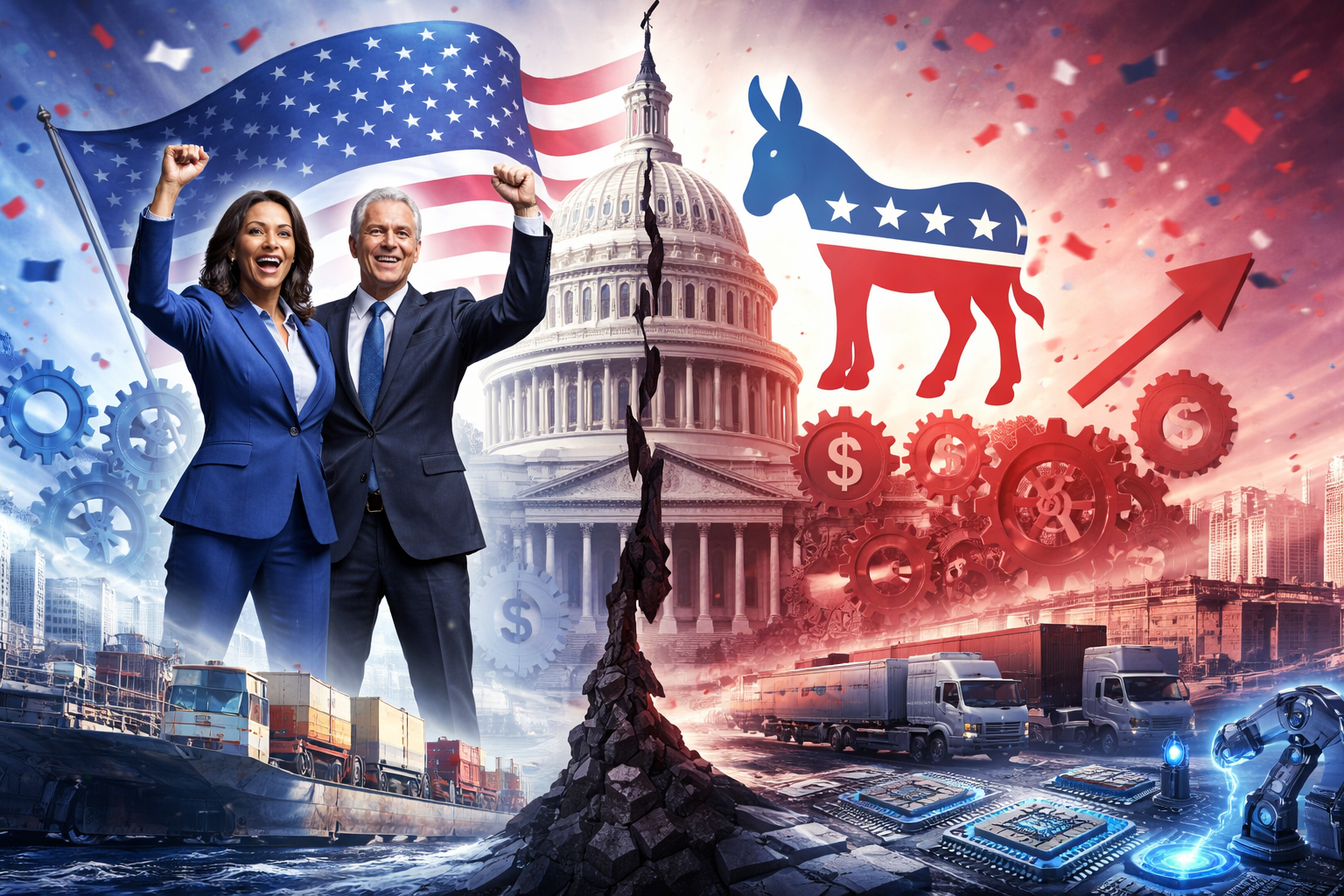
The recent U.S. midterm elections, in which Democrats secured comfortable majorities in both the Senate and the House of Representatives, have raised significant questions about the future trajectory of the country’s economic policies. Despite their win, the presence of President Donald Trump in the White House for two more years suggests the likelihood of ongoing political gridlock that may limit legislative progress on key economic issues.
Initial market reactions to the election outcomes were subdued but leaned slightly negative, with global stocks dipping and the dollar weakening. Analysts interpret this as a reflection of uncertainty about how much Democrats can advance their economic agenda given that Trump is poised to exercise veto power on legislation.
Expected Legislative Stalemate and Regulation Concerns
Economists and policy experts widely anticipate two years of complete legislative gridlock. The Democrats, lacking a filibuster-proof Senate majority, face severe obstacles in enacting policies, particularly as Trump vowed to become “Mr. Veto” to block Democratic initiatives. This dynamic is expected to stall near-term major economic reforms.
However, investors remain wary about the increasing possibility that, if Democrats also claim the presidency in 2028, they could implement substantial changes including corporate tax increases and AI-related regulations. Local opposition to data centers—the backbone infrastructure supporting AI growth—helped secure several Democratic victories, reflecting public concern about this sector’s expansion and hinting at tougher regulatory environments ahead. Such developments pose risks to big technology firms that have benefited from rapid AI growth.
Tariffs and Trade Policy Challenges
Trump’s tariff policies remain highly unpopular, with 56% of Americans viewing them negatively according to a recent Pew Research Center poll. Voters in states heavily affected by tariffs, especially those reliant on exports like Texas, Michigan, Iowa, and Illinois, helped deliver wins for Democrats.
Nevertheless, substantive changes to trade policy seem unlikely under Trump’s administration, given his longstanding ideological commitment to tariffs and existing legal authority enabling their continuation on grounds of national security and economic emergencies. Though Congress cannot directly revoke these tariffs, the new Democratic majority may pursue additional legal actions aimed at curbing tariff escalations.
Geopolitical and Energy Market Implications
The scale of Republican defeats may encourage Trump to adopt a less erratic approach toward critical foreign policy issues, such as relations with Canada and Iran. Trump signaled a willingness to cooperate with Democrats and expressed reluctance to escalate conflict with Iran, a stance that could help stabilize soaring oil prices—a crucial concern for voters grappling with high cost of living.
Any negotiation with Iran and sustained reduction in gas prices would alleviate economic pressures, potentially influencing voter sentiment in future elections.
Political Pressure and Potential for Economic Negotiation
While Trump’s presidency limits the Democrats’ immediate ability to overturn key economic policies, including tariffs, the new Congress wields considerable leverage. There is speculation that ongoing investigations into allegations of corruption could lead to impeachment proceedings, potentially forcing Trump to compromise on his tariff strategies and other economic priorities to secure his political standing.
Despite the decisive rejection of Trump’s economic policies at the ballot box, the Democratic majority faces an uphill battle in reversing these policies without unified control of the executive branch.