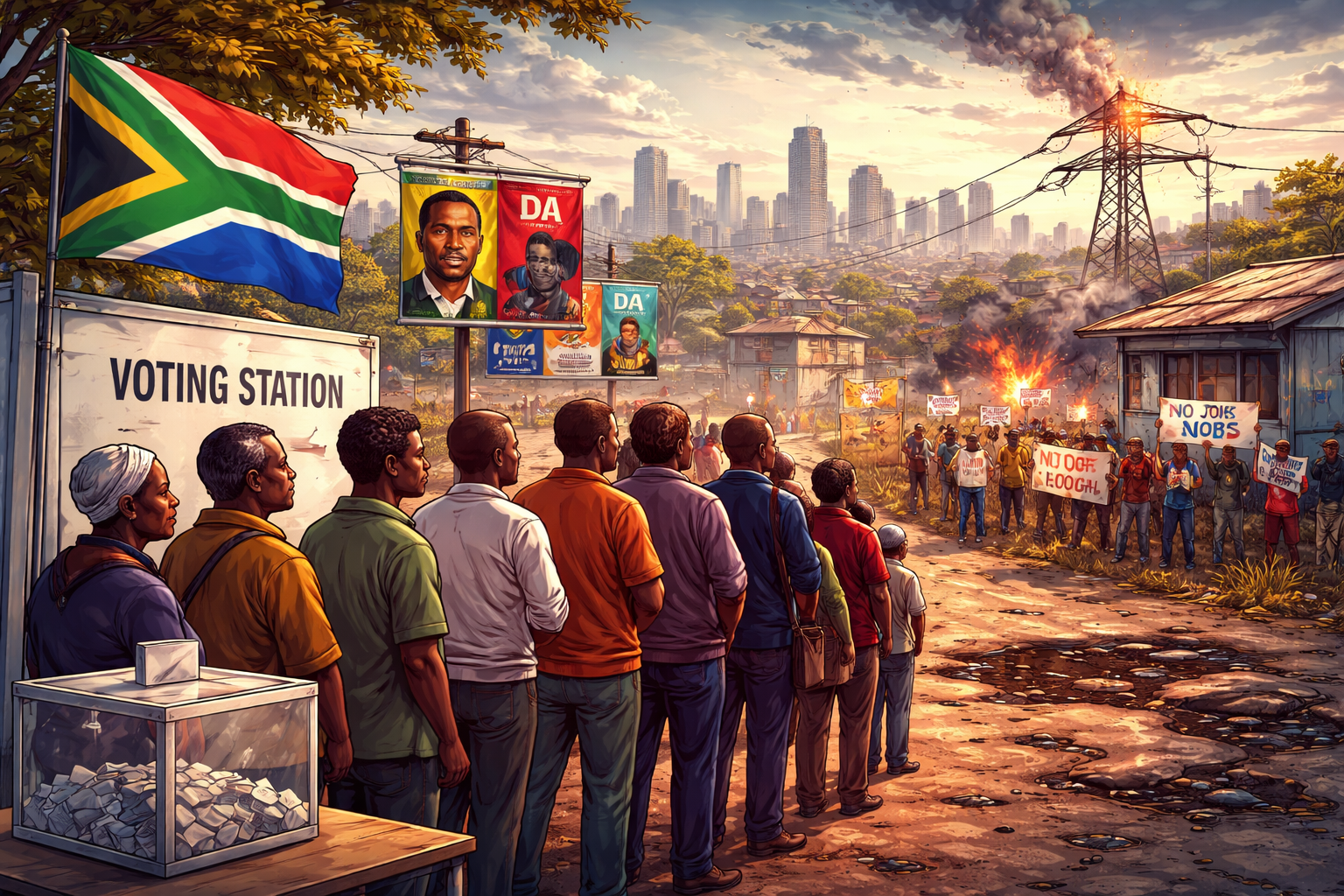
South Africa’s municipal elections have become a focal point for voters frustrated by ongoing local issues such as water shortages and service delivery failures. In townships like Tembisa near Johannesburg, residents face daily challenges including frequent electricity outages and sewage problems, prompting some to question the value of voting altogether.
As South Africans head to the polls to elect their local government leaders, the results will not only determine control over major cities but also test the waning dominance of the African National Congress (ANC), which has seen a steady decline in voter support over recent years.
Water Crisis Drives Voter Concerns
Access to clean and reliable water remains a pressing concern nationwide. Many regions, including Johannesburg and the Tshwane metropolitan area encompassing Pretoria, suffer from persistent water cuts, aging infrastructure, and water treatment failures. These problems have led to health impacts, with over 400 residents falling ill after a recent water treatment incident in Tshwane.
Despite these challenges, analysts note that political parties have yet to offer substantial or detailed plans to address water infrastructure and supply issues, offering largely transactional promises to restore and improve water access.
Decline of the ANC and Electoral Shifts
The ANC, historically dominant in South African politics, has experienced a significant drop in municipal election support — falling from 53.91% of the vote in 2016 to 45.59% in 2021. Predictions suggest support could decrease further, potentially to around 30%, leading to more coalition-led municipalities. This decline reflects a growing electorate, particularly younger voters such as Millennials and Gen Z, who demand new voices and effective governance.
Voter Lindokuhle Mbandazayo, 22, represents this shift, expressing intent to explore alternatives to the ANC in pursuit of improved local conditions.
Migration and Election Misinformation
Campaign discussions have also been shaped by protests over immigration policies and asylum processes. Parties like Action SA have capitalized on immigration concerns to garner support, though estimates suggest their voter share remains below 10%.
Meanwhile, misinformation has surged during the election period, including false claims about voting rights for asylum seekers and refugees—which are legally ineligible to vote. Electoral officials have received over 700 disinformation complaints, underscoring challenges in maintaining election integrity amidst widespread social media activity.
Voter Turnout and the Election Outcome
Historical trends show municipal election turnout significantly lags behind national elections, with 45.87% turnout in 2021 compared to 58.64% in the 2024 national vote. Political analysts emphasize that actual voter participation will critically influence council composition, particularly because half of council seats are allocated through proportional representation, which depends heavily on turnout.
The election’s outcome will thus hinge less on online discourse and campaign promises and more on whether voters in affected communities translate frustration into ballots, possibly reshaping South Africa’s local political landscape.