

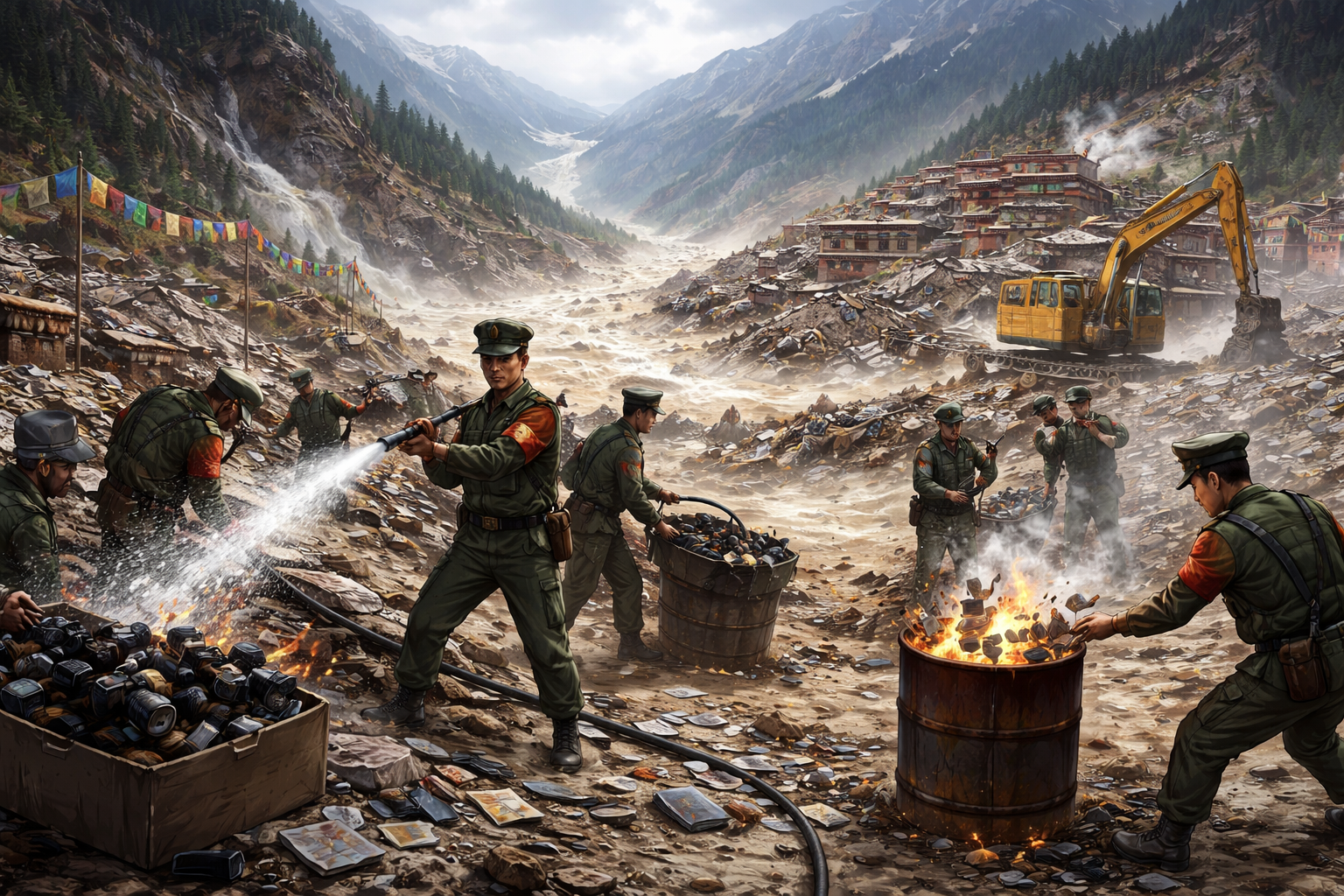
In the wake of a devastating flash flood along the China-Nepal border on August 26, starkly different responses emerged across the two neighboring regions. Nepal suffered immediate and visible destruction with hundreds dead and thousands missing, while Tibet, the Chinese autonomous region across the border, experienced a deliberate and sophisticated digital suppression of disaster images.
According to reports, survivors in Tibet who attempted to share raw footage of the flood were quickly blocked by China’s advanced state-backed censorship technology. This effort to control the narrative starkly contrasts with the public humanitarian crisis unfolding in Nepal and highlights China’s evolving approach to information control.
Experts monitoring Chinese internet activity note that the government employed precision censorship techniques, utilizing image-recognition technology to prevent videos of the disaster, especially those depicting the destruction of Gyirong Port’s border gate, from appearing on domestic platforms.
Rapid Erasure of Flood Footage in Tibet
Local residents recorded dramatic scenes as a torrent of mud and debris swept through Gyirong Port, a vital trade hub connecting China and Nepal. Footage showed a massive wave crashing into and toppling the national border gate. However, within hours, posts and videos depicting these events were removed from Chinese social media platforms such as WeChat.
China Digital Times, an independent watchdog, reported that videos of the collapsed border gate were systematically blocked even in private messages. The censorship targeted the symbolic destruction of the national gate rather than content with explicit violence or political messaging.
State-Controlled Narrative Floods Digital Space
Instead of a direct blackout, Chinese platforms used what analysts call a “saturated information” approach. Searching for terms like “Tibet mudslide” on Chinese apps results not in empty pages but curated streams of state media reports, sterile graphics, and official scientific explanations, intended to replace independent eyewitness footage.
On Weibo, the disaster briefly trended, but casualty figures were frozen early — with official reports stating three dead and 558 missing in Tibet. The focus quickly shifted to promoting government rescue efforts, including reported meetings led by China’s top leadership and official visits to the affected area.
Infrastructure Concerns and Censored Inquiries
Underlying the managed public narrative is a critical issue of infrastructure vulnerability. A censored hashtag referencing the reopening of Gyirong Port “only half a year ago” revealed public concern about repeated floods and poor site planning. The port had been devastated in 2024 and again in early 2026.
The censorship of these concerns limits public scrutiny on issues such as infrastructure reliability, glacial lake monitoring failures, and early-warning system shortcomings. Tibet’s tightly controlled political environment further restricts independent reporting and open discussion.
The Human Toll and Diplomatic Tensions
While China’s digital censorship protects the domestic image of control and resilience, Nepal faces the disaster’s severe human impact. Thousands remain missing, including workers trapped in hydroelectric tunnels, and rescue efforts continue amid challenging conditions.
Nepalese voices have publicly criticized China for failing to share critical trans-boundary disaster data, which they say contributed to the loss of life. The Chinese Embassy in Nepal denied these allegations, labeling them “fake news” and emphasizing the need for cooperation. However, families of missing persons continue to wait for clarity and aid amid strained diplomatic relations.