
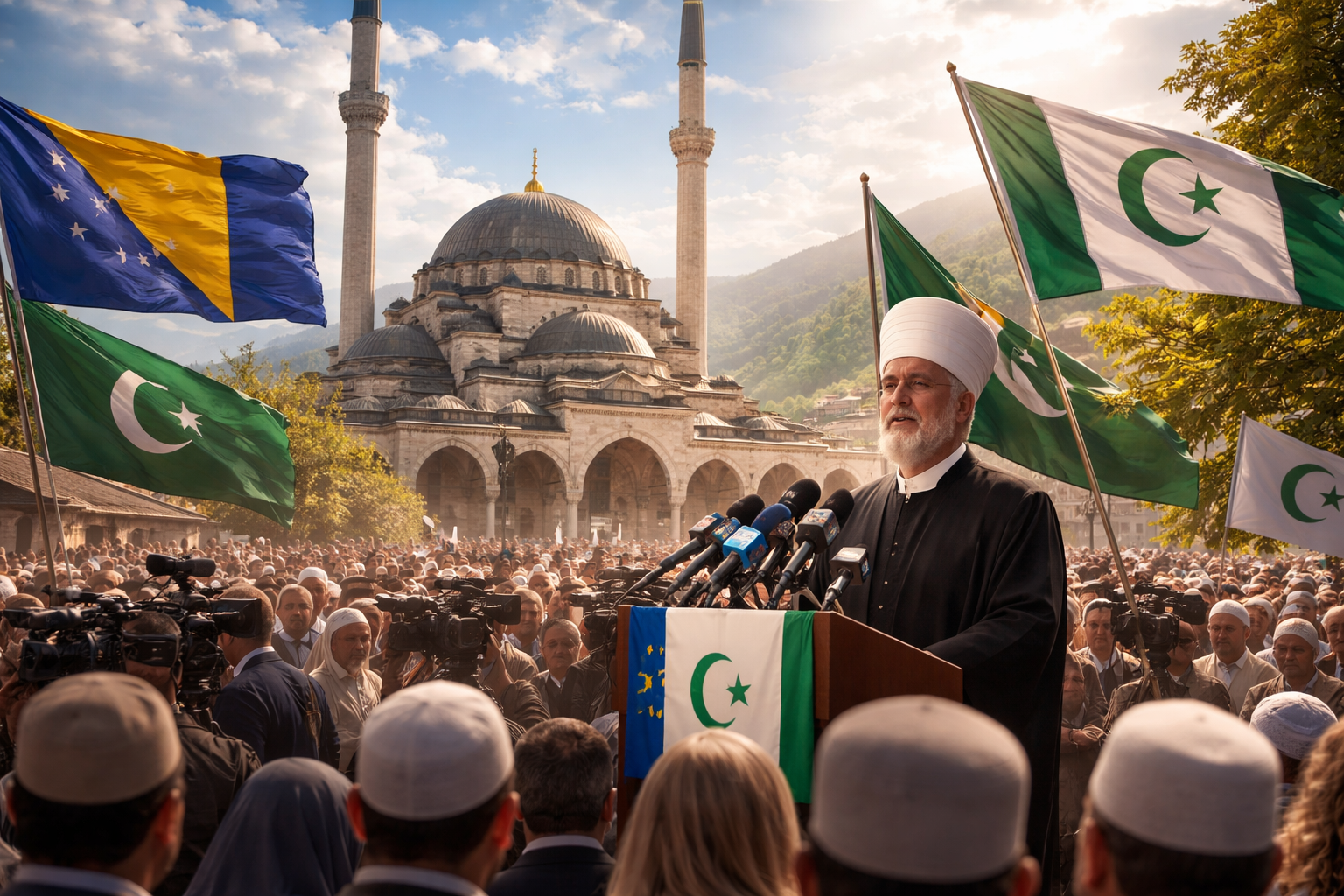
Bosnia and Herzegovina is on the verge of selecting a new Grand Mufti, known as the reis-ul-ulema, who leads the country’s Islamic community. The incumbent, Husein Kavazovic, has reached the end of his permitted two seven-year terms and will not seek reappointment.
The Grand Mufti plays a pivotal role in representing Muslim interests to the state, addressing political, moral, and social issues, and maintaining the community’s independence from foreign influence. This election carries significance beyond Bosnia’s borders, resonating with Muslims and non-Muslims across Europe.
The Candidates and Their Visions
Three figures are vying to succeed Kavazovic: Salem Dedovic, Mufti of Mostar; Nedzad Grabus, Mufti of Sarajevo; and Mensur Malkic, head of the Directorate for Religious Affairs and envoy of the current Grand Mufti. Each candidate offers distinct priorities: Malkic emphasizes institutional and religious strengthening of the Islamic Community; Dedovic views the role with a political perspective, seeking greater engagement in social debates; and Grabus, with international experience as former Grand Mufti of Slovenia, aims to fortify the community amid globalization and secularization pressures.
Historic and Institutional Context
The Islamic Community in Bosnia and Herzegovina has a unique organizational structure that dates back to Austro-Hungarian rule starting in 1878. It operates independently from the state, relying on donations, membership fees, and zakat. The community governs itself through a parliament (Sabor), a Constitutional Court, and the Riyaset, its highest executive body, headquartered in Sarajevo.
Throughout its 150-year history, the community has endured multiple political transitions—from Ottoman and Austro-Hungarian rule to Yugoslavian governance and the postwar Dayton Accords era—while actively distancing itself from radical ideologies. It has fostered cooperation with Jewish and Christian communities, exemplifying coexistence in a pluralistic society.
Significance for European Muslims
Leaders within Bosnian Muslim and broader European Muslim circles stress the importance of the upcoming election. Zenahir Mrakovic, head of the Islamic Community of Bosniaks in Germany, highlights the close historic and institutional ties shared with the Bosnian Islamic Community. Imam Benjamin Idriz from Germany notes that the Grand Mufti position in Sarajevo is unparalleled in Europe and carries weight for Muslims continent-wide.
Experts suggest that Bosnia’s model of self-organization could serve as a blueprint for institutionalizing Islam in other European countries, helping communities maintain religious identity while integrating into democratic societies. This approach contrasts with other Muslim communities shaped by different cultural contexts.
Challenges and Expectations
The new Grand Mufti will assume leadership amid ongoing challenges: Bosnia and Herzegovina’s fragile statehood, increasing attempts at external influence by powers including Ankara, Riyadh, Washington, Berlin, and Brussels, and a rising tide of anti-Muslim sentiment and Islamophobia across Europe. Right-wing populism and extremist parties are expanding, targeting Muslim participation in societal life.
Observers expect the incoming Grand Mufti to leverage the office’s democratic legitimacy actively in debates surrounding Islam’s place in Europe. The role is seen as crucial to fostering confidence among Bosniak and European Muslims and signaling to majority societies that Islam supports European values such as the rule of law, gender equality, and freedom of expression.