

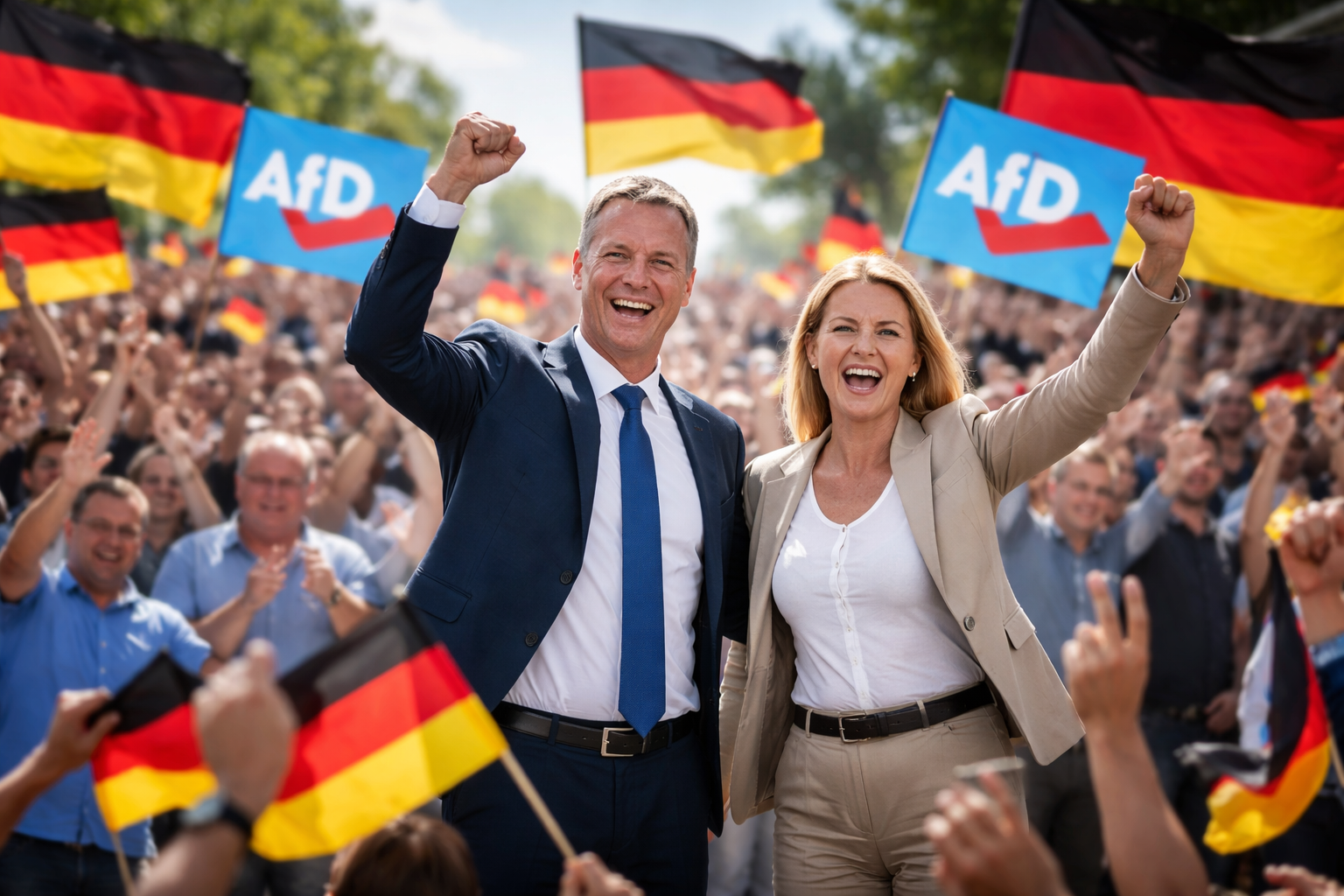
The far-right Alternative for Germany (AfD) celebrated a major electoral success in Saxony-Anhalt, marking their best performance in the region to date. AfD co-leader Alice Weidel characterized the result as a “historic” and “dream” outcome, fueled by increased turnout among former non-voters, which she framed as a victory for democratic engagement.
The AfD’s success signals widespread public dissatisfaction with the current federal government and leadership, with Weidel specifically criticizing Chancellor Friedrich Merz’s unpopularity. She emphasized voter demand for changes in policies, particularly in immigration control, energy policy, and tax reduction.
AfD Plans to Negotiate Governance While Upholding Principles
Ulrich Siegmund, AfD’s leader in Saxony-Anhalt, stated the party believes it has received a “mandate to govern” in the state. However, he emphasized the party’s intent to maintain its core principles without compromise. Siegmund expressed willingness to initiate exploratory discussions with other parties to explore potential governing arrangements, hinting at possibilities of cooperation through defections or minority governments.
Siegmund also revealed ambitions for AfD co-leader Weidel to become the German chancellor, indicating the party’s broader national aspirations beyond Saxony-Anhalt. AfD co-leader Tino Chrupalla echoed the call for a shift in national policy, criticizing the current government’s financial support for Ukraine and arguing that taxpayers’ money should prioritize domestic interests.
Implications for Germany and Europe
Weidel predicted that the Christian Democratic Union/Christian Social Union (CDU/CSU) bloc would no longer be able to secure federal election victories and projected AfD to gain at least 40% of the vote in the 2029 federal election. The party’s message centers on delivering strong leadership that aligns with what it defines as Germany’s national interests.
The election outcome has spurred varied reactions across Europe. Polish officials condemned the AfD’s victory as concerning, while French ministers warned against nationalism and xenophobia. Conversely, Hungary’s former prime minister Viktor Orbán lauded the results as the beginning of a significant political shift. Responses within Italy’s government also diverged, with Foreign Minister Antonio Tajani criticizing the AfD’s values and Deputy Prime Minister Matteo Salvini praising the election outcome.
Next Steps in Saxony-Anhalt and Beyond
Despite winning the most votes, the AfD does not hold a majority in Saxony-Anhalt’s state parliament, setting the stage for complex coalition talks. The AfD’s leadership plans to engage other parties to determine viable governance arrangements, with Siegmund willing to lead as minister-president if a stable majority is confirmed. The political dynamics in Saxony-Anhalt will be closely watched as a possible indicator of broader right-wing gains ahead of upcoming state and federal elections across Europe.