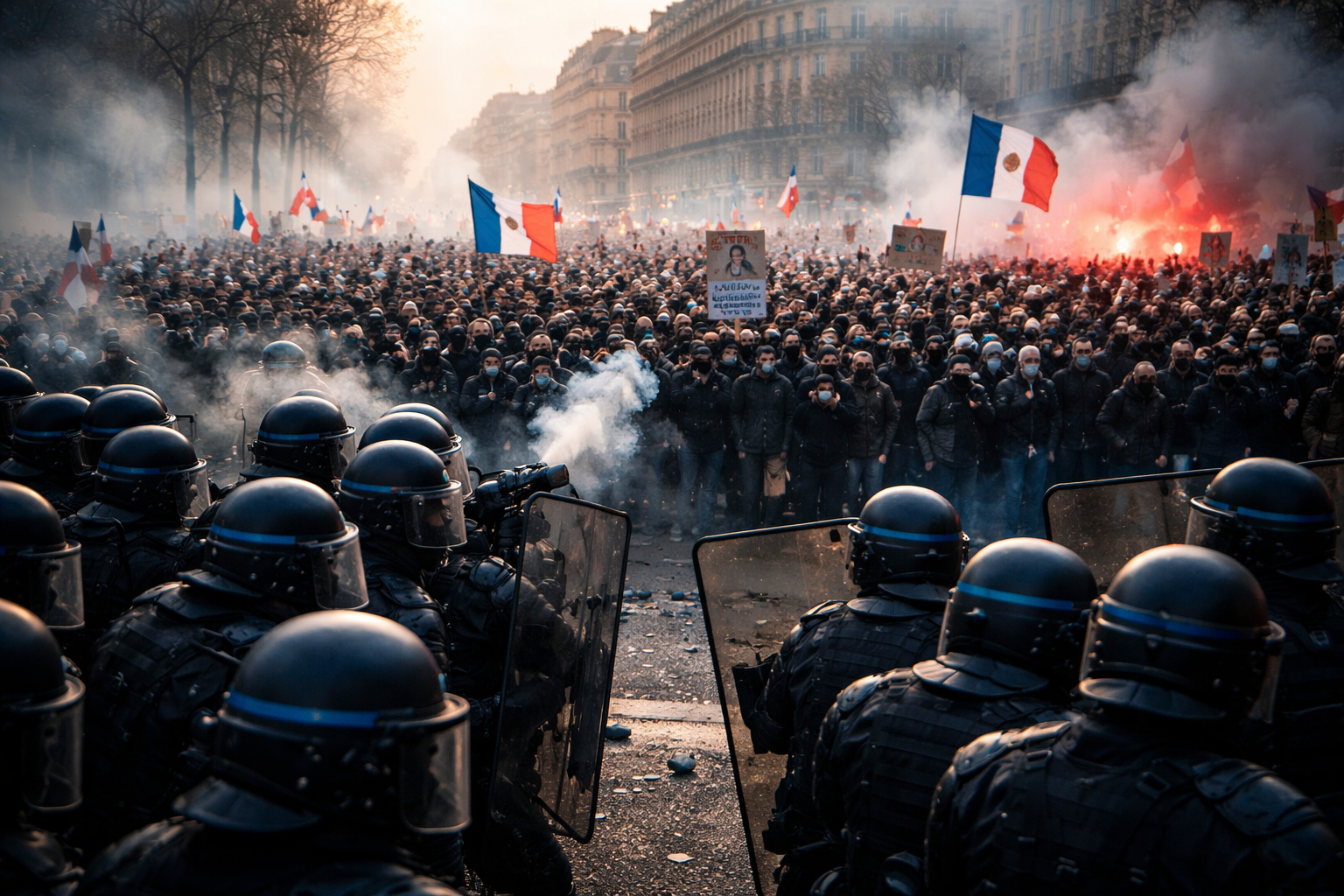
As protests sweep across France, the police force is under intense scrutiny following multiple allegations of excessive violence. Videos circulating on social media show officers engaging in harsh tactics, with some demonstrators suffering severe injuries. The French force is known for its heavier armament compared to many European counterparts.
More than half a million people protested recently, mostly peacefully, voicing concerns over public sector cuts, the cost-of-living crisis, and student demands for improved educational conditions. However, violent incidents involving rioters setting fires and attacking police complicated the response.
Heavy Arsenal and Use of Controversial Weapons
The French police routinely deploy weapons such as LBD-40 guns that fire rubber bullets, stun grenades, and tear gas—tools often restricted or banned in other European countries. Amnesty International and human rights groups have criticized the frequent use of these “non-lethal” but potentially harmful weapons, citing cases of serious injuries including blindness, amputations, and broken bones among young protesters.
Experts note that while using rubber bullets is not unique to France, the intensity and methods employed—including stun grenades with high explosive content—set French police apart. The Minister of the Interior has defended the police’s equipment as proportional and lawful under French codes, even though some devices are classified as “war material.”
Comparisons and Criticism of Policing Methods
Police experts argue that France’s crowd control approach is more confrontational compared to countries like Germany, which prioritize de-escalation. Past protests in France saw the deployment of military police and aggressive tactics, resulting in serious injuries and comas among demonstrators. Advocates highlight that international standards recommend police force be exceptional and proportionate, principles some say France has struggled to uphold.
Unlike countries with independent oversight bodies, French police misconduct is primarily investigated internally by the IGPN, which has opened multiple cases amid recent protests. Critics contend that this system lacks transparency and accountability, a concern also echoed across Europe.
Responses and the Path Forward
The Interior Minister praised police efforts in containing mixed groups of peaceful and violent protesters while preventing crimes. However, rights organizations urge the French government to fulfill human rights obligations and reconsider police tactics. Demonstrations continue with plans for further protests and the potential deployment of military forces, leaving the debate over policing methods and violence at the forefront of France’s political and social discourse.