
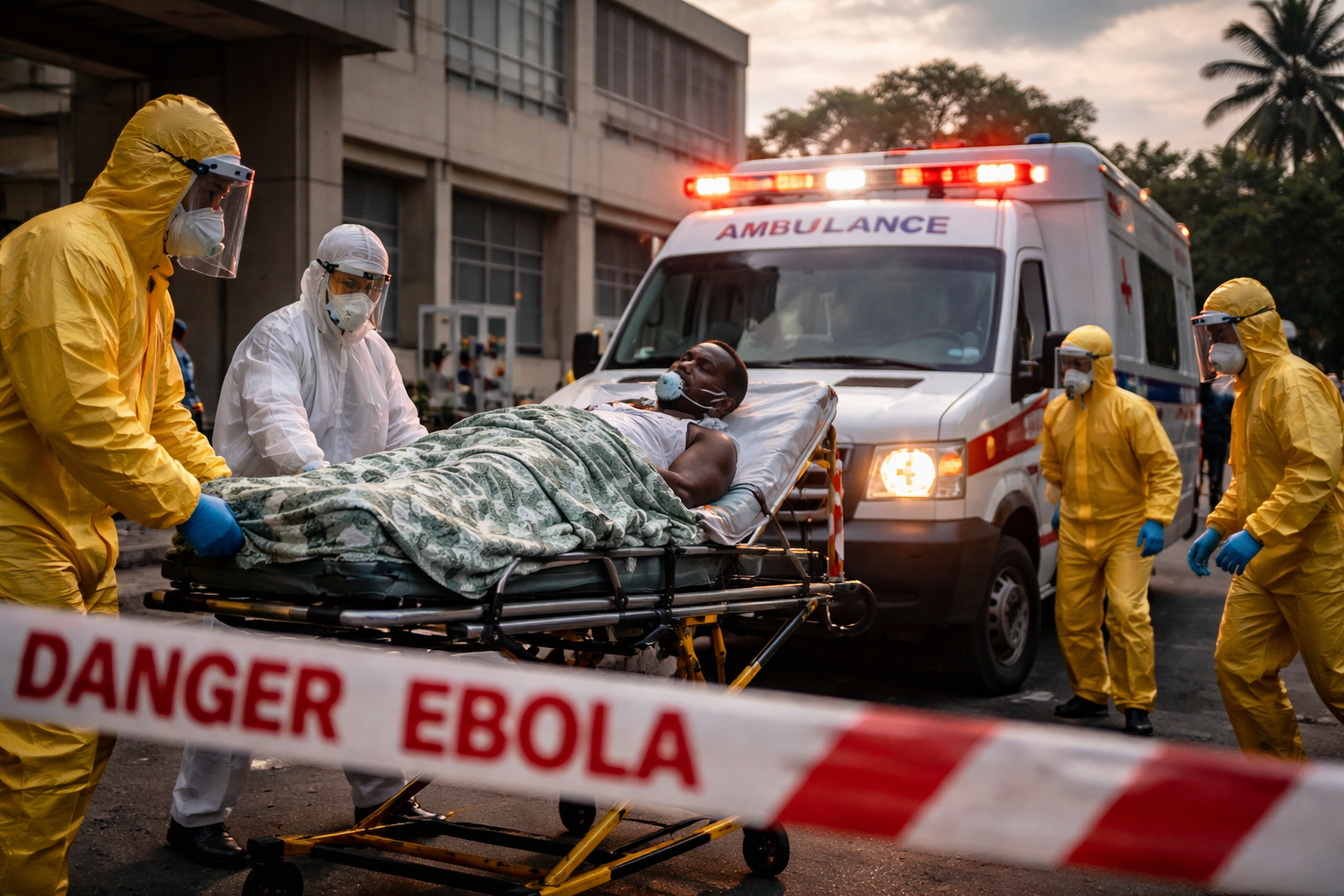
Nigeria’s Health Ministry confirmed the country’s first known Ebola case in the current outbreak, involving a woman who recently arrived from Uganda. The patient began showing symptoms on October 7 and was admitted to a hospital in Abuja on October 11 before testing positive for Ebola.
The Ebola outbreak, primarily affecting the eastern provinces of the Democratic Republic of Congo (DRC), has also spread to Uganda and Kenya. Nigerian health officials have launched contact tracing efforts for 44 individuals who had contact with the infected woman to contain the virus.
Details of Nigeria’s Ebola Case
The Nigerian Health Minister stated that the patient traveled on an international flight from Uganda, one of the countries affected by the ongoing outbreak. Following her admission to a private hospital in Abuja, the diagnosis of Ebola was confirmed. Authorities have immediately started tracing those exposed to the patient to prevent further transmission.
The Nigeria Center for Disease Control had increased surveillance measures weeks earlier after Kenya reported its first cases, enhancing preparedness through early detection, isolation, laboratory diagnostics, infection control, and risk communication efforts.
Scope of the Current Ebola Outbreak
The current epidemic, driven by the Bundibugyo Ebolavirus strain, has resulted in over 9,000 confirmed cases and more than 4,300 deaths, reflecting a fatality rate near 50%. Most cases remain concentrated in the DRC, particularly near the Ugandan border in the east.
Although Kenya recorded limited cases with the first patient dying and no reported spread beyond his contacts, Uganda had earlier reported about 20 cases and 2 deaths before being declared Ebola-free in late August. Nigeria’s recent case raises concerns about the potential resurgence of the virus linked to cross-border travel.
Comparing to Past Outbreaks
This outbreak, which officially began in May but likely started earlier with undetected cases, is the second-largest on record and is spreading faster than previous ones. By comparison, the 2014-2016 West African epidemic caused approximately 11,300 deaths from around 28,500 cases over 30 months, whereas this outbreak reached over 9,000 cases in a shorter timeframe.
The scale and speed of transmission reflect both the characteristics of the Bundibugyo strain and improvements in detection and diagnostics, which may contribute to higher reported numbers.