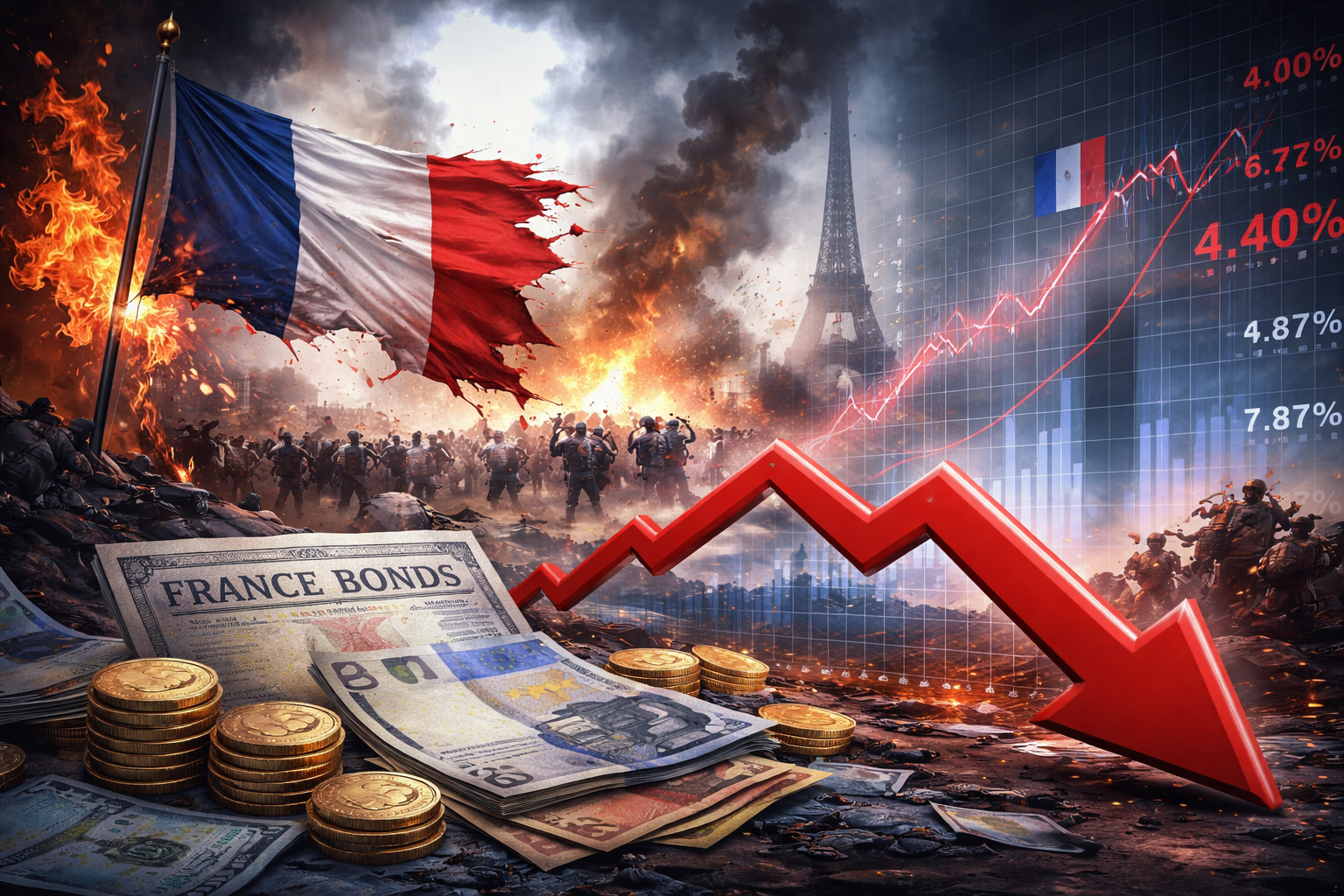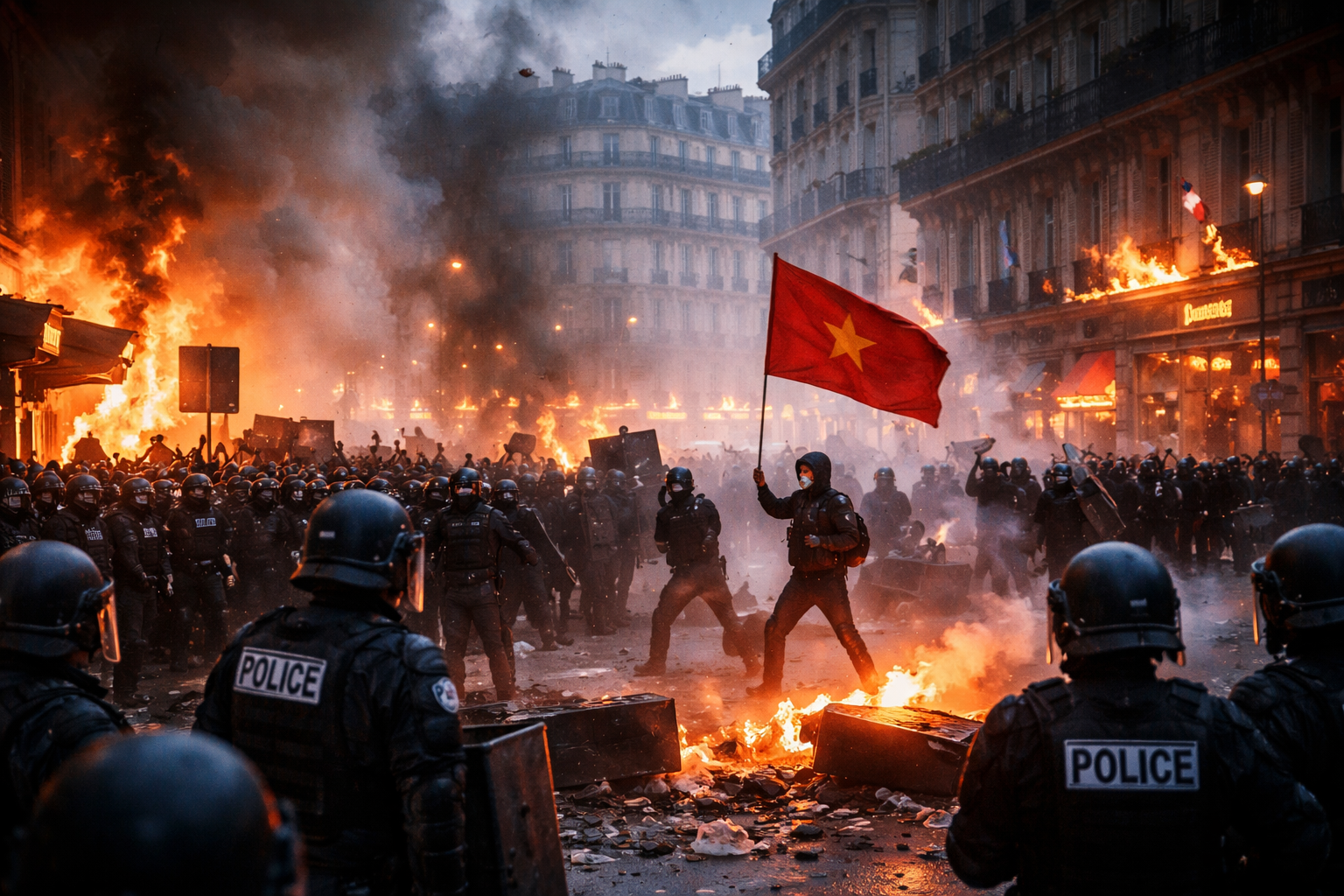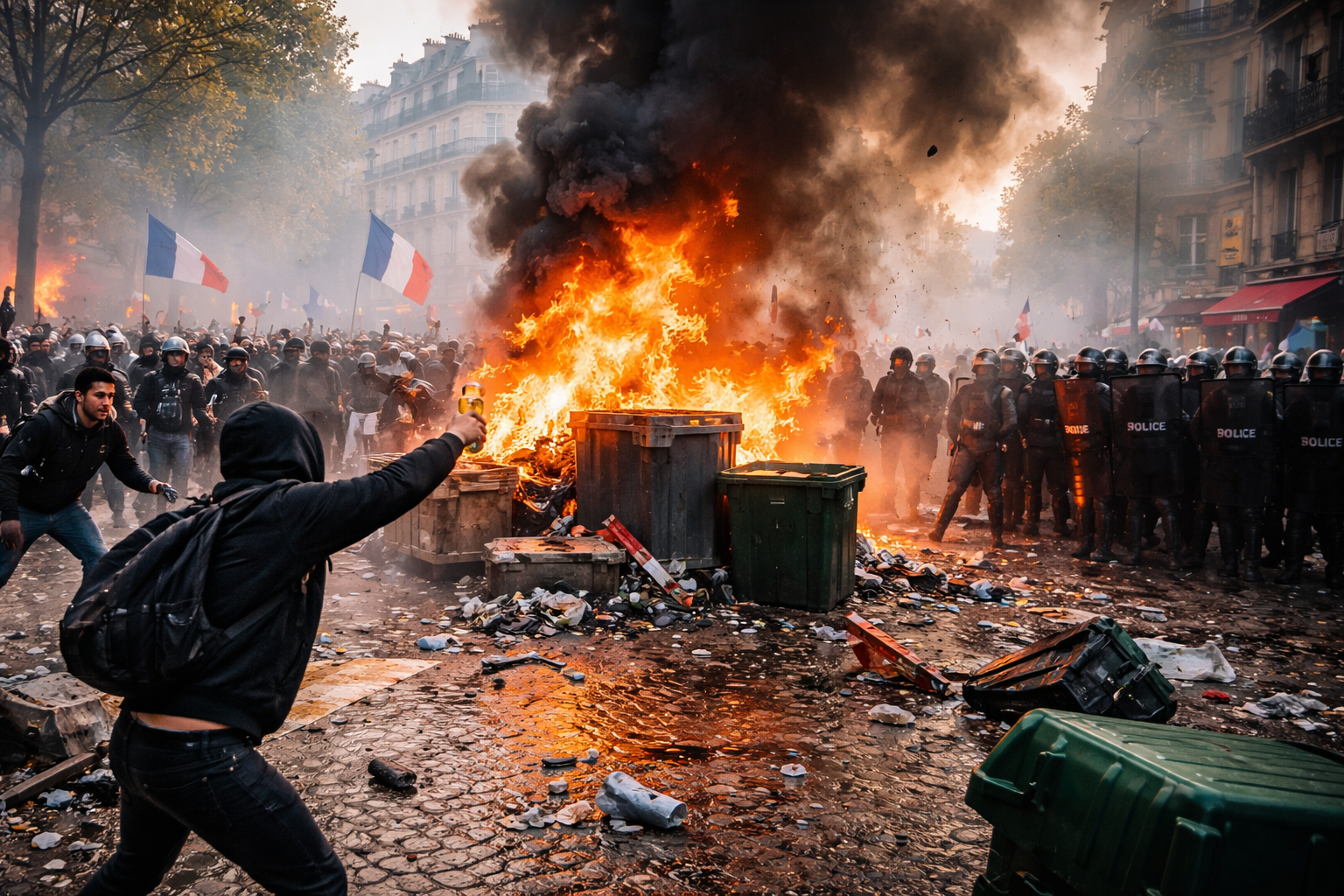
Over the weekend, France experienced widespread unrest with violent riots erupting across cities including Paris, Limoges, and Lyon. These disturbances followed weeks of student protests against the education system and broader social grievances related to cost of living and fuel prices. Authorities arrested approximately 2,400 people nationwide, including 855 in Paris alone.
President Emmanuel Macron publicly condemned the “unbridled violence” in a televised address Sunday evening, distinguishing between peaceful protesters with legitimate demands and those involved in destruction and looting. The unrest prompted sharp criticism of the government’s handling of the situation and fueled concerns about political instability.
Widespread Violence and Arrests
Riots saw makeshift barricades built from bicycles set ablaze in Paris, the destruction of the town hall steeple in Limoges, and fires set to the tourism office in Lyon. A group of masked individuals was reported smashing street furniture, torching vehicles, and looting stores. Peaceful marches with hundreds of thousands of participants, including schoolchildren and families, took place alongside smaller violent factions.
Paris authorities described the level of violence as unprecedented. Lamia El Aaraje, the Socialist deputy mayor of Paris, stated the city faced violence unlike anything previously seen. The police response, criticized as both harsh and inadequate, saw confrontations with protesters leading to serious injuries among teenagers and accusations of disproportionate arrests. Legal observers noted the number of arrests during the student protests surpassed those in an entire year of Gilets Jaunes demonstrations.
Underlying Causes and Reactions
Student protests, ongoing since September, focus on demands for improved school conditions, smaller class sizes, and university admissions reforms. These grievances reflect broader frustrations with social inequality and the economic pressures facing younger generations. Sociologists emphasize that the unrest stems from a complex set of intersecting crises, including climate change, political disillusionment, and rising far-right influence.
Political leaders have expressed concern over the government’s inability to anticipate or control the protests and riots. Marine Tondelier, leader of the French Greens, lamented how entire cities were left vulnerable to rioters while peaceful demonstrators faced police violence, calling for the interior minister’s resignation. Conservative and far-right voices warn of threats to democracy and state authority.
National and Regional Impact
The law enforcement and political challenges exposed by the unrest underscore the widening disconnect between Macron’s administration and the French populace. Economic hardship, particularly rising fuel costs and cuts to public services, have compounded frustrations.
The weekend’s violent events have drawn attention beyond France, with related protests also reported in Spain, Portugal, and Italy, signaling a regional pattern of youth-driven dissent across Europe. Officials and commentators highlight the need for political solutions addressing the root social and economic issues underlying the demonstrations and violence.