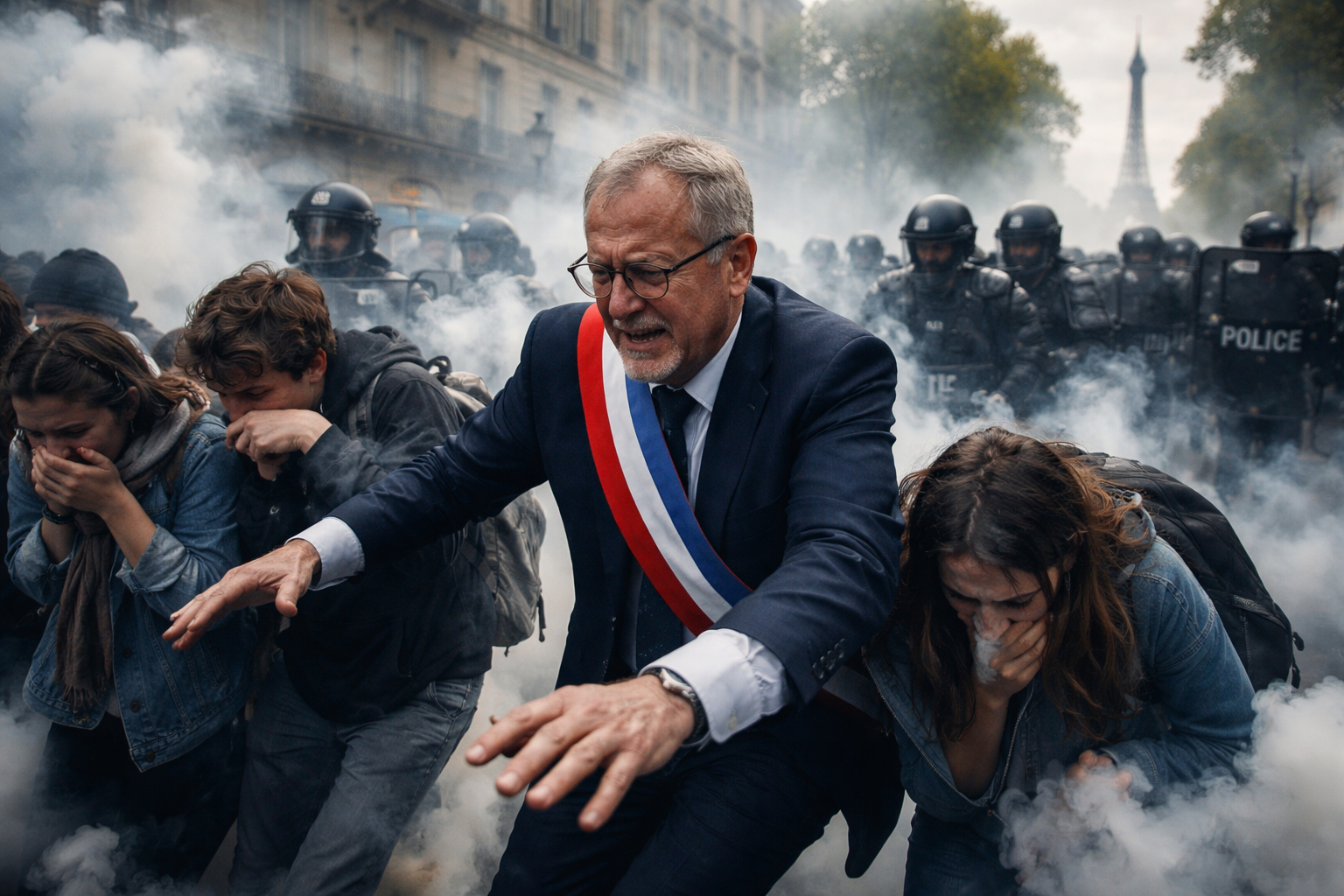


Recent student protests in France have showcased the country’s enduring revolutionary spirit, with thousands of teenagers facing arrests and risking injury to block schools and demonstrate in public. Meanwhile, British students, despite facing significant challenges such as soaring student debt and limited housing affordability, voice frustrations less frequently through street protests.
This contrast stems largely from differing civic traditions and education systems in the two countries, says Kitty Sayers, a journalism master’s student who grew up in France as a British national.
Historical and Educational Roots of French Protest Culture
In France, protest and insurrection are woven into the national identity, reinforced by compulsory education. French students learn repeatedly about revolutionary events—the French Revolution and the 1968 student protests—as foundational to their freedoms. From around age 11, pupils engage in debates and moral education that emphasize civic responsibility and the right to protest as a legally protected avenue for change.
This education instills a view that citizens have a social contract with the state: By paying taxes and obeying laws, they expect fair governance. When actions like raising the retirement age or increasing electricity costs violate this social contract, mass protest is seen as the appropriate response. Consequently, young Europeans in France view taking to the streets not as rebellious but as exercising their roles as active citizens.
The British Context: Individualism and Limited Collective Action
British youth, by contrast, tend to embrace a cultural model emphasizing individualism and personal freedoms over collective political action. Although Britain has historic legacies of protest and social upheaval, such as suffragettes and the poll tax riots, these are often regarded as episodic rather than central national narratives.
The Thatcher era’s lasting impact on weakening unions also contributed to a public less inclined to organize widespread protests. Young people in the UK often channel their activism into established causes, such as climate change or international solidarity movements, rather than initiating mass street actions themselves. Their political engagement remains significant but is less likely to manifest as frequent, large-scale demonstrations.
Cross-Generational Solidarity and State Response in France
The French student protests have received considerable solidarity from various professional groups and the wider society. Parents, many of whom protested as students themselves, have joined demonstrations and encouraged broader parental support for upcoming general strikes. This cross-generational backing reinforces the legitimacy of youth activism and frames it as part of shared citizenship rather than delinquency.
However, the state’s forceful reaction to recent protests, including police violence and hundreds of arrests of minors, reveals tension beneath this cultural acceptance. Some conservative students and citizens criticize the protests as politically motivated disruptions, showing that public opinion remains divided.
According to Sayers, this robust tradition of protest education and civic engagement explains why French teenagers mobilize quickly and massively, supported by a society that generally views protest as a fundamental right and duty. In contrast, British youth lack this ingrained communal framework and therefore rarely take to the streets with the same immediacy or scale.