
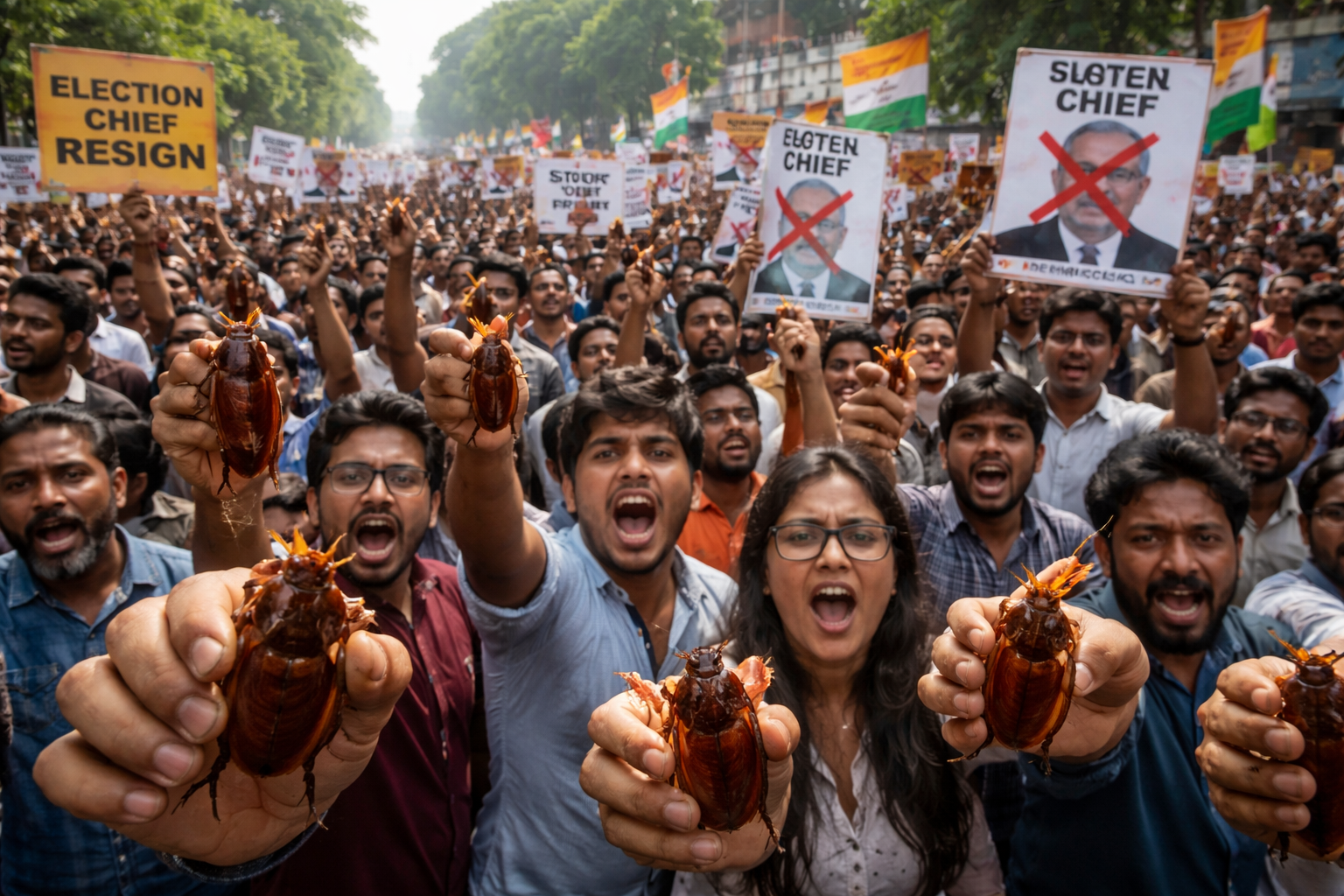
India’s Cockroach Janta Party (CJP) has organized a nationwide march to New Delhi on Saturday after its ultimatum demanding the resignation of Election Chief Gyanesh Kumar was ignored. The protests focus on allegations of irregularities in voter roll management amid a massive re-verification effort called the Special Intensive Revision (SIR).
Authorities have intensified security and restricted gatherings at Jantar Mantar, the designated protest site, detaining demonstrators including opposition leaders and student activists. The protests have drawn wide attention due to the stakes involved in maintaining the credibility of the world’s largest democratic election process.
Electoral Roll Dispute Triggers Protests
The latest unrest stems from a report by the Indian Express revealing internal objections raised by Election Commissioners Sukhbir Singh Sandhu and Vivek Joshi. Over ten months, they formally challenged decisions related to voter registration changes and control of electoral roll data. Sandhu complained that actions taken were “unauthorized and illegal,” contradicting the written advice of the two commissioners.
Gyanesh Kumar, appointed in 2025 by a panel led by Prime Minister Narendra Modi, including opposition member Rahul Gandhi who opposed Kumar’s appointment, now faces scrutiny. Alongside his colleagues, Kumar oversees the SIR, an effort to remove duplicates, deceased voters, and foreign illegal immigrants from electoral rolls. Critics say more than 130 million names have been removed nationwide, raising concerns about disenfranchisement.
Who Are the ‘Cockroaches’ and Their Demands?
The CJP emerged after a remark by India’s Chief Justice Surya Kant referring to unemployed youth as “cockroaches,” which the group adopted as a symbol of youth frustration over education and employment issues. The movement has amassed nearly 25 million Instagram followers.
The group’s demands include Kumar’s resignation, criminal proceedings against him, an immediate halt to upcoming elections, freezing the SIR process, and repealing the 2023 law governing Election Commissioner appointments. The CJP first gained national attention by protesting leaked competitive exams, securing the resignation of a former education minister.
Broad Coalition of Protesters and Government Response
The CJP is among multiple factions calling for protests. Student groups, civil society members, and opposition leaders including Rahul Gandhi and Priyanka Gandhi Vadra have joined the demonstrations. Farmer activist Rakesh Tikait, known for leading major protests in 2020-2021, has also expressed support.
The Election Commission denies any internal split or overreach, asserting unanimous decisions on the SIR. Officials criticized opposition for not scheduling meetings and rejected accusations of political suppression. Delhi police declared the October 10 protest illegal and urged citizens to avoid participation.
Security Measures and Anticipation of Saturday’s March
New Delhi has deployed about 43,000 security personnel and imposed barricades around key locations such as the Election Commission office. Several protesters and journalists linked to prior CJP demonstrations reported intimidation tactics. National spokesperson Deepak Baliyan was detained but released the same day.
Authorities previously used tear gas and pellet firing to break up protests. The government and security forces remain vigilant as the scheduled march approaches, signaling ongoing tensions around electoral integrity and youth political activism in India.