

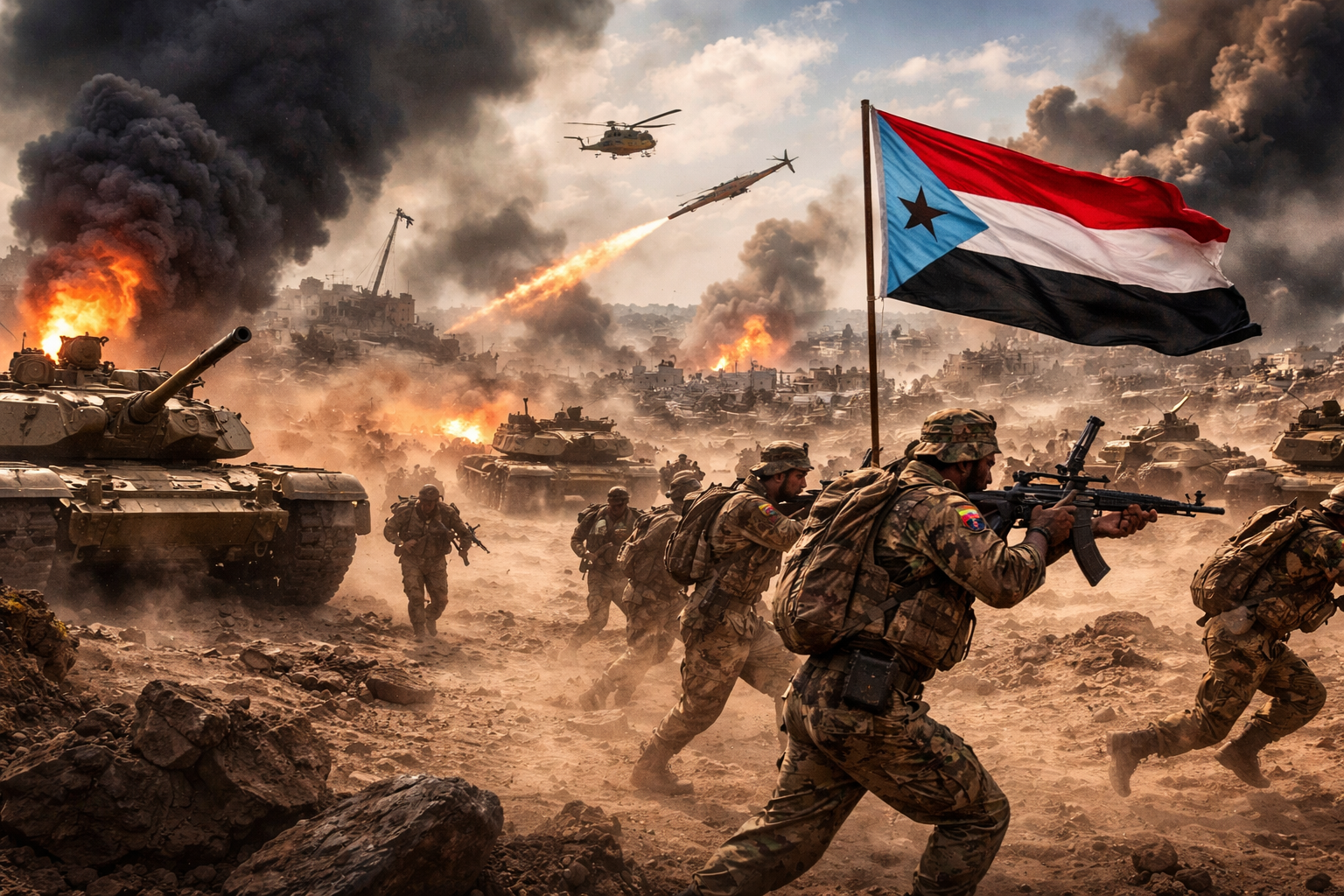
Yemen’s internationally recognized government, supported by Saudi Arabia, announced a new military operation Sunday targeting territory held by Houthi rebels backed by Iran. The operation comes amid heightened conflict around the strategic southwestern city of Taiz, a crucial battleground in Yemen’s prolonged civil war.
Rashad al-Alimi, head of Yemen’s Presidential Council, declared the start of the offensive in a televised address, emphasizing an effort to restore state authority across the nation. This announcement followed the Houthis’ recent capture of a key road linking Taiz with the government-controlled city of Aden, isolating Taiz after a siege lasting more than a decade.
Escalating Violence in Taiz Region
Fierce clashes over the past day reportedly resulted in more than 70 deaths near Taiz, according to the AFP news agency. Local residents have also reported explosions near Riyadh, Saudi Arabia, signaling regional tensions linked to the conflict.
Regional Responses and Military Alliances
In reaction to the escalation between Saudi Arabia and the Houthis, the Pakistani Foreign Ministry announced that the Mecca Alliance—which includes Pakistan, Saudi Arabia, and Turkey—held an emergency meeting. The alliance condemned Houthi attacks on Saudi Arabia’s holiest cities, Mecca and Medina, and agreed to deploy military forces and capabilities to Saudi Arabia.
Background and Conflict Dynamics
The renewed hostilities mark a revival of Yemen’s civil war following a four-year ceasefire established in 2022. That truce broke down in July after the Houthis permitted an Iranian plane to land in Yemen’s capital, Sanaa, against Saudi airspace restrictions. Subsequently, the Houthis declared a maritime blockade on Saudi Arabia and seized strategic locations along the Red Sea coast, including the Bab el-Mandeb Strait, a vital international shipping route.
The Houthis have controlled Sanaa and much of Yemen’s western population centers since 2014. The government offensive seeks to reverse those gains amid questions about regional support and the conflict’s wider geopolitical implications.