

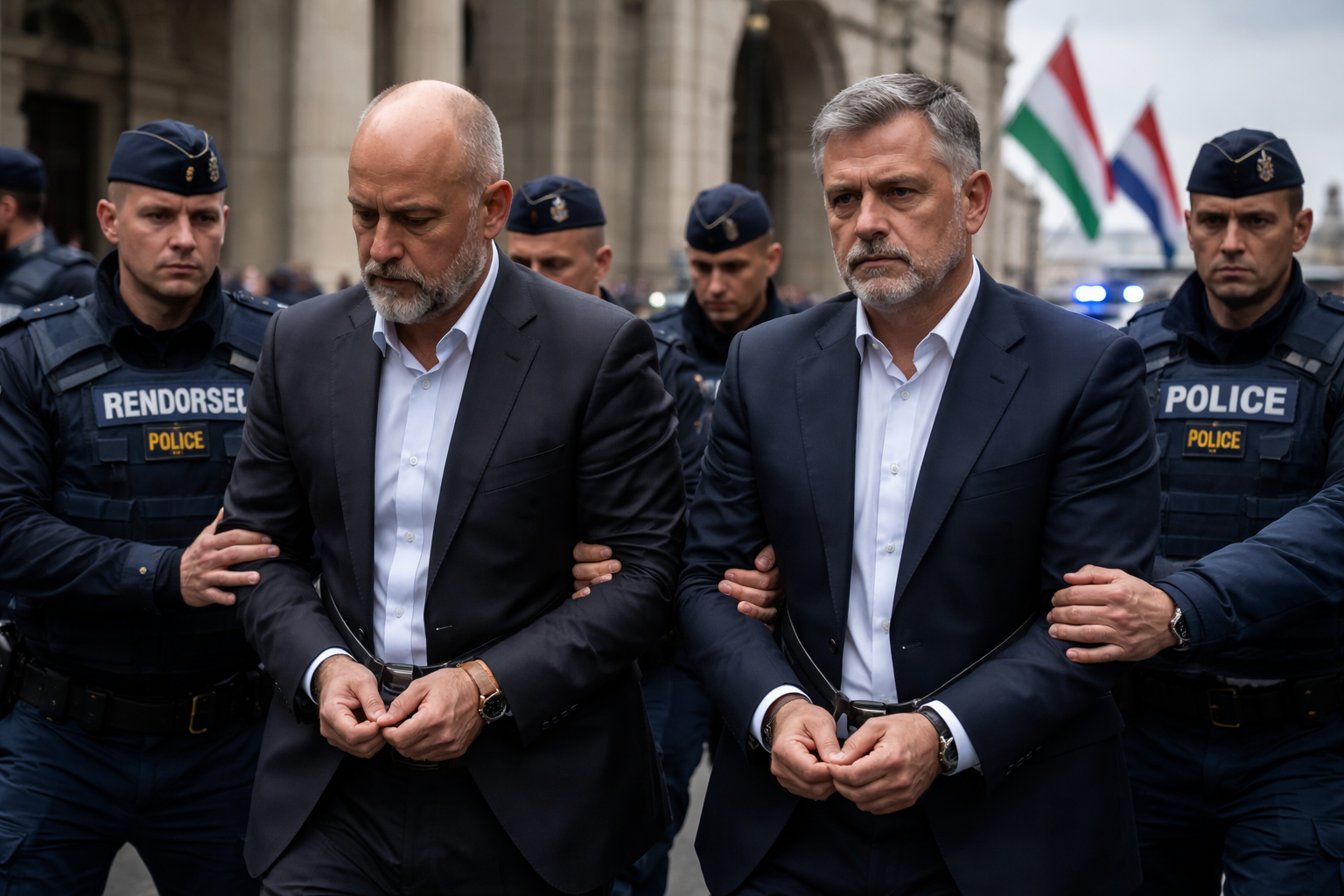
Two former ministers from Hungary’s previous far-right government, led by Viktor Orbán, were detained on suspicion of bribery and misappropriation of public funds. Their arrests followed a parliamentary vote to lift their immunity, moving forward probes into alleged corruption during Orbán’s 16-year tenure.
Balázs Hankó, a former culture minister and Fidesz party member of parliament, was taken into custody regarding the criminal misuse of approximately 17.3 billion forints (€47 million) from Hungary’s national cultural fund. Prosecutors claim funds were diverted to artists and groups with connections to Fidesz and used to finance the party’s 2026 election campaign. Hankó has denied wrongdoing, calling the charges a “political show trial.”
Miklós Seszták, an MP representing Fidesz ally KDNP and former minister for national development between 2014 and 2018, was also detained over an alleged bribery scandal involving more than 12 billion forints (€32.6 million) connected to state bus purchases and public construction projects. These accusations focus on inflated prices for secondhand buses. Seszták has similarly denied any misconduct.
Parliament Votes to Lift Immunity Amid Anti-Graft Drive
The arrests came shortly after the Hungarian Parliament voted to suspend parliamentary immunity of Hankó and Seszták, as well as Prime Minister Péter Magyar, whose party won April elections on an anti-corruption platform. Magyar requested his immunity be lifted to address accusations of an unrelated incident involving allegedly throwing a phone into the Danube River, which he maintains was politicized.
Magyar emphasized the significance of the arrests, stating that for the first time in decades, Hungarians can witness “real regime change and equality before the law.” He also accused the previous governments of Orbán of causing Hungary to lose between 8% and 10% of its GDP due to corruption and fund misuse.
Broader Anti-Corruption Measures Unfold
The Hungarian national asset protection and recovery office, established under Magyar’s administration, announced initial cases it aims to investigate. These include allegations of selling political connections for residence permits, corruption in local council expenditures, involvement of a prominent real estate mogul in questionable state investment dealings, and misuse of funds on propaganda activities by a now-abolished sovereignty protection office from Orbán’s era.
Following police raids at Fidesz party offices in July related to the cultural fund scandal, Orbán accused authorities of attempting to delegitimize his party through a politically motivated investigation.
Outlook
The detention of senior former officials linked to Orbán’s government marks a notable shift in Hungary’s political landscape under Magyar’s leadership. These high-profile investigations represent the first major legal actions targeting Orbán-era figures and signal the administration’s efforts to tackle long-standing allegations of corruption and abuse of public resources.