

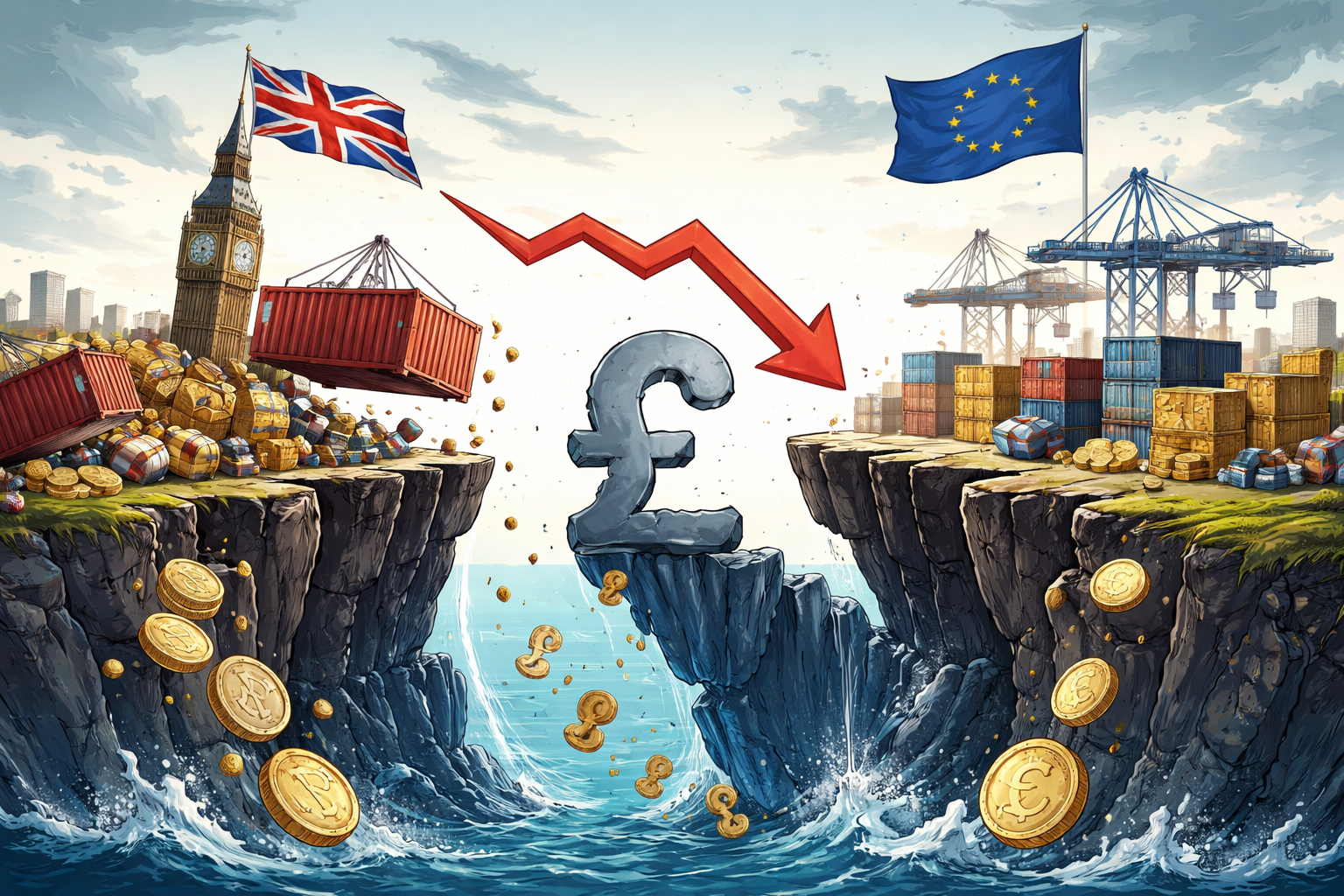
The UK is losing up to £6.5 billion annually in exports to the European Union due to ongoing regulatory barriers following Brexit, a new report from the Institute for Public Policy Research (IPPR) reveals. The main hurdle is the absence of a mutual recognition agreement (MRA) allowing UK manufacturers to avoid duplicative product testing required by the EU.
The economic think tank’s analysis suggests that since the UK’s post-Brexit trading arrangements took effect in 2021, exporters have faced extra administrative costs that have led some to abandon EU markets altogether or establish subsidiaries within the trade bloc. This regulatory disconnect may be costing the UK economy about 0.18% of its national income each year, surpassing the expected gains from recent trade deals like the Comprehensive and Progressive Agreement for Trans-Pacific Partnership (CPTPP) with countries such as Japan, Canada, Australia, and Singapore.
Trade Losses Concentrated in Key Industries
The IPPR’s findings highlight that the industries most affected by the lack of a product standards alignment are motor vehicles and parts, electronics, and pharmaceuticals. Motor vehicle exports could have seen an increase of between £2.48 billion and £3.42 billion annually. Electronic exports might have been £1.17 billion to £1.67 billion higher, while pharmaceutical exports could have benefitted by £740 million to £820 million per year.
Joseph Sassoon, an economist at IPPR and co-author of the report, noted that the study rigorously ruled out other potential causes of export decline such as COVID-19 disruptions, global supply chain shifts, Russia sanctions, and energy market volatility. The impact of the missing MRA remained significant across all models.
Political Context and Calls for Renewed Negotiations
This report adds weight to demands from some political figures for the UK government to resume negotiations with the EU to establish a mutual recognition deal. At the recent Liberal Democrat conference, Ed Davey, the party leader, emphasized that rejoining the EU single market and customs union could boost exports and stimulate economic growth by aligning standards with the UK’s largest trading partner.
Earlier in the year, the UK’s Labour leadership proposed creating a single market for goods with the EU, a suggestion that Brussels officials declined, emphasizing the EU’s insistence on adherence to core principles and cautioning against selective alignment with EU policies.
Opportunities to Reduce Post-Brexit Trade Frictions
The IPPR report underscores that a mutual recognition agreement based on dynamic alignment—where the UK keeps product regulations synchronized with the EU—would allow authorities on both sides to accept each other’s product assessments. This would reduce costs and uncertainty for exporters and could recover billions in trade lost due to current regulatory barriers.
The findings present a clear opportunity to ease UK-EU trade friction and improve economic outcomes, providing a focal point for future UK-EU negotiations.