
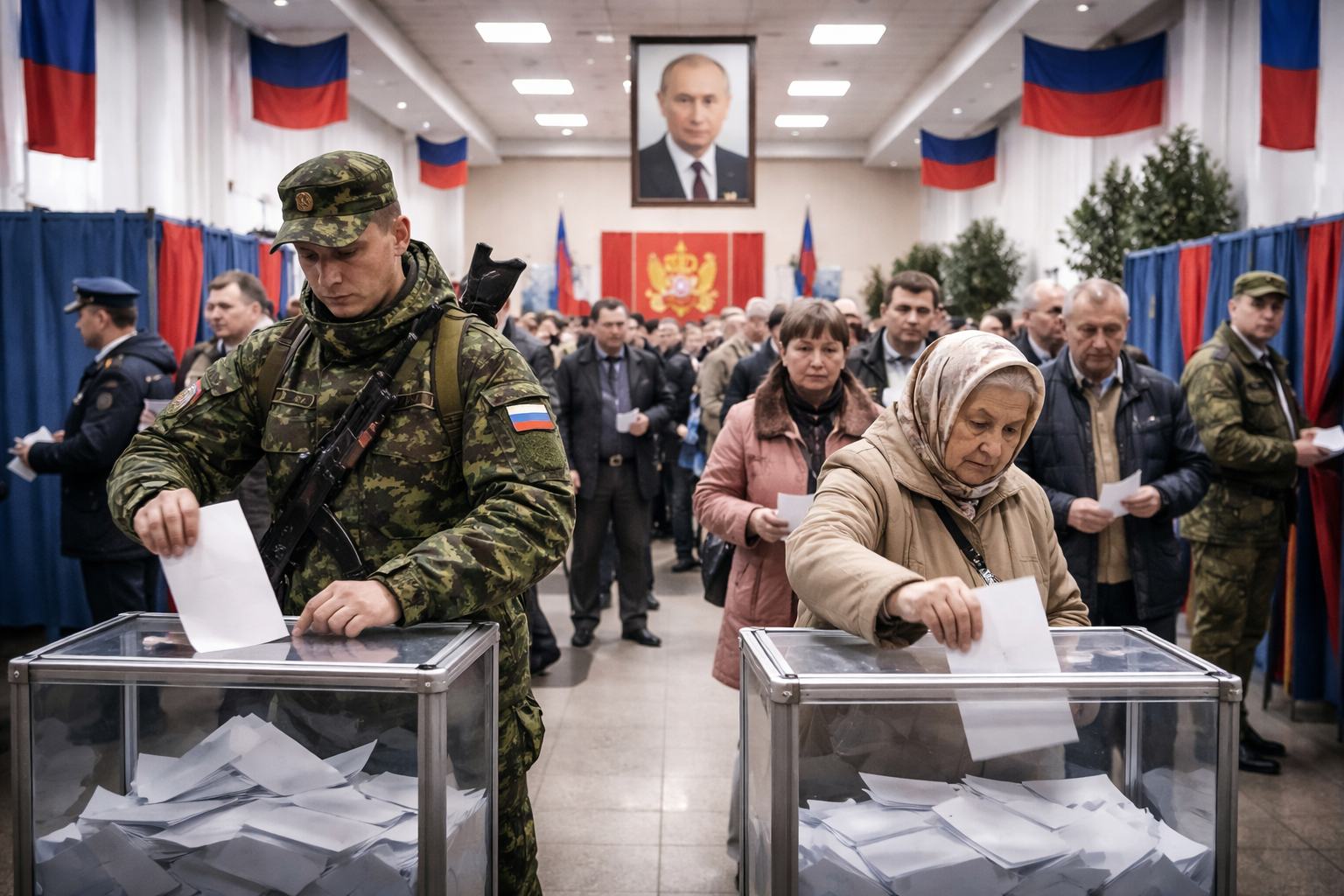
Russians began voting in a three-day election to choose a new State Duma, the country’s lower house of parliament, with the outcome widely expected to reinforce the ruling party’s long-standing dominance. The vote comes amid the ongoing war in Ukraine and increasing Kremlin efforts to consolidate political control.
Vladimir Putin’s United Russia is forecast to maintain its hold on the legislature, joined by a few nominal opposition parties that consistently align with the Kremlin on key matters. The election is the first since Russia launched its full-scale invasion of Ukraine in 2022, against the backdrop of a conflict that has moved closer to home for many Russians through drone strikes on industrial infrastructure across the country.
Opposition Crackdown and Controlled Campaign
Authorities intensified their grip on the electoral process by excluding Yabloko, the only liberal, anti-war party, from the ballot. This move eliminates the last significant political voice openly opposing the Ukraine war. The remaining opposition groups, including the Communists and the far-right Liberal Democrats, represent what is known as the “systemic opposition”—parties permitted limited criticism yet loyal to United Russia on matters the Kremlin considers vital.
Political analysts describe the election campaign as unusually subdued and lacking engagement. Candidates largely avoided controversy or debate, with some failing to appear for televised discussions, which sometimes resulted in awkward, half-empty studio events. Campaign materials from United Russia featured low-budget production and artificial intelligence techniques but offered no compelling slogans or policy proposals.
Election as a Tool for Kremlin Legitimacy
Experts note that despite the elections not being free or fair, the Kremlin uses them to project legitimacy and popular support for the government and the war effort. In a televised address, Putin explicitly linked voting to demonstrating national unity in the face of external pressures, framing participation as a show of support for Russian soldiers and shared national values.
Public Anxiety and Uncertainty After the Vote
While the election result itself is largely predetermined, many Russians are focused on what the next phase may bring. With Russian military progress in Ukraine at a costly stalemate, rumors of a new large-scale mobilization circulate widely. Some young men have already left the country, anticipating the possibility of another draft similar to last year’s wave of conscriptions. Even individuals close to the Kremlin express uncertainty about post-election plans, illustrating widespread apprehension.
Although Putin recently dismissed the likelihood of imminent mobilization, the unease persists. Voters and officials alike recognize that a compliant new State Duma could grant the Kremlin greater freedom to implement potentially unpopular policies related to the war effort, once the election process is complete.