
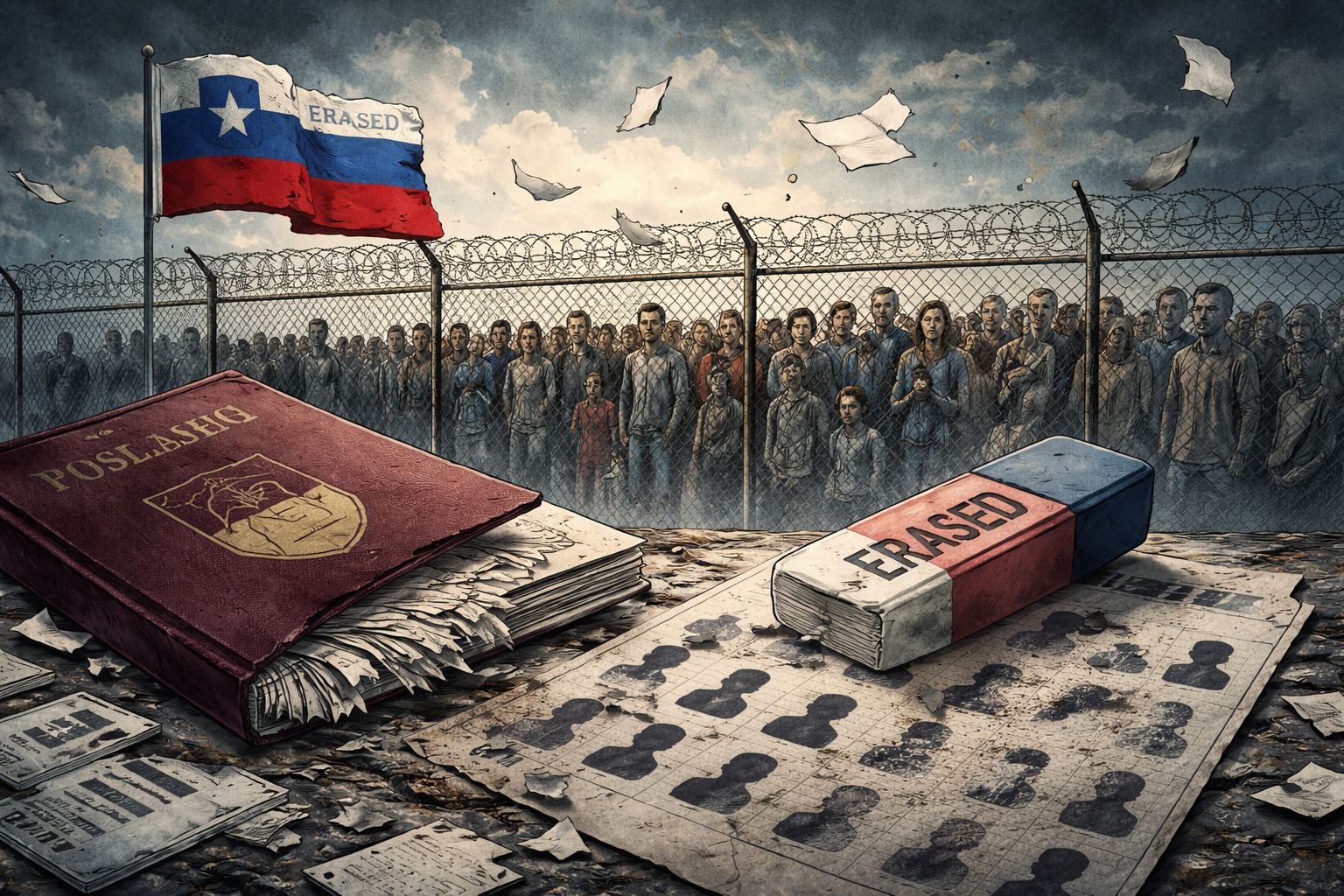
In February 1992, the Slovenian government abruptly erased 25,000 people from its official citizen registry. These individuals, mostly born in other regions of the former Yugoslavia but living permanently in Slovenia, were transformed instantly into illegal immigrants without warning or the right to appeal. This unprecedented action stripped them of all legal protections, including residency rights, healthcare, pensions, and employment.
The affected population amounted to about 1.3% of Slovenia’s population at the time. The government’s declared aim was to remove what it perceived as a “fifth column” of Balkan residents and solidify Slovenia’s alignment with Europe after the dissolution of Yugoslavia.
Human Impact and Anecdotes
The human toll was profound and traumatic. One mother recalls taking her son to school registration, only to be told by officials that he did not legally exist. Many were forced into hiding, working illegally with no protections and living in constant fear. One man deported due to a registry error was sent to a war-torn country where he was treated as a prisoner of war. Others found their homes claimed by others who had changed locks, while some relied on the kindness of strangers, including people who lent their healthcare cards or offered emergency aid.
The Legal and Social Aftermath
It was not until 1998 that the Slovenian constitutional court ruled the erasure unconstitutional, alleviating the immediate crisis. Nevertheless, restoring rights and compensation for the victims has been a slow and ongoing struggle. Memorials have been erected in Slovenia’s capital to acknowledge the erased citizens, yet official apologies and settlements remain limited.
Contemporary Relevance and Broader Implications
This episode in Slovenia’s history foreshadows current European challenges involving immigrant rights and citizenship revocation. The practice of bureaucratically stripping citizenship is increasingly invoked, mirroring tactics seen in other countries, such as the U.S. immigration enforcement efforts targeting minor administrative discrepancies to revoke citizenship. The so-called specter of “remigration” now haunts Europe, suggesting that Slovenia’s 1992 mass erasure serves as a disturbing blueprint for a covert form of state terror disguised as administrative procedure. Officials involved in border enforcement and ethnonationalist groups have openly aligned around these approaches, signaling the potential for wider adoption.