

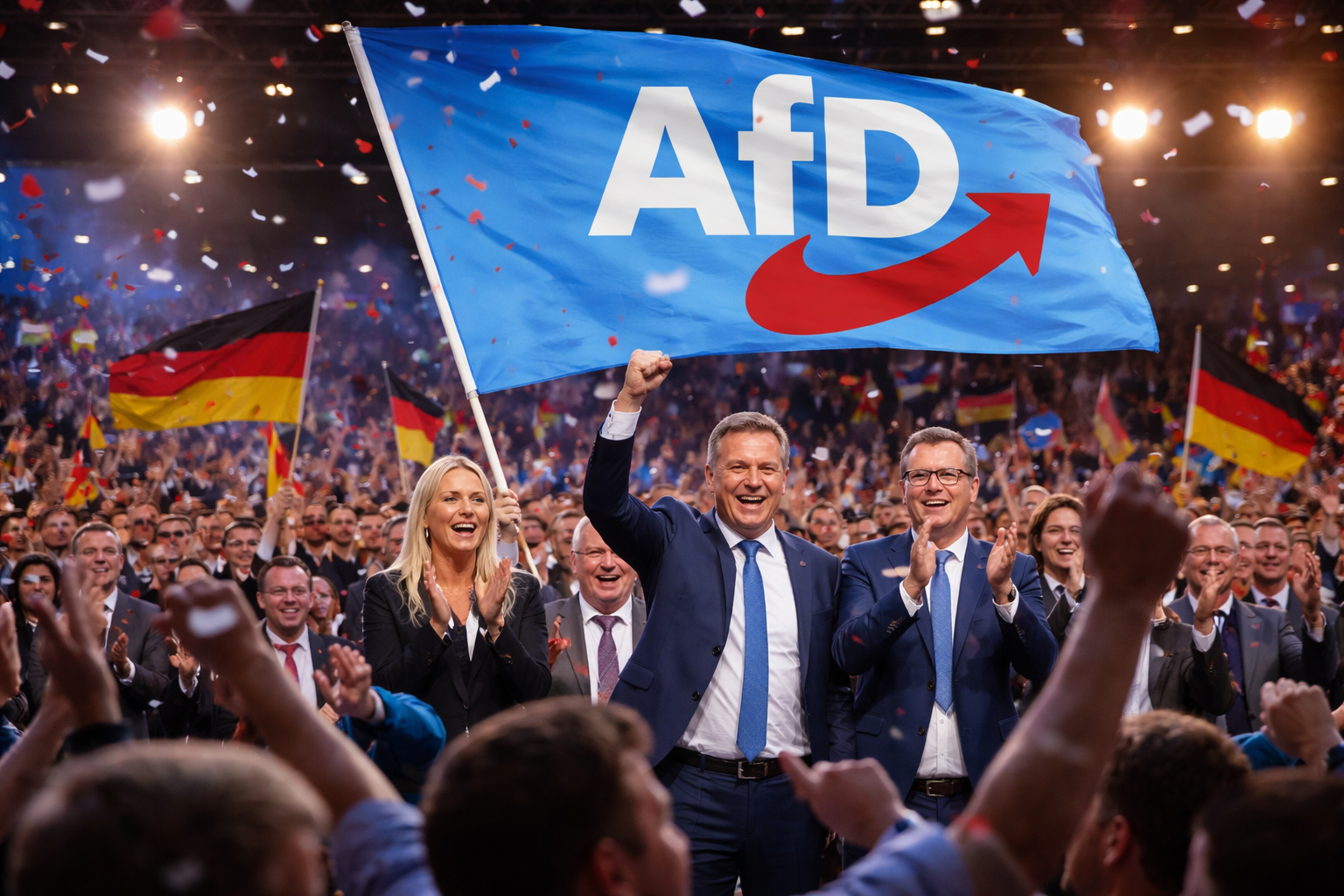
The far-right populist party Alternative für Deutschland (AfD) achieved a significant victory in the state election in Saxony-Anhalt, Germany, securing 43.8% of the vote. However, the party fell short of an absolute majority, winning 39 out of 83 seats, three seats fewer than needed to govern alone.
The election marks a milestone as AfD aims to form the first far-right state government in Germany since World War II. The result reflects a strong surge in support for AfD, whose share of the vote more than doubled compared to five years ago.
CDU Faces Severe Setback Amid AfD Rise
The Christian Democratic Union (CDU), led nationally by Friedrich Merz who is unpopular in Saxony-Anhalt, suffered a major decline, dropping to 17.2% and obtaining just 15 seats. Other parties, including the Social Democrats, Greens, and The Left, each won less than 10% of the vote, reflecting a fragmented opposition.
AfD candidate Ulrich Siegmund declared victory, stating the party had a clear mandate to govern and called for political change, emphasizing themes like migration and domestic security as non-negotiable. Siegmund ruled out minority governance and refused to engage in political games, while acknowledging the uncertainty over how other parties will form a stable administration without AfD’s cooperation.
Political and Social Reactions to AfD’s Success
The CDU described the result as bitter and reaffirmed its refusal to cooperate with AfD. Franziska Hoppermann, CDU general secretary, called the outcome a defeat not only for her party but also for the democracy in Saxony-Anhalt since reunification, rejecting any immediate discussion of Merz’s future.
Religious and civil society voices rallied against the AfD’s rise. Thousands gathered in Magdeburg for an anti-AfD demonstration, and the bishop of Magdeburg warned against forces attempting to sow discord and undermine democracy, reminding that not all elected representatives fully embrace democratic principles.
The German Economic Institute cautioned that AfD’s hardline positions, particularly on immigration, could harm the state’s economy given its aging population and reliance on foreign labor. Additionally, concerns were raised about AfD’s pro-Kremlin stance, with critics warning of potential security risks, though the party dismissed those allegations.
Looking Ahead: Challenges for Saxony-Anhalt’s Government Formation
AfD’s near-majority leaves an uncertain political landscape. Siegmund signaled intentions to launch policies including remigration, banning rainbow flags in schools, halting windfarm development, and promoting nationalist themes. Meanwhile, conventional parties face the challenge of forming a government without collaborating with AfD, which remains politically isolated due to its extremist classification by Germany’s domestic intelligence.
The election represents a significant test for the CDU and Chancellor Merz’s coalition government nationally, as AfD continues to gain momentum and trail the mainstream party in national polls. The outcome is likely to influence Germany’s political dynamics in the lead-up to future federal elections scheduled for 2029 or 2033.