

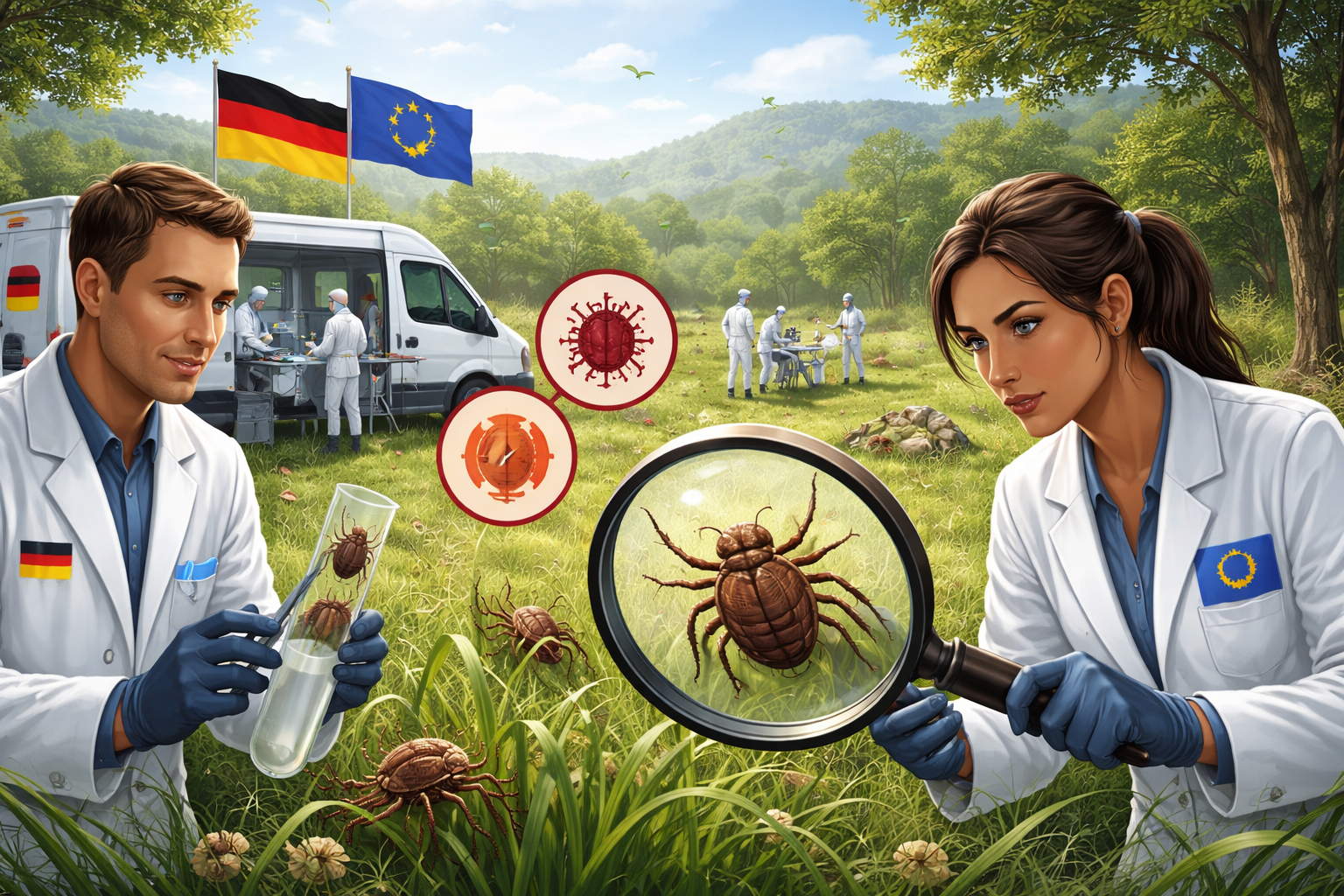
Germany and Kosovo have joined forces to track and combat the expanding threat posed by Hyalomma ticks, a species capable of carrying the Crimean-Congo hemorrhagic fever (CCHF) virus. This virus is a highly pathogenic agent causing severe illness with symptoms comparable to Ebola and Marburg viruses, including bleeding, organ failure, and a high fatality rate.
The Hyalomma tick, often referred to as the “great hunting tick” due to its active pursuit of hosts rather than passive waiting, was once mainly confined to Africa, Asia, and southern Europe. However, climate change has enabled its spread northward, with confirmed sightings in Germany and several Eastern European countries. Kosovo, located in southeastern Europe, has been identified as a significant hotspot for this tick and the associated virus for years.
Scientific Partnership Drives Monitoring and Prevention
Kurtesh Sherifi, a veterinarian from Kosovo, developed an interest in zoonotic diseases like CCHF early in his career after 11 cases, including five deaths, were reported in Kosovo in 2005. Due to limited local resources, Sherifi partnered with Germany’s Bernhard Nocht Institute for Tropical Medicine—an organization specializing in high-risk viruses, including those in Risk Group 4 such as CCHF.
Petra Emmerich, a German virologist and military reservist expert on dangerous viruses, began collaborating with Sherifi in 2009. This partnership received support from Germany’s Biosecurity Program starting in 2013, enabling enhanced research, surveillance, and exchange of expertise. Joint efforts include monitoring tick populations, conducting seroprevalence studies in farm animals, and raising public awareness through educational programs targeting at-risk groups such as farmers.
Risks and Challenges in Controlling the Virus
The CCHF virus is transmitted primarily through Hyalomma tick bites, but infection can also occur when people, including farmers, remove ticks from livestock using bare hands, exposing them to infected blood. While not all Hyalomma ticks carry the virus and many bites do not lead to illness, the lack of a vaccine or specific treatment makes prevention critical.
Infected individuals often experience flu-like symptoms initially but can progress to severe hemorrhagic manifestations requiring intensive care and isolation due to high contagion risks. Treatment generally includes supportive care and administration of the antiviral drug ribavirin, though its effectiveness is limited in acute cases, as observed in Kosovo.
Impact and Future Outlook
Thanks to these collaborative initiatives, Kosovo has seen a dramatic decrease in serious CCHF cases, from about 100 per decade previously to only five in the past ten years. Nonetheless, the expansion of Hyalomma ticks into new regions such as France signals the need for ongoing vigilance. Both Germany and Kosovo are committed to sharing research insights and prevention strategies with neighboring countries less experienced in managing this threat, including Macedonia and Albania.
As climate conditions continue to facilitate the geographic spread of these ticks, the sustained partnership exemplifies a proactive scientific and public health response, aiming to curb the spread of this deadly virus in Europe and beyond.