
Ratko Mladić’s death reignites debate over his legacy as victims condemn the glorification of a war criminal responsible for genocide during the Bosnian conflict
The death of Ratko Mladić, known worldwide as the Butcher of Bosnia, has stirred profound emotions across the Balkans. Serving a life sentence for genocide, war crimes, and crimes against humanity, Mladić died in prison recently. His passing brings a moment to reflect not only on his atrocities but also on the ongoing efforts to ensure that truth and justice endure.
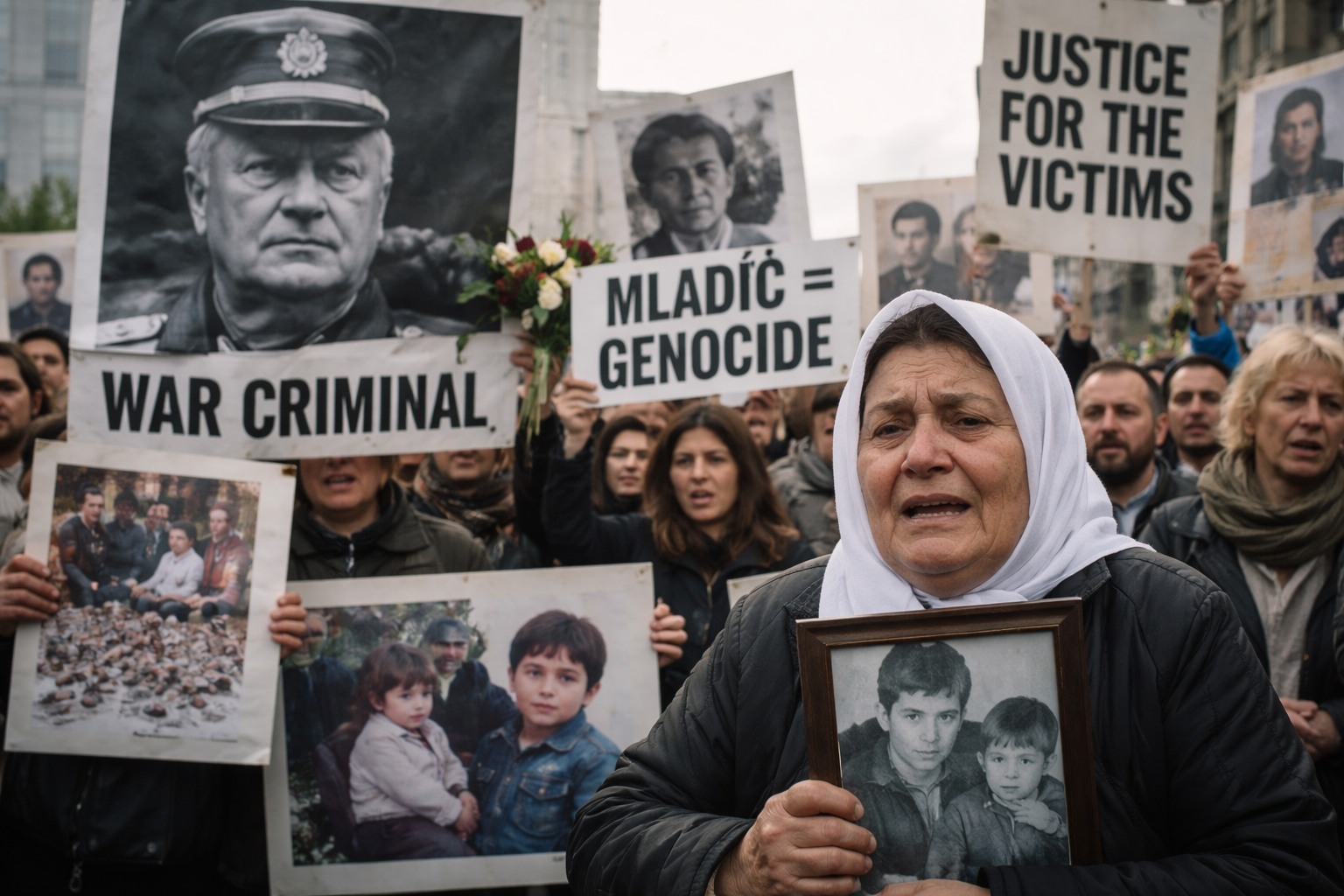
While many mourn the victims and remember the horrors inflicted, others, particularly within parts of Serbian society, continue to view Mladić as a hero, a stance that deeply wounds survivors and observers alike. The ongoing glorification of Mladić threatens to overshadow the brutal historical facts of the 1990s Balkan wars.
This report, based on detailed accounts and statements from survivors and analysts, explores why Mladić’s shadow remains long and how victims are calling for a firm stand against denial and distortion of history, according to information reported by the Guardian.
Horrific legacy of Mladić’s command during the Bosnian War
Ratko Mladić was the commander of the Bosnian Serb forces during one of the most devastating conflicts in Europe since World War II. He was responsible for the deaths of an estimated 100,000 civilians, including the genocide of at least 8,000 Muslim men and boys in Srebrenica. The siege of Sarajevo, lasting 1,425 days, led to more than 11,000 deaths and subjected the city to constant shelling and sniper attacks.
Džemil Hodžić, who lost his brother to a sniper in 1995 during the Sarajevo siege, recalled how children lived in fear, aware that Mladić was behind their suffering. “As kids, Mladić was a kind of horror creature,” Hodžić said. His legacy remains that of cruelty and devastation, deeply rooted in the memories of survivors.
Controversy over Mladić’s image and hero worship in parts of Serbia
Despite the overwhelming evidence of Mladić’s crimes, many Serbians see him as a defender of their people, adhering to a nationalist vision of a Greater Serbia. The Serbian government caused international outrage by announcing that Mladić would be buried with full military and state honors, signaling official backing of his image as a hero.
Politicians like ultranationalist Vojislav Šešelj praised Mladić for his resilience against The Hague’s tribunal, while Bosnian Serb leader Milorad Dodik emphasized his role defending ethnic Serbs. This state-sanctioned glorification clashes sharply with international condemnation and survivor demands.
Calls from victims and international officials to resist genocide denial
The United Nations Secretary-General’s office warned leaders to avoid denying the gravity of Mladić’s crimes or glorifying war criminals. Emir Suljagić, director of the Srebrenica Memorial and one of few male survivors of that massacre, stressed that Mladić’s death changes nothing about the historical truth or the loss of innocent lives. “The people he sent to their deaths never had the chance to grow old. That is the only fact about his death that matters to me,” Suljagić told Bosnian media.
He also pointed out that Mladić operated with accomplices who remain free, posing ongoing threats to justice and peace. There is still work to dismantle denial and ensure accountability for those who supported his atrocities.
Legacy of Mladić and the fight against the glorification of war crimes
Human rights advocates, survivors, and analysts emphasize the need to keep memory alive and confront the dark history rather than allow it to be distorted. Dr. Waqar Azmi from Remembering Srebrenica declared, “His legacy is not one of heroism, but of shame: a dark reminder of the depths of human cruelty.”
Hodžić observed with sorrow that “many still share his ideology” and that the fight “is not yet finished,” particularly because of ongoing genocide denial and efforts to relativize Mladić’s crimes. The butcher may have died, but the struggle for truth, justice, and remembrance continues to define the region’s path forward.