
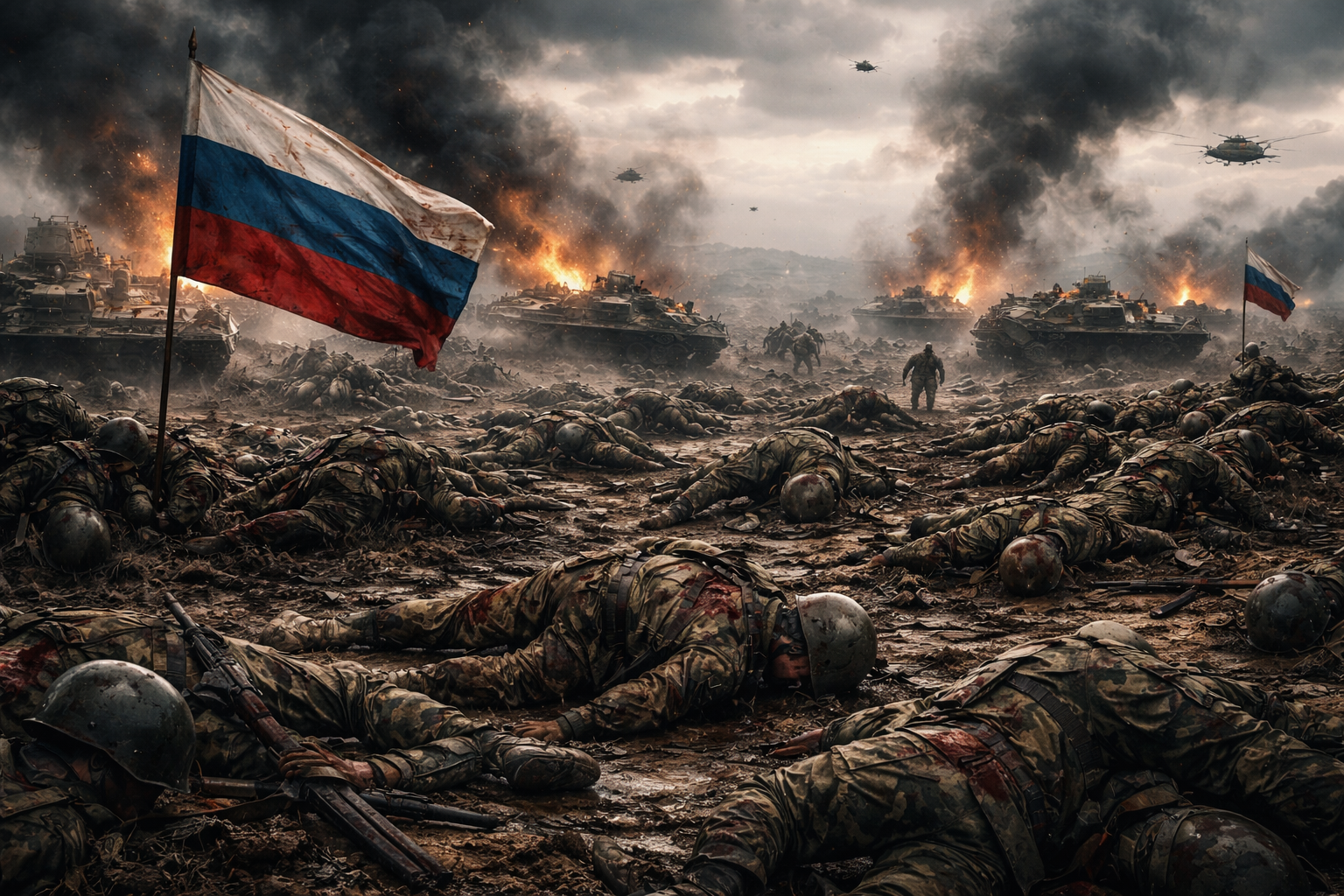
Russia is reportedly losing about 6,000 more troops each month in Ukraine than it can replenish through recruitment efforts, intensifying the pressure on Moscow’s military capabilities.
Russia continues to recruit an estimated 1,000 new soldiers daily to send to the battlefield in Ukraine. However, western officials report that this pace falls short of compensating for the number of troops killed or wounded every month. This significant gap of roughly 6,000 troops monthly is stirring strategic shifts from Moscow, including an escalation in missile strikes targeting Ukraine’s civilian infrastructure.
These developments indicate Moscow’s increasing reliance on tactics aimed at breaking Ukrainian morale by attacking energy supplies ahead of winter rather than replenishing ground forces lost to prolonged fighting. Meanwhile, political risks and equipment shortages limit Russia’s ability to mobilize more soldiers, deepening the military strain.
Information was provided by western officials closely monitoring the conflict, highlighting how Russia’s losses and recruitment challenges could influence future phases of the war.
Recruitment vs. Casualty Rates: A Growing Disparity
According to western intelligence, Russia’s recruitment of about 1,000 soldiers per day has become insufficient. In the last two months, this inflow has not replaced the number of troops lost due to casualties. One official stated, “We estimate that the gap between the number of people Russia is losing to casualties and the number they’re being able to recruit is around 6,000 a month at the moment.”
This disparity has led to a strain on Russia’s military resources, with fewer frontline soldiers available, impacting Moscow’s overall war efforts in Ukraine. The limited ability to increase recruitment stems from political and economic risks, as a prior mobilization in autumn 2022 caused an exodus of up to one million Russians, many of them skilled, with less than half returning.
Escalation of Missile Strikes to Break Ukrainian Morale
In response to this shortfall, Russian President Vladimir Putin has drastically increased missile attacks on Ukrainian civilian and energy infrastructure. Since early July, over 360 missiles have been fired, exploiting Ukraine’s limited defenses against ballistic missiles.
Western analysts interpret these strikes as a strategy to undermine Ukraine’s resolve, particularly by threatening energy supplies critical for the winter months. This campaign comes amid ongoing Ukrainian attacks on Russian fuel targets, which have caused fuel shortages and heightened the conflict’s complexity.
International Support and Risks of Further Russian Escalation
Ukraine continues to appeal to international allies for more offensive missiles and defense systems. Notably, UK Prime Minister Andy Burnham’s recent visit to Kyiv included promises to provide classified information on British long-range cruise missile components. Burnham also urged the global community to enhance protection for Ukraine, particularly advocating for US-made Patriot interceptor missiles.
In reaction, Russia has threatened retaliatory actions against UK military targets, both inside and outside Ukraine. However, western officials believe Putin seeks to avoid a direct confrontation with NATO, instead relying on hostile rhetoric and proxy actions, such as cyberattacks and attacks on civilian infrastructure in the UK.
The Bigger Picture: Campaign of Attrition and Attempts to Divide Europe
Western officials assess that Putin’s overarching goal is to maintain a war of attrition, hoping that international support for Ukraine will diminish over time. By repeatedly threatening the use of nuclear weapons and conducting missile campaigns, Russia aims to create fear and division within Europe, weakening unified support for Ukraine.
As one official explained, these threats are intended to make Europe feel fractured and vulnerable, a tactic consistent with Russia’s longstanding military doctrine of using aggressive rhetoric to influence adversaries’ decisions.