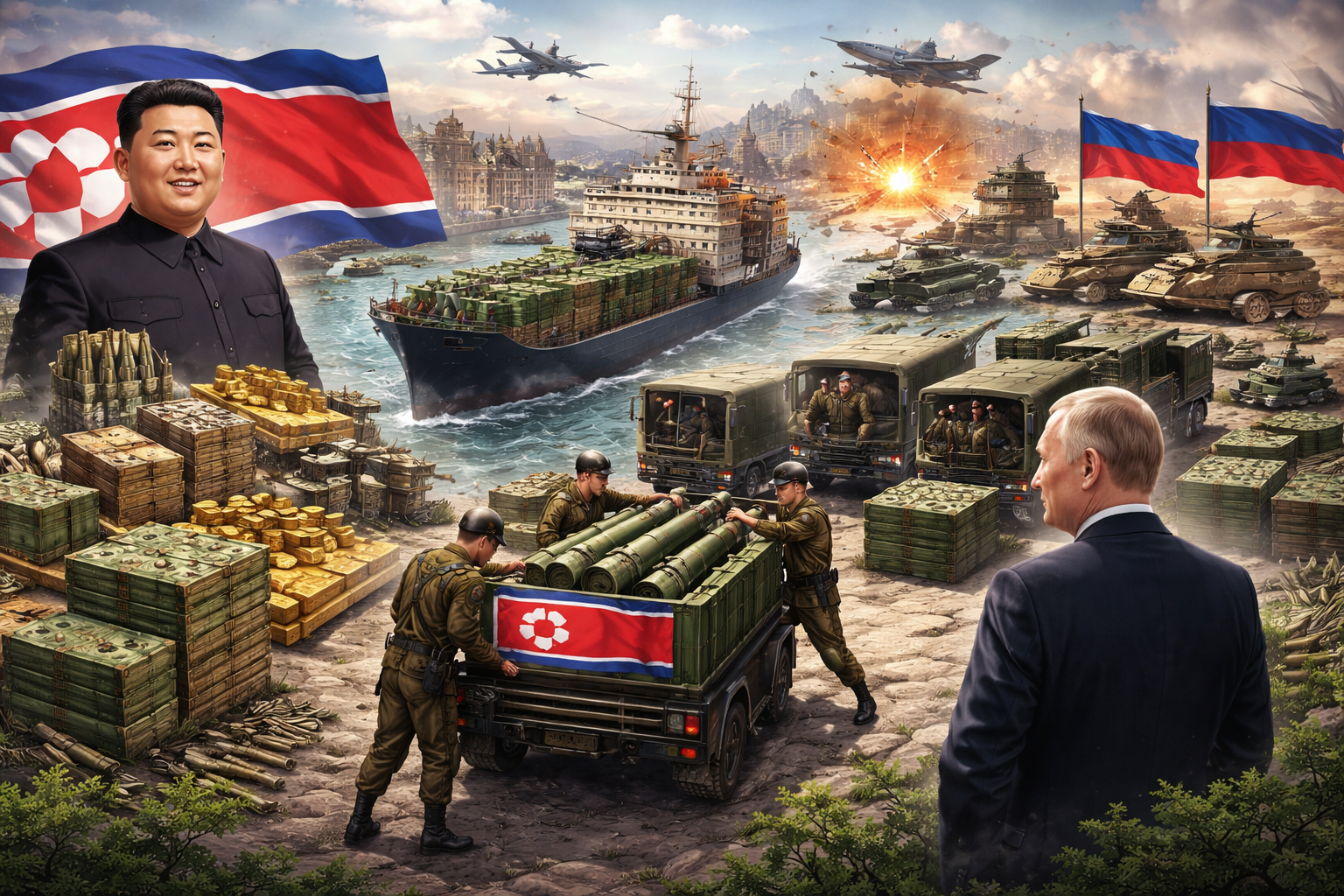
North Korea has experienced an unexpected economic surge, largely driven by its military and logistical support to Russia during the conflict in Ukraine. According to reports from the South Korean Institute for National Security Strategy and Bloomberg Economics, Pyongyang has earned billions of dollars through weapons sales, troop deployments, trade, and cyber activities. This influx of revenue has enabled significant urban development and expanded political influence for North Korea’s leadership, though the majority of the population remains economically vulnerable.
Satellite imagery reveals that electricity availability in Pyongyang has dramatically improved since 2020, with illuminated urban areas tripling in size. Government projects include massive new apartment complexes resembling ballistic missiles, modern department stores stocked with Western brands, advanced hospitals, and luxury coastal resorts. However, experts note that most economic benefits are concentrated in the capital, while regional development plans face persistent challenges.
Financial Gains from Military Support
Estimates indicate North Korea earns between $7.7 billion and $14.4 billion from supplying munitions and providing soldiers to Russia. Ukraine alleges that North Korean troops and missile units are actively engaged on the front lines, with numbers reportedly ranging from 16,000 to 72,000 deployed or expected to be stationed in Russia. Payments to North Korean soldiers reportedly include monthly fees and higher amounts for casualties, facilitating a lucrative exchange for Pyongyang.
In return, Russia supplies North Korea with crude oil, grain, advanced military equipment, and technology related to drones, missiles, and submarines. This reciprocal trade has bolstered North Korea’s military capabilities and global stature.
Broader Economic Impact and Modernization
Beyond war support, North Korea’s economy has benefited from trade with China, overseas labor exports, and cybercrime. Notably, a large cryptocurrency heist in 2025 attributed to North Korean hackers yielded approximately $1.5 billion in Ethereum. These combined sources far surpass the country’s previous annual GDP benchmarks.
The capital city shows signs of modernization with electric vehicles, smartphone-based payment systems, and large-scale infrastructure projects like the biggest hospital in the country and a massive indoor hothouse. However, new industrial development programs aimed at regional cities reportedly struggle due to inadequate infrastructure and outdated economic models, limiting broader economic transformation.
Shifts in Political Influence and International Relations
North Korea’s partnering with Russia has elevated its international profile. High-profile visits from leaders of Russia, China, and Belarus have taken place in Pyongyang, while North Korea’s leader attended major diplomatic events alongside these figures. The enhanced role marks a sharp contrast with earlier years when the regime faced severe economic hardship and international isolation.
Despite this geopolitical visibility and influx of funds, widespread economic hardship persists for much of the population. Rising food prices and currency devaluation have strained household incomes outside the capital, with many families requiring all adults to work to sustain livelihoods.